The cupboard where good spices quietly go to waste
Open the cupboard where you keep your spices and take an honest look. If it is anything like mine used to be, the front row is fine — salt, pepper, whatever you reached for last night. Behind that sits a row you half remember. And in the dark at the back is a small graveyard: a jar of ground coriander bought for one recipe, two tins of cumin because you forgot you already had one, and something that might once have been paprika.
Here is the thing I wish someone had told me sooner. This is not a spice problem. It is a storage problem. When you cannot see what you own, three things happen without fail: you buy duplicates, you let jars go stale, and you cook with a much smaller range than you actually have — simply because reaching the back of the cupboard is a chore.
How bad does it actually get?
Worse than people admit, because the cost never arrives in one obvious moment. It leaks out slowly.
You buy the same thing twice
Standing in the shop, you cannot remember whether you have turmeric at home, so you buy it to be safe. Multiply that across a year of small “to be safe” purchases and you have paid twice for half your rack.
Ground spices lose their point
Whole spices are forgiving; ground spices are not. Once a spice is ground, far more of it is exposed to air, and the aromatic oils that give it flavour begin to fade. Widely published culinary guidance suggests using ground spices within roughly a year for best flavour and whole spices within a few years — not because they become unsafe, but because they go flat. A jar you cannot see is a jar you will not finish in time.
You cook smaller than you could
This is the quiet cost that matters most. If reaching your smoked paprika means unloading the front two rows, you will reach for it far less often, and your cooking narrows to whatever is easy to grab. A rack that shows everything at once genuinely widens what you make for dinner.
What actually helps
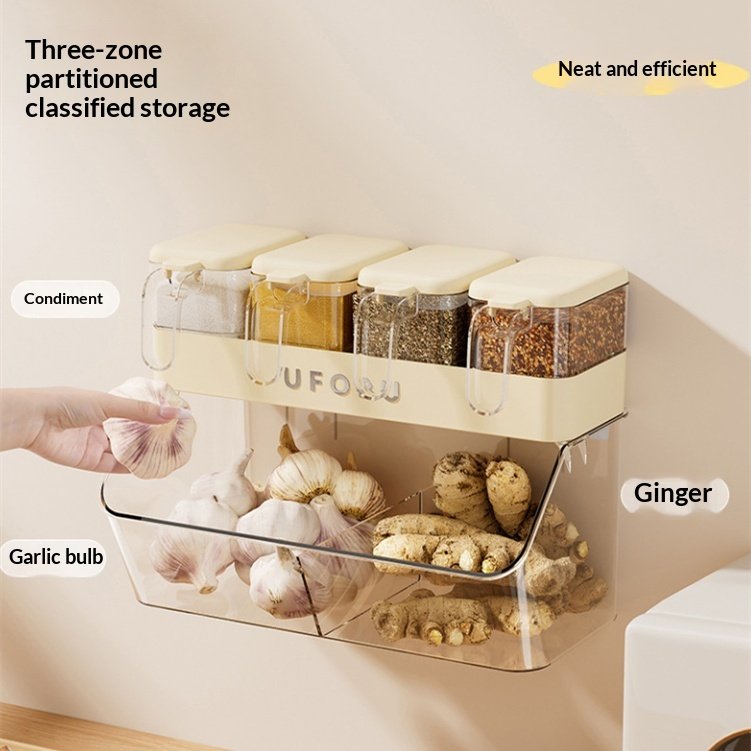
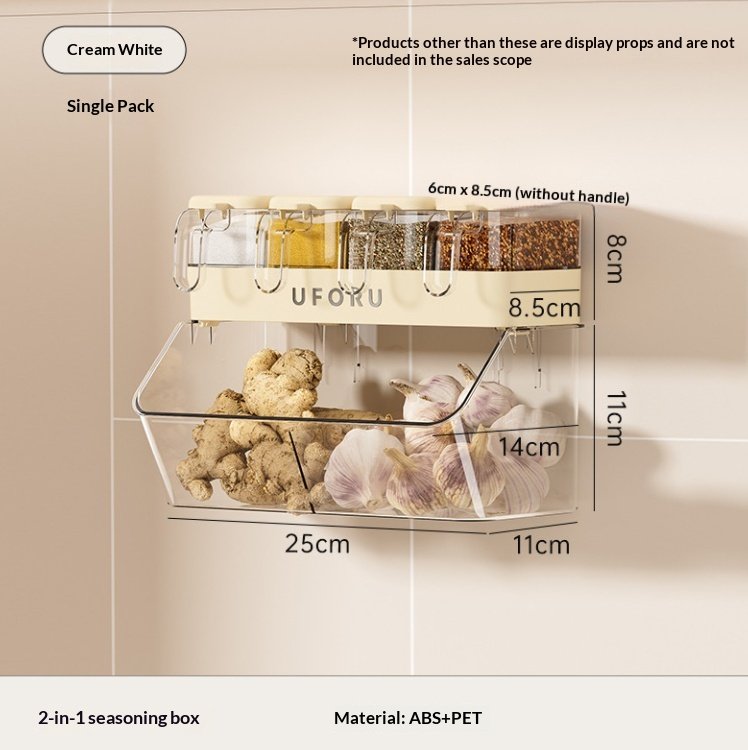
The fix is unglamorous and it works: make every jar visible and reachable at the same time. The moment you can scan your whole collection at a glance, you use more of it, you stop buying duplicates, and stale jars get spotted and replaced. That is the entire idea behind a wall-mounted, drawer-style rack — the drawer-style seasoning organiser we stock lifts the collection off the worktop and onto the wall in shallow rows you can actually read.
Get it off the worktop
Worktop space is the most valuable real estate in a small kitchen. A rack that lives flat on the counter eats into it and still hides the back row. Going vertical — onto a wall or the side of a cabinet — gives you the visibility without the clutter.
Store it where you cook
Put the rack within arm’s reach of where you actually stand and stir, not wherever there happened to be a gap. Spices you have to walk for are spices you will skip. The whole point is to make reaching for them frictionless.
Keep it out of heat and light
One rule that genuinely protects flavour: spices keep best somewhere cool, dark and dry. That means not directly above the hob and not beside the kettle, where heat and steam speed up the fade. A wall a little away from the cooking zone is ideal — close enough to reach, far enough to stay fresh.
What does not help
A bigger jar set you still cannot see. A tiered riser placed inside the same dark cupboard, where the back row stays a mystery. And decanting everything into pretty matching jars with no labels, which photographs beautifully and turns your cumin and cinnamon into a nightly guessing game.
Where you keep them tells you what will go wrong
If your spices live above the cooker, expect them to fade fast from the heat. If they live in a deep, dark cupboard, expect duplicates and forgotten jars. If they live in clear jars on a sunny windowsill, expect them to look lovely and lose their punch within months. Match the storage to the failure you most want to avoid.
Three things people get wrong
“A big rack just means more waste”
In practice it is the opposite. Spices are wasted when they are forgotten, and they are forgotten when they are hidden. Being able to see the whole range is exactly what stops the waste.
“Clear jars are always best”
Light is one of the things that dulls a spice. Clear jars in bright light look wonderful and fade faster. If your rack will sit somewhere sunny, lean towards tins or a shaded wall.
“It is just for show”
A neat wall of spices does look good, but the real return is behavioural: you cook with more of what you own and buy less of what you already have. The tidiness is a side effect, not the point.
What to expect over the first few months
In the first week, the obvious win is worktop space and the small pleasure of seeing everything at once. Over the first month, you notice you are reaching for spices you had half forgotten. And within a few months the quieter benefit arrives: you stop buying duplicates, and you start replacing the genuinely stale jars because, for the first time, you can actually see them.
If you are working through a small kitchen more broadly, the same visible-and-reachable logic applies elsewhere — it is the same thinking behind the wall-mounted approach we wrote about for the bathroom, and you will find more of our practical guides on the Learn hub.
Submit your story
I would genuinely like to hear how you store yours. Have you found a spice-organising trick that survives a real, busy kitchen? A labelling system that actually sticks? Or a small-kitchen layout that keeps everything reachable? Send it through our contact page. I read everything, and the best tips almost always come from readers.
How this article was created
I wrote this from hands-on experience with a cluttered spice cupboard and from widely published culinary guidance rather than invented figures. The point about ground spices losing aroma faster than whole spices, and fading with heat, light and air, reflects long-standing advice from cookery and food-storage sources; it concerns flavour, not safety. Where I did not have a verifiable statistic, I have not invented one — you will not find precise “percentage of flavour lost” numbers here, because I could not source them credibly. If you spot something you believe is wrong, please tell me and I will correct it.