Soy Milk Makers: Making Plant Milk at Home
A soy milk maker blends and cooks plant milk at home. Here is what to look for, how it works and what to expect from the first batch.
 By Ahamed Khan
In this guide22
- 01How a soy milk maker works
- 02Capacity and jug material
- 03Blades and functions
- 04Voltage and plug
- 05Your first batch
- 06Nut milk and oats
- 07Cleaning matters
- 08Is it worth it?
- 09Soaking, rinsing and preparation
- 10Ratio and thickness
- 11Straining or not
- 12Flavour and sweetness
- 13Soups, porridge and more
- 14Storing your milk
- 15Safety
- 16Choosing beans and nuts
- 17Is it cheaper than buying?
- 18What to expect from the first month
- 19The bottom line
- 20Submit Your Story
- 21How This Article Was Created
- 22Frequently Asked Questions
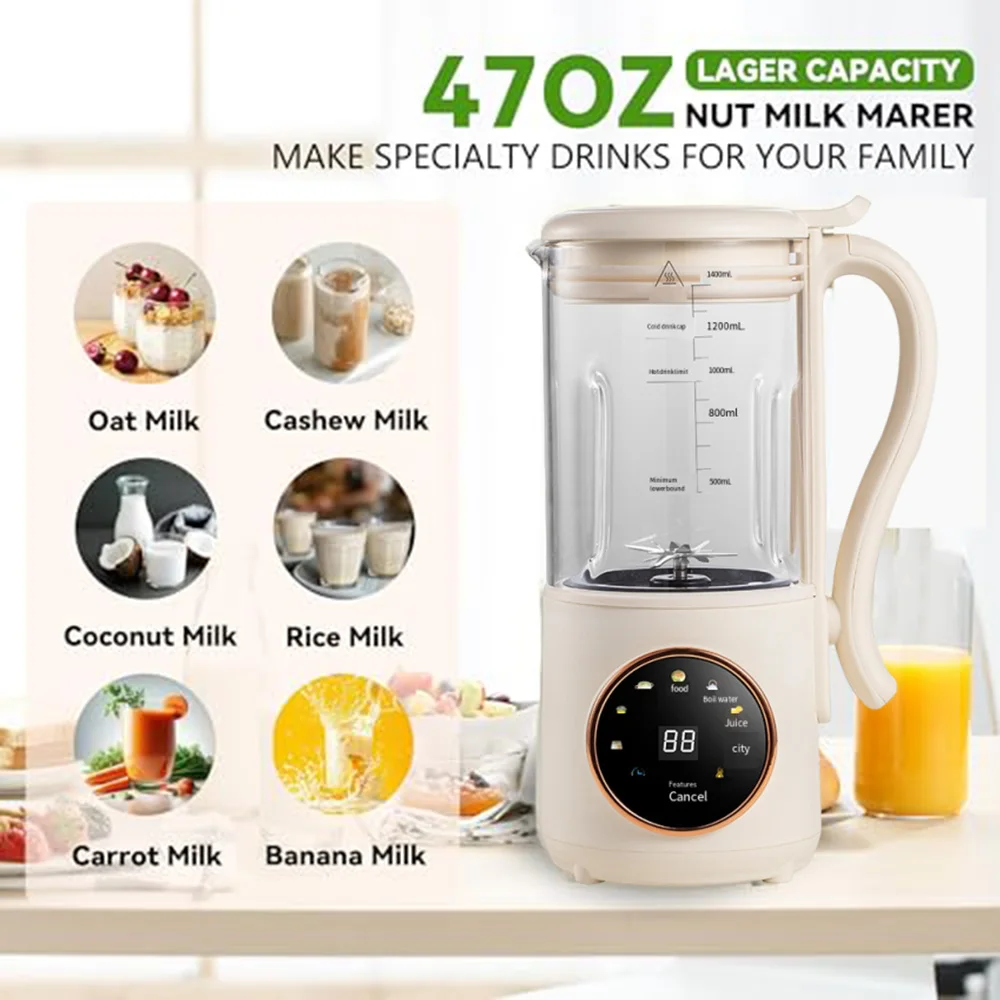
Plant milk is easy to buy and surprisingly easy to make. A soy milk maker does most of the work: you add soaked beans or nuts and water, choose a program, and the machine grinds, heats and finishes the batch.
If you drink plant milk often, making your own is worth a look. Here is what to check before you buy, and what to expect in the kitchen.
How a soy milk maker works
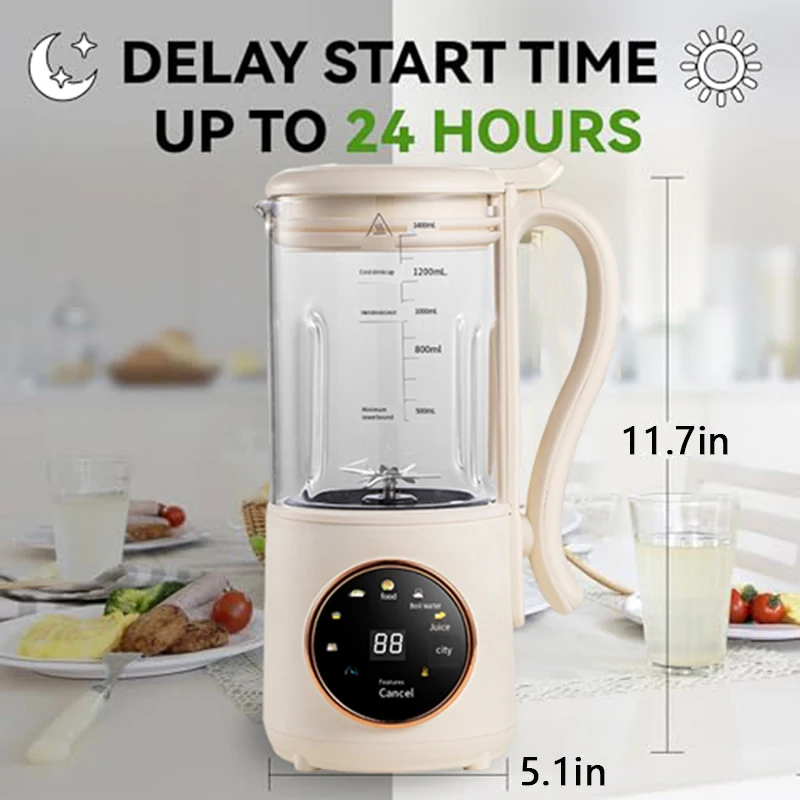
Inside the jug is a set of blades and a heating element. The blades grind the beans or nuts with water into a smooth liquid. Many programs also heat the mixture, because soy needs proper cooking before it is safe and pleasant to drink. At the end you strain the milk if your recipe calls for it, or pour it straight out.

Capacity and jug material
The machine we list has a 1400 ml glass jug. That is enough for a family batch of milk, or a pot of soup. A glass jug is easy to clean, does not hold on to smells in the way some plastics can, and lets you see what is happening inside. It is heavier than plastic, so handle it with care.
Blades and functions
This model has 16 blades and nine functions. More blades usually means a finer grind, which helps with smooth milk. The functions go beyond soy milk to include nut milk, soup, porridge and juice, so it can double as a small blender and cooker.
Do not expect every function to be perfect. Read the program list before you buy and make sure the ones you will use are there.
Voltage and plug
This version is built for 100V to 127V with a US plug, so it suits US sockets. If you travel with kitchen appliances, always check the voltage first.
Your first batch
Soak soybeans overnight, rinse them, and fill the jug to the marked levels. Never go over the maximum line, as hot liquid can foam up. Run the soy milk program and let it finish fully. Soy milk should always be cooked through, so do not stop a program early.
If the result is thick, add a little water next time. If it tastes beany, it often helps to use fresh beans, rinse them well and keep the soaking water out of the jug.
Nut milk and oats
Almonds, cashews and oats also work well, and they usually need less soaking time than soybeans. Use the nut milk program if there is one, and strain it through a fine cloth or filter bag for a smoother drink.
Cleaning matters
Rinse the jug straight after use, before residue dries. Fill it halfway with warm water and a drop of detergent, run a short cycle if the manual allows, then rinse. Keep the base dry and wipe it with a cloth, and never immerse it in water.
Is it worth it?
If you drink a lot of plant milk, a home machine gives you control over ingredients and lets you skip added sugars. If you drink a glass a week, a carton may be simpler. It also helps to enjoy a bit of cooking, since the routine of soaking and cleaning is part of the deal.
If you already own a blender for smoothies, our Portable Blenders in the Gulf: A 2026 Buying Guide guide will help you work out how much overlap there is.
Soaking, rinsing and preparation
Dry soybeans need soaking before use. Cover them with plenty of cold water and leave them for several hours or overnight, then drain and rinse. Soaking softens the beans, which helps the blades grind them smoothly and shortens the cooking time. Discard the soaking water, since it can carry an unpleasant taste.
For nuts, soak almonds or cashews for a few hours. Oats need only a short rinse. Always follow the amounts in the manual, because overfilling the jug is the most common cause of foaming over.
Ratio and thickness
The balance of beans to water decides the thickness. A smaller handful of beans gives a light milk, while a larger handful gives a creamy drink closer to what you find in cartons labelled as barista or whole. Start with the manual’s suggested amount, taste the result, and adjust up or down by a spoonful next time.
Straining or not
Some machines have fine filters, and some recipes are fine without straining. If you like a very smooth milk, pour it through a fine mesh or a cloth bag, and press out the liquid. The leftover pulp, often called okara, can be mixed into pancake batter, soups or veggie patties, so you do not need to throw it away.
Flavour and sweetness
Home-made soy milk is plain by nature. If you want it sweeter, add a small amount of sugar, honey, dates or vanilla after cooking. Start with very little, since a little sweetness goes a long way. Salt, in a tiny pinch, can bring out flavour.
Soups, porridge and more
The extra functions are what make this type of machine more than a one-trick tool. Soup programs blend and heat vegetables to a smooth texture. Porridge programs cook grains such as oats or rice into a soft, creamy meal. Always follow the manual for liquid levels, and never add so much that the mixture can overflow while heating.
Storing your milk
Home-made plant milk has no preservatives, so it keeps for a shorter time than a carton. Cool it down, pour it into a clean bottle, and keep it in the fridge. Use it within a couple of days, and shake before pouring because it may separate. If it smells sour, throw it away.
Safety
Hot liquid and steam need care. Keep the lid closed during a program, do not open the jug until the cycle finishes, and keep the cord out of reach of children. Place the machine on a stable, heat-resistant surface, with space for steam to escape.
Choosing beans and nuts
Use fresh, good-quality ingredients, because they are what you taste. Buy soybeans labelled for eating, check the date, and store them in a cool, dry place. For nut milks, choose raw, unsalted nuts. If anything smells stale or oily, do not use it.
Is it cheaper than buying?
That depends on the beans and nuts you use and on how often you make a batch. Soybeans are inexpensive per litre of milk, while nuts cost more. Home-made milk also takes time, so think about the value of that as well. Many people make their own because they like controlling the ingredients, not only because of cost.
What to expect from the first month
Your first few batches are experiments. Keep notes on the amounts you used and how the milk turned out. After three or four tries, you will have a recipe that suits your taste, and the routine will feel quick. If you stop using the machine after a few weeks, it may not be right for your routine, so be honest with yourself before you buy.
The bottom line
A soy milk maker suits people who drink plant milk regularly and do not mind a little routine. The 1400 ml Glass Soy Milk Maker combines a large jug with nine functions, and ships from a US warehouse to US addresses. See more in Kitchen & Dining or our US store.

1400 ml Glass Soy Milk Maker and Nut Milk Blender, 9 Functions
An automatic soy milk maker with a 1400 ml glass jug, 16 blades and nine functions for nut milk, soups, porridge and juice. Ships from a US warehouse to US addresses. Card payments via secure checkout.
$59.99
View productSubmit Your Story
Have you made plant milk at home? Share the recipe or the mistake that taught you the most. Share it through our contact page and we may feature it in a future article.
How This Article Was Created
This guide was written from the product details on our listing and from widely known buying considerations for this kind of item. We do not quote statistics we cannot source, and we describe only features shown on the product page, so check the page for current options, sizes and prices. Items in this article ship from a US warehouse to US addresses only.
Frequently Asked Questions
Is homemade soy milk cheaper than store-bought?
Usually yes. A bag of dry soybeans makes many litres, so once you own the machine the per-litre cost drops well below cartons.
Can a soy milk maker make other plant milks?
Most also make oat, almond, rice and nut milks, and many double as soup or smoothie makers thanks to the heating and blending cycle.
Do you need to soak soybeans first?
Some machines require soaking, but many newer models have a cold-soak-free program that grinds and heats dry beans directly. Check the cycle list before buying.