For the longest time I blamed my own hands. Wrapping paper drifted off-line halfway across the roll. Hems came out with a gentle wave in them. A straight edge on card stock? Not without a ruler, a pencil, and a lot of patience. I assumed some people were just born able to cut straight, and I wasn’t one of them.
It turns out the problem was never me. It was the tool. Once I switched to a pair of laser-guided scissors, the whole thing stopped being a fight. I want to walk you through what actually changed, because I think a lot of people give up on neat cutting for the wrong reason.
Why cutting a straight line by eye is genuinely hard
Here is the honest truth: your eyes and your hand disagree more than you think. When you cut, you watch the blade tips, but your wrist quietly rotates as your arm moves across your body. Over a short 10 cm snip you barely notice it. Over a long cut across a sheet of wrapping paper, that tiny rotation becomes a visible curve.
Marking a line first helps, but it slows everything down, and a pencil line on dark gift wrap or patterned fabric is often invisible anyway. So most of us just wing it, accept the wobble, and trim the mess afterwards. That trimming is where good material gets wasted.
How a laser guide changes the game
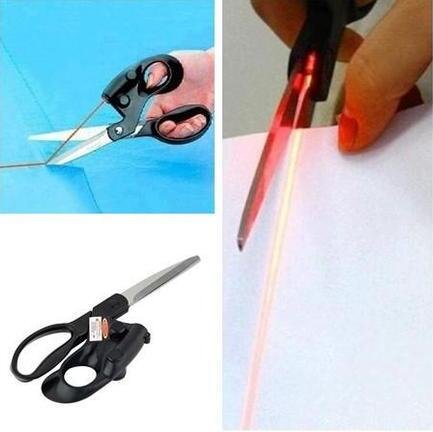
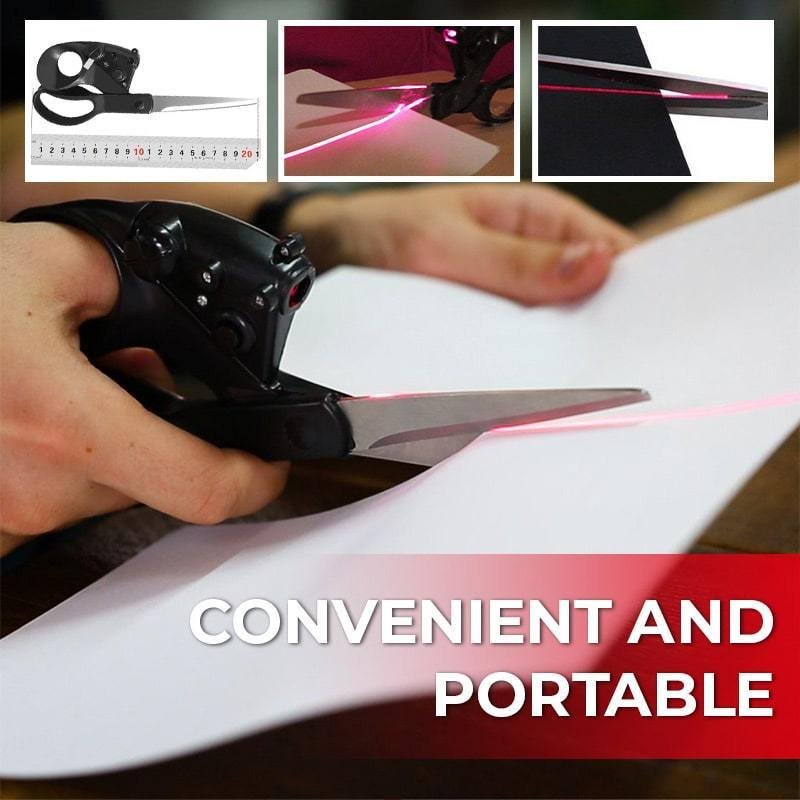
A laser-guided pair of scissors solves the problem from the other direction. Instead of asking your hand to stay straight, it shows you the straight line and lets you follow it. Switch it on and a bright, thin line projects forward across the material, past the blades. You are no longer guessing where the cut will land — you can see it before you close the blades.
The shift is mental as much as practical. You stop staring at the blade tips and start following a line, the same way you would trace over a ruler. The cut comes out straight because you can finally see straight.
Getting a clean cut: what actually works
Line up before you commit
Rest the material flat, switch on the laser, and move the scissors so the line sits exactly where you want the cut. Only then start cutting. It sounds obvious, but half the battle is aiming before you snip, not after.
Let the scissors travel, not your wrist
Move your whole forearm along the line and keep your wrist relaxed. If you try to steer with your wrist, you reintroduce the exact rotation the laser is helping you avoid. Long, smooth strokes beat short, choppy ones.
Keep the material still
On longer cuts, weight down or hold the far end of the fabric or paper. If the material shifts, the laser line stays put but your cut wanders. A still surface does half the work for you.
Common mistakes that ruin a straight line
A few habits quietly sabotage people, and they are easy to fix:
- Cutting too fast. The laser rewards a steady pace. Rushing pulls you off the line before you notice.
- Holding the scissors at an angle. Keep them upright so the projected line stays crisp and lands where the blades actually meet.
- Ignoring the light. In very bright sunlight a thin laser line is harder to see. Move into softer light and it snaps back into focus.
- Forcing thick material. These are precision shears, not bolt cutters. For the right materials they are brilliant; for the wrong ones, no tool feels good.
What they are brilliant for — and what they are not
I reach for mine constantly for gift wrapping, where a straight edge instantly makes a parcel look tidier. They shine for dressmaking and sewing, trimming fabric, felt and ribbon along a clean line. Scrapbooking, card-making and school craft projects are a natural fit too, and they handle paper, thin card, leather and PU without complaint.
Where I would set expectations: they are not designed for heavy cardboard, wire, or thick multi-layer material. Think of them as a precision instrument for everyday craft and household cutting, not a workshop tool. Use them for what they are built for and they feel almost unfair.
Clearing up a few myths
“The laser does the cutting.” It doesn’t — the laser is a guide, a projected line to follow. The stainless-steel blades do the cutting, the same as any good scissors.
“It’s a gimmick that dies in a week.” The laser is a small, low-draw light. With the included battery and normal use it lasts a long time, and you only really need it switched on for the longer, fussier cuts.
“You still need to mark the fabric first.” That’s the whole point — you don’t. The line you follow is the laser, which is why it works on dark and patterned material where a pencil mark disappears.
What to expect over the first few months
In the early days you’ll probably over-think it, lining every cut up twice. Within a week it becomes second nature: switch on, follow the line, done. The blades stay sharp with sensible use — keep them for fabric, paper and craft materials rather than cutting tape-covered boxes, and they hold their edge. When the laser battery eventually fades, the scissors still cut perfectly well as ordinary shears; the guide is a bonus, not a crutch.
The quiet win is how much less material you waste. Fewer crooked first cuts means fewer do-overs, and over a season of wrapping and crafting that adds up.
Little jobs that got easier overnight
The first place I noticed the difference was gift wrapping. A straight edge on the paper means the folds line up and the parcel looks like someone who knew what they were doing wrapped it. Around birthdays and the holidays, when you are wrapping ten things in a row, cutting straight the first time saves a surprising amount of paper and patience.
Then it crept into everything else. Taking up a hem on curtains or trousers, where a clean fabric edge makes pinning and sewing far easier. My nephew’s school craft projects, where cutting card and coloured paper to a neat line suddenly stopped being my job. Even practical bits around the house — trimming shelf liner and drawer paper to fit, cutting down a template, squaring off a sheet of felt for a backing. None of these are glamorous, but each one used to come with a little wonky edge I’d quietly live with. Now they don’t.
A note on comfort and left-handers
The other thing I underestimated was the handle. A contoured, light-touch grip matters more than you expect once you are cutting for half an hour straight. Your hand doesn’t cramp the way it does with cheap, hard-handled scissors, so you can keep going through a whole wrapping session or a batch of sewing without stopping to shake life back into your fingers. If you are left-handed, the laser guide is genuinely levelling — you follow the projected line on either side, so you are not fighting a right-handed blade bias to keep things straight.
Is it worth keeping one in the drawer?
For me the answer landed quickly: yes. It is the kind of small tool you don’t think you need until you use it, and then you quietly stop reaching for your old scissors. It earns its spot for anyone who wraps gifts, sews, crafts, or just likes a tidy edge — which, it turns out, is most of us.
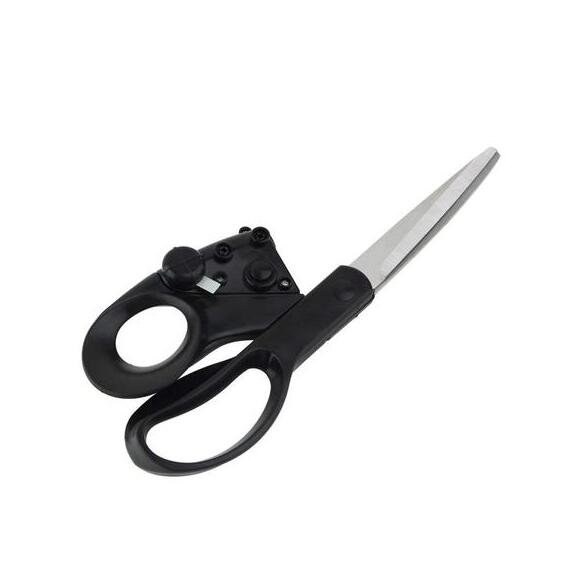
Laser-Guided Scissors
Straight-cut precision shears for sewing, fabric and gift wrapping. Battery included.
$12.99
Submit Your Story
Have you tried laser-guided scissors for a project — a big batch of gift wrapping, a sewing run, a classroom craft session? I’d love to hear how they held up and what you cut with them. Share your experience and any tips you’ve picked up, and we may feature them in a future guide to help other readers cut with confidence.
How This Article Was Created
This guide was written from hands-on experience with laser-guided scissors and general, widely understood principles of cutting and craft, not from invented statistics or lab claims. Where we describe materials and use cases, we’ve kept to what these scissors are genuinely designed for. Nothing here is a medical or safety claim; it’s practical advice for everyday crafting and household use. If your needs are unusual — very heavy or industrial materials — choose a tool built specifically for that job.