Digital Kitchen Scales: A Practical Buying Guide
Why grams beat cups for small quantities, what to check before buying a digital spoon scale, and whether you need one or a full platform scale.
 By Ahamed Khan
In this guide10
- 01Why Grams Beat Cups for Small Quantities
- 02What to Check Before Buying
- 03Getting Accurate Readings
- 04Cleaning and Caring for a Spoon Scale
- 05A Common Misconception
- 06Spoon Scale or Platform Scale?
- 07Buying Online With Confidence
- 08Submit Your Story
- 09How This Article Was Created
- 10Frequently Asked Questions
Baking is the one place in the kitchen where “about a tablespoon” quietly ruins things. A yeast dough that is 20 percent too dry rises differently than one measured correctly, and a pinch of baking powder that is actually twice a pinch can leave a cake with a strange aftertaste. Cups and spoons are fine for cooking, where a little variation does not matter. They are not fine for the handful of ingredients where grams actually count.
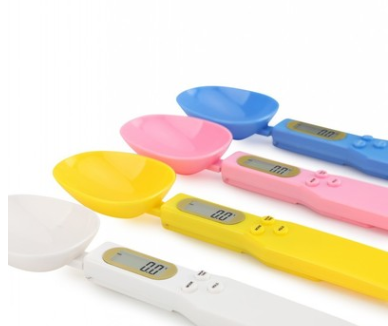
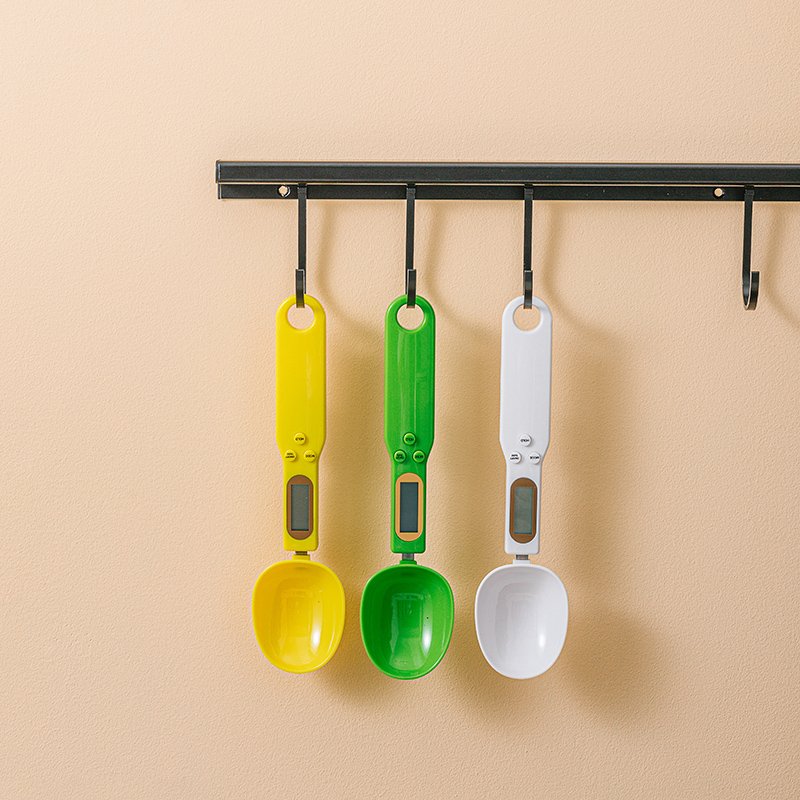
A digital spoon scale solves this without adding a bulky platform scale to your counter. You scoop directly into the spoon-shaped head, read the number, and tip the ingredient straight into your mix. No separate bowl to wash, no measuring cups to dig through a drawer for.
Why Grams Beat Cups for Small Quantities
A measuring cup of flour can weigh anywhere from 110 to 170 grams depending on how tightly it was packed and how it was scooped, which is a huge swing for a baking recipe calibrated around one specific weight. For small quantities, the problem compounds: a “teaspoon” of baking powder scooped heaping versus level can be nearly double the intended amount, and that difference is large enough to taste. Weighing in grams removes the guesswork entirely, which is why most serious baking recipes are written by weight in the first place.
What to Check Before Buying
Three things matter more than anything else. First, unit switching: a scale that only shows grams is fine for baking but less useful if a recipe calls for ounces or millilitres, so grams/oz/ml switching covers more use cases. Second, a tare function, which zeroes out the spoon’s own weight so the number you read is purely the ingredient, not the spoon plus the ingredient. Third, auto shut-off, which matters more than it sounds: a scale left on by accident drains its battery fast, and auto shut-off after a short idle period avoids a dead battery exactly when you need it.
Getting Accurate Readings
Always zero the scale (tare) immediately before each new ingredient, not just once at the start, since residue or a damp spoon head can throw off the next reading by a gram or two. Keep the scale on a flat, hard surface rather than a towel or uneven counter mat, since digital load sensors are sensitive to the spoon tilting even slightly. And avoid weighing anything significantly over the rated capacity (usually 500g for a spoon-style scale); beyond that, the sensor can read inaccurately or the scale may simply display an error.
Cleaning and Caring for a Spoon Scale
Unlike a platform scale, the spoon head on this style directly touches food, so it needs a proper wipe-down after anything wet or sticky, not just a shake. Most spoon scales are not fully submersible, since the electronics sit in the handle, so a damp cloth on the bowl and a dry wipe on the handle and display is the safer routine than running it under a tap. Let the spoon dry completely before storing it, since trapped moisture around the battery compartment is the most common cause of a scale that stops reading reliably after a few months.
Battery life on a well-used scale with auto shut-off typically runs several months between changes; if readings start drifting or the display dims before the battery is actually dead, that is usually the first sign the sensor itself needs a simpler fix first: re-calibrating by taring on a completely empty, dry spoon before assuming the unit is faulty.
A Common Misconception
“A kitchen scale is only for serious bakers” undersells what these are actually useful for day to day: measuring instant coffee or loose-leaf tea consistently, portioning dry pet food, dosing liquid medicine by weight when a dropper is not precise enough, or just getting a protein-powder scoop exactly right instead of eyeballing it. A spoon-style scale earns its counter space well beyond baking.
Spoon Scale or Platform Scale?
The two formats solve different problems rather than one being a straight upgrade on the other. A platform scale with a bowl on top is better for larger batches, like weighing out several hundred grams of flour for bread dough, since a spoon head simply cannot hold that volume. A spoon scale wins for small, precise quantities measured directly into a mix or a cup, which covers most day-to-day measuring far more often than full-batch baking does. Many kitchens end up with both, but if you are choosing one to start with, think about which problem you hit more often: large-batch baking, or getting small quantities exactly right.
Buying Online With Confidence
Digital spoon scales are an inexpensive category across the GCC market, typically landing between roughly 12 and 50 US dollars depending on brand and precision rating; a comparable 500g/0.1g model, like this one listed on Amazon.ae, sits toward the lower-middle of that range. Checkout at AKNB Global is secure and encrypted, with the exact delivery cost and timeframe for your country shown before you confirm, and tracked delivery across Saudi Arabia, the UAE, Qatar, Kuwait, Bahrain and Oman. If precise brewing matters to you too, our guide to electric kettles covers the other half of a good coffee or tea routine.

Electronic Kitchen Scale
A digital kitchen scale shaped like a measuring spoon, built to weigh small amounts of spices, baking powder and liquid medicine accurately in grams or ounces right where you're cooking. Card payments via secure checkout.
$22.99
View productSubmit Your Story
Found a use for a spoon scale beyond baking that others might not think of? Share it through our contact page and we may feature it in a future update to this guide.
How This Article Was Created
This guide is based on general, well-established kitchen-measurement practice around weight versus volume measuring and digital scale accuracy. Pricing context was checked directly against live Amazon.ae listings at the time of writing, linked above. We do not publish invented statistics or unverifiable claims.
You might also find our stand mixer buying guide guide helpful when planning your next purchase.
For another precise kitchen tool, take a look at our digital meat thermometer guide.
Frequently Asked Questions
Why use a digital kitchen scale instead of cups?
Weighing is far more accurate than volume cups, since a cup of flour can vary a lot. Recipes by weight come out consistent every time.
What features matter on a kitchen scale?
Look for a tare button to zero out containers, 1 gram resolution, a clear display, and units switching between grams, ounces and millilitres.
How do I keep a kitchen scale accurate?
Place it on a hard flat surface, keep the sensor dry, replace batteries when readings drift, and avoid overloading beyond its rated capacity.