Electric Pressure Cooker Buying Guide: Size, Presets and Safety
How to choose an electric pressure cooker: pot size, the presets and pressure levels that matter, safety and cleaning, plus voltage tips for buying online in the US and Gulf.
 By Ahamed Khan
In this guide7
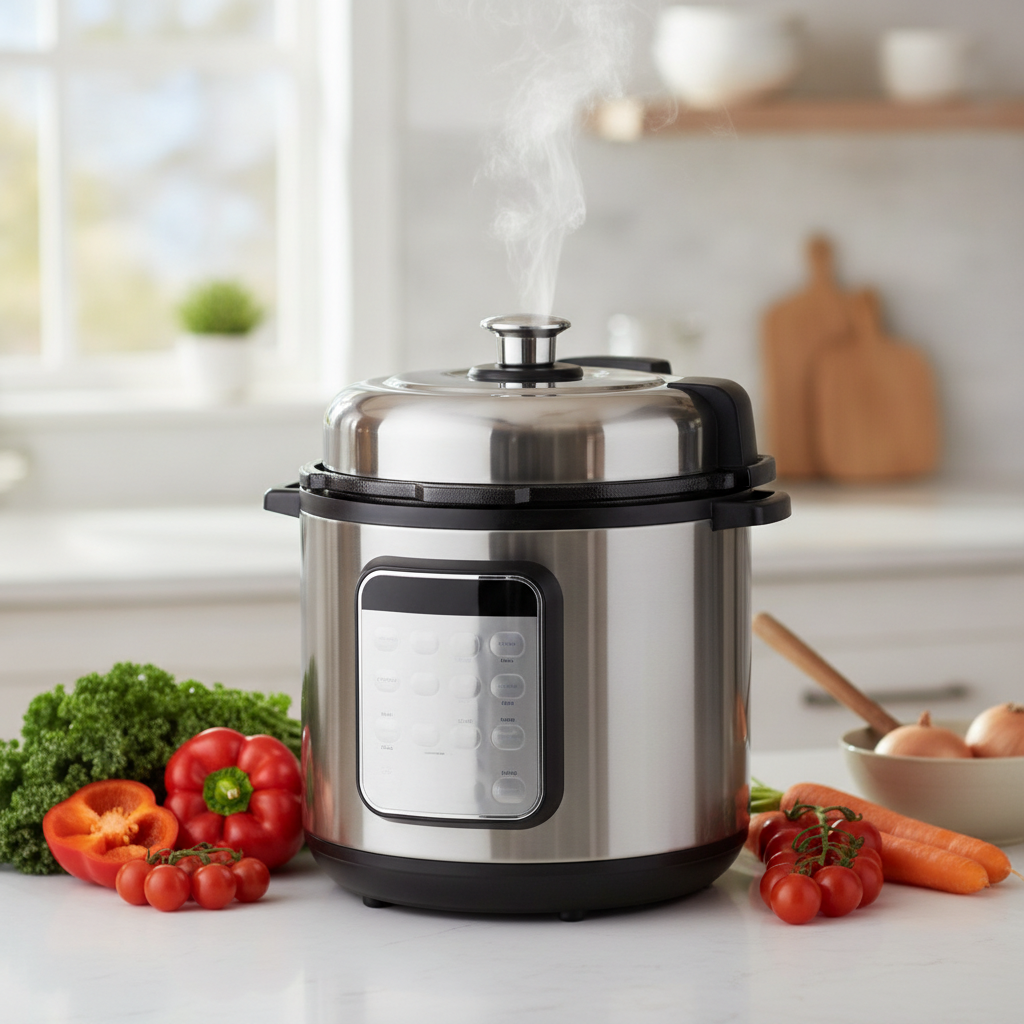
An electric pressure cooker is the appliance that turns a long braise or a pot of dried beans into a weeknight-friendly dinner, which is why it has become a fixture on so many American countertops. If you are shopping for your first electric pressure cooker — or replacing an older model — it helps to know which features actually change how you cook and which are just marketing. This guide walks through capacity, presets, pressure levels, safety and online buying so you can pick a model that fits your kitchen and your budget.
Why an electric pressure cooker earns its counter space
A pressure cooker traps steam and raises the internal pressure, which pushes the boiling point of water well above its usual mark. Food that would normally simmer for hours — stews, tough cuts, stock, dried chickpeas — cooks in a fraction of the time. Most electric models also double as slow cookers, rice cookers, steamers and sauté pans, so a single unit can replace two or three gadgets. If you already rely on a good air fryer for crisp, fast cooking, a pressure cooker rounds out the moist, slow-braise side of your kitchen and keeps the counter from filling up with single-use appliances the way an extra stand mixer or specialty tool might.
Match the pot size to your household
Capacity is the first decision, and it is the one most people get wrong by buying bigger than they need. Remember that you can never fill a pressure cooker to the brim: most require you to stay below the two-thirds line, or the halfway line for foamy foods like beans and oats. Here is how the common sizes break down:
- 3-quart: Ideal for one or two people, side dishes, and small kitchens or dorms where storage space is tight.
- 6-quart: The most popular size and the easiest to find recipes and accessories for. It comfortably feeds a family of three to five.
- 8-quart: Best for batch cooking, meal prep, large roasts, and households that regularly cook for a crowd or freeze leftovers.
Presets, pressure levels and the controls that matter
Modern models can carry a dozen or more preset buttons, but a few core controls do most of the real work. Prioritise these over a crowded button panel:
- High and low pressure: High handles meats and beans; low is gentler for eggs, seafood and delicate vegetables.
- Manual time control: The single most useful feature, letting you set an exact cook time instead of trusting a generic preset.
- Sauté function: Lets you brown meat and soften onions in the same pot before pressure-cooking, so you wash one bowl instead of two.
- Delay start and keep warm: Handy for timing dinner around work or holding food until everyone is at the table.
App-connected and voice-assistant models exist, but they cost more and most owners rarely use the phone control once the novelty fades. Pay for the cooking functions you will use daily rather than the longest feature list.
Safety, cleaning and build quality
Today’s electric pressure cookers are far safer than the stovetop pots of the past. Look for a lid that locks and will not open while the pot is pressurised, a clearly marked steam-release valve, and automatic overheat protection. For the inner pot, a food-grade stainless steel insert lasts longer and takes a sauté better than a nonstick coating that can scratch over time. Check that the sealing ring, lid and inner pot are dishwasher-safe, since the silicone ring absorbs odours and needs regular washing. Large cuts of meat still benefit from a quick check with a digital meat thermometer — pressure cooking is fast, but confirming a safe internal temperature removes any guesswork.
Power, voltage and buying online
Where you shop changes which unit you should order. In the United States, models run on 120V and a standard Type A/B plug, so almost any listing will work out of the box. Shoppers in the Gulf and across Europe should buy the 220–240V version made for their region rather than importing a US unit — a pressure cooker is a high-wattage heating appliance, and a small travel adapter cannot safely handle that load. Check the plug type for your country (Type G in much of the Gulf), confirm the brand offers local warranty support, and make sure replacement sealing rings are easy to buy, since they wear out before the cooker does. Finally, read recent buyer reviews for real-world reliability before you commit.
The bottom line
A good electric pressure cooker pays for itself in time saved and in cheaper, tougher cuts turned tender. Decide on capacity first, settle on the handful of controls you will genuinely use, and always buy the version matched to your local voltage. When you are ready to compare models, browse our shop for more tested kitchen picks.
Frequently asked questions
What size electric pressure cooker should I buy?
A 6-quart model suits most families of three to five and is the easiest size to find recipes and accessories for. Choose 3-quart for one or two people, and 8-quart if you batch-cook or feed a crowd.
Is an electric pressure cooker the same as an Instant Pot?
Instant Pot is simply the best-known brand of electric pressure cooker. Many other brands offer the same pressure, saute and slow-cook functions, often at a lower price, so compare features rather than just the name.
Can I use a US electric pressure cooker in the Gulf or Europe?
Not safely. These are high-wattage heating appliances, so buy the 220-240V version sold for your region instead of running a 120V US unit through a travel adapter, which cannot handle the load.
Are electric pressure cookers safe to use?
Yes. Modern models have a locking lid, a pressure-release valve and overheat cut-offs that stop the lid opening while the pot is pressurised, as long as you keep the valve and sealing ring clean.
Looking for electric pressure cooker options with fast shipping? See current listings on Amazon. As an Amazon Associate, AKNB Global earns from qualifying purchases.