I understand how irritating this is. You make the bed properly, tuck everything in, and by morning the fitted sheet has let go of two corners and gathered somewhere around your knees. You straighten it, and the same thing happens the next night.
It is a small problem that quietly ruins your sleep, and almost nobody talks about it. So let me explain what is actually going on, and what genuinely fixes it.
Why fitted sheets slip in the first place
A fitted sheet holds on through elastic tension alone. That tension has to beat three forces working against it every night: your body weight shifting, friction between sheet and mattress, and the elastic itself weakening over time.
Hot sleepers make it worse without realising. Damp fabric slides more easily than dry fabric, which is why the problem often feels worse in summer or in air-conditioned rooms where humidity swings.
How bad is it? Three levels
Level one: one corner, occasionally
Usually a sizing mismatch. The sheet is slightly too large for the mattress depth, so there is not enough tension at the weakest corner.
Level two: the same corner, every night
This points at something structural — a mattress edge that is more rounded than the others, or elastic that has already gone at that point. It will not improve on its own.
Level three: multiple corners, sheet bunching
The elastic has lost its grip across the whole sheet. At this stage you are not sleeping on a sheet so much as wrestling one, and no amount of remaking will hold it past midnight.
What to do, in order
1. Check the depth, not just the size
Most people buy by bed size and ignore mattress depth. A sheet cut for a 25 cm mattress on a 30 cm one will never hold. Measure your mattress from the top surface to the underside before buying anything else.
2. Make the bed on a dry mattress
If you strip a bed and immediately remake it after cleaning, trapped moisture reduces grip. Let the surface dry first.
3. Rotate the sheet
Sheets wear unevenly. Turning the sheet 180 degrees moves the tired corners to the ends that take less strain.
4. Clip the corners
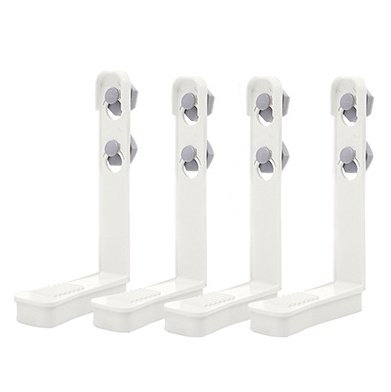
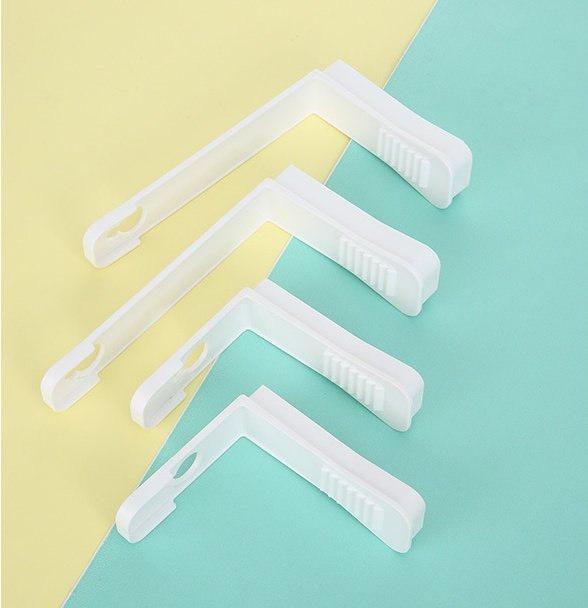
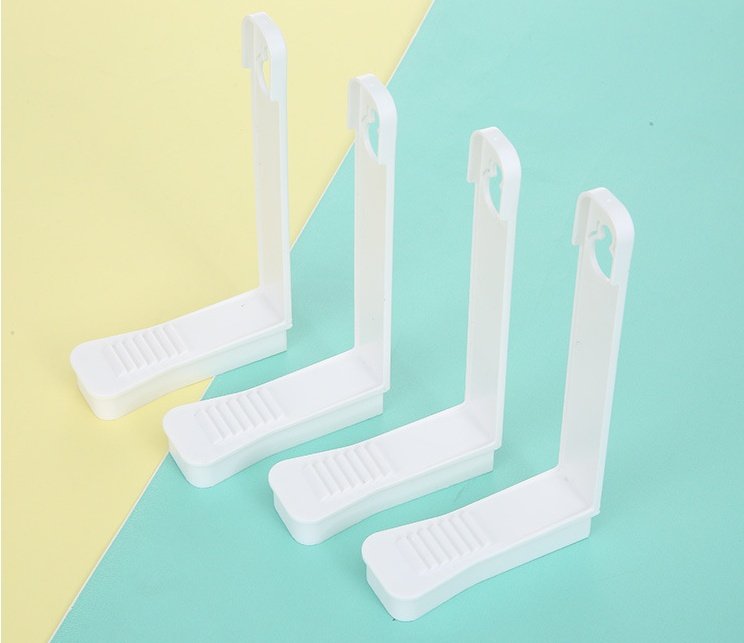
This is the step that actually solves it rather than delaying it. Corner clips grip the sheet and the mattress edge together, so the sheet is held mechanically instead of relying on elastic that is already losing. They sit underneath, out of sight.
What not to do
- Do not wash on high heat repeatedly. Heat is what kills elastic. Warm washes and low-heat drying extend a sheet’s useful life considerably.
- Do not tie the corners in knots. It concentrates stress on one point and tears the fabric.
- Do not use safety pins. They work loose, and a pin in a bed is a genuinely bad idea.
- Do not buy a larger sheet hoping for more grip. Larger means looser.
Which corner slips tells you what is wrong
- Head corners — usually you, sitting up against the headboard and dragging the sheet with you.
- Foot corners — leg movement through the night. The most common pattern by far.
- One side only — if you share the bed, this is almost always the heavier or more restless sleeper’s side.
- All four — the sheet is the wrong size or the elastic has gone. Clips will still hold it, but the sheet is near the end of its life.
When to stop troubleshooting and replace the sheet
Some sheets are finished, and no accessory changes that.
- The elastic is visibly stretched or snapped. If it no longer recovers when pulled, it is done.
- The fabric is thinning or tearing at the corners. Clips grip fabric — if the fabric is failing, they will tear it further.
- Persistent staining or odour that survives washing. Time to replace on hygiene grounds, not comfort.
Clips are for a good sheet that will not stay put. They are not a repair for a worn-out one.
Three misconceptions worth correcting
“Expensive sheets do not slip”
Price reflects fabric quality and weave, not grip. A high thread-count sheet with shallow corners will slip off a deep mattress just as readily as a cheap one. Fit is what matters.
“Deep-pocket sheets solve everything”
Only if your mattress is genuinely deep. Put a deep-pocket sheet on a standard mattress and you create slack, which is precisely what causes slipping.
“It is just an annoyance, not a real problem”
Sleep is easily disrupted by small physical irritations, and repeatedly waking to fix bedding fragments your night. It is a minor problem with an outsized effect on how rested you feel.
What to expect once you fix it
The first night is usually the giveaway — you wake and the bed still looks made. Over the following weeks the bigger benefit is that your sheet stops being stretched and yanked back into place every morning, which is what wears the elastic out in the first place.
Left unaddressed, the cycle accelerates: the more you pull a slipping sheet tight, the faster the elastic fails, and the sooner you are replacing a sheet that was otherwise perfectly good.
Submit your story
I would like to hear what has worked for you. Do you have a mattress shape that defeats every sheet you try? A brand that holds up better than most? A trick for guest beds that get made once and left?
Send it through our contact page. Readers consistently send better practical fixes than I come up with on my own, and I am happy to share the good ones.
How this article was created
This is written from direct experience of the problem and from what is physically verifiable — mattress depth, elastic fatigue, friction and moisture. I have deliberately not included survey figures, percentages or lifespan statistics, because I could not source any of them from a reference I would trust.
Where I mention sleep disruption, I have kept it general and avoided medical claims. If you are experiencing ongoing sleep problems, that is a conversation for a doctor rather than a bedding article. If anything here is wrong or your experience differs, tell me and I will update it.