Electric Sewing Machines for Beginners: What to Look For
An electric sewing machine makes hemming and mending quick. Here is what a beginner should look for, and what to ignore.
 By Ahamed Khan
In this guide23
- 01Start with what you will sew
- 02The foot pedal
- 03A sewing light
- 04The extension table
- 05What is in the kit
- 06Weight and size
- 07Learning the basics
- 08Keep it tidy
- 09Who it suits
- 10Understanding the parts
- 11Fabric choices for first projects
- 12Needles and thread
- 13Simple projects to try first
- 14Troubleshooting common problems
- 15Safety and care
- 16Growing your skills
- 17Setting up your sewing space
- 18How much practice is enough
- 19Next steps
- 20The bottom line
- 21Submit Your Story
- 22How This Article Was Created
- 23Frequently Asked Questions
Hemming trousers, mending a seam, making a cushion cover. These are the jobs most people actually do with a sewing machine, and a basic electric sewing machine handles all of them. You do not need a hundred stitches to get started.
Here is a plain guide to what matters when you are buying your first machine.

Start with what you will sew
Be honest about your projects. If you want to fix clothes and make simple home items, a compact household machine is plenty. If you plan to sew heavy canvas or thick layers regularly, you will need to look at stronger machines.

The foot pedal
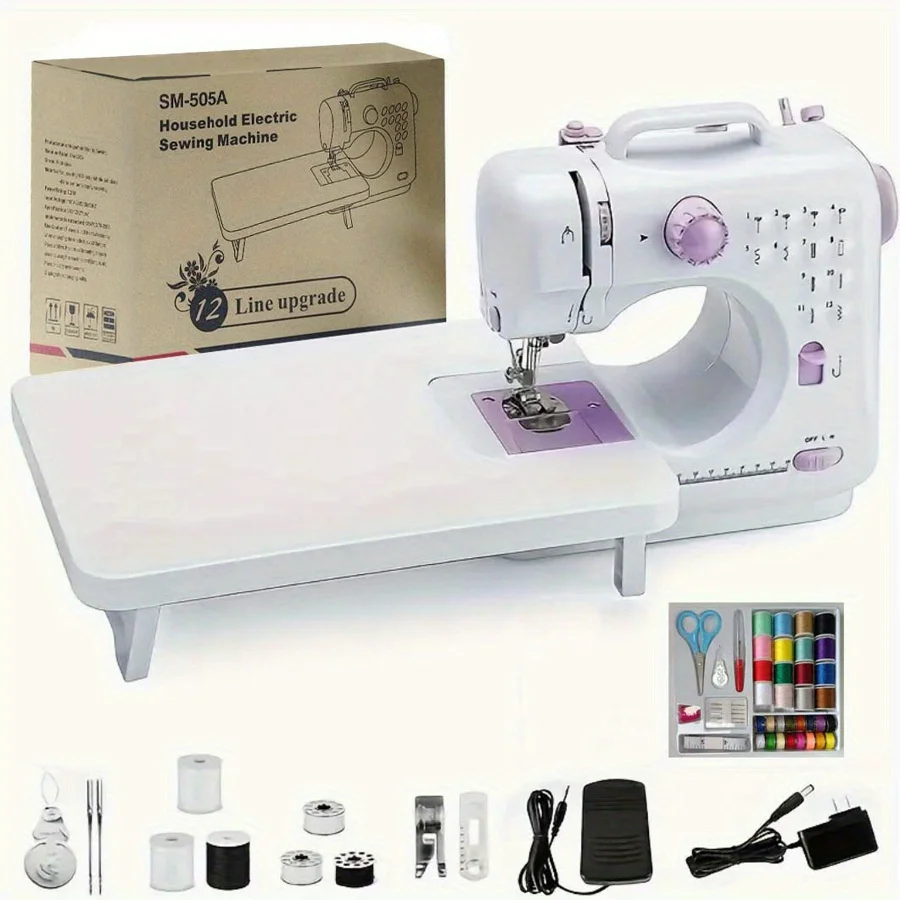
A foot pedal controls the speed, and it frees both hands to guide the fabric. That is a big help for beginners, who can go slowly through tricky corners and speed up on straight lines. The machine we list comes with a foot pedal.
A sewing light
Good light makes stitching easier on the eyes and helps you see where the needle will land. A built-in light is a small feature that you will use every time.
The extension table
An extension table adds a flat area around the needle. It supports larger pieces such as curtains or trousers, so the fabric does not drag. It is a practical feature that many small machines lack.
What is in the kit
Our listing includes sewing kit tools. For beginners this saves a shopping trip, but check what you actually have: spare needles, bobbins, thread, scissors and a seam ripper are the basics. Buy a few spools of good-quality thread, since cheap thread can fray and cause problems.
Weight and size
This machine weighs about 2.63 kg, which is light enough to carry and store in a cupboard. Light machines can move on the table when you sew fast, so place it on a stable surface, and sew at a steady pace.
Learning the basics
Start with scrap fabric. Thread the machine carefully following the diagram, wind a bobbin, and sew straight lines on a spare piece. Then try curves, corners and a simple hem. Practise reversing a few stitches at the start and end of each seam so it does not unravel.
If things go wrong, the usual causes are incorrect threading, a blunt or bent needle, or the wrong tension. Re-thread from scratch before you change anything else. That solves most problems.
Keep it tidy
A sewing space helps. Clear a drawer or a box for your thread, pins and scissors, and keep them in one place. Our guide on How to Finally Organise Your Sock and Underwear Drawer (and Keep It That Way) has ideas that work just as well for sewing supplies.
Who it suits
It suits beginners, students and households that want to mend and make simple things. It is not a heavy-duty or professional machine, and it does not need to be.
Understanding the parts
Before you sew, learn the names of the main parts. The needle goes up and down to make the stitch. The presser foot holds fabric flat. The bobbin sits beneath, holding the lower thread. The tension dial adjusts how tight the thread pulls, and the foot pedal controls speed.
Keep the manual nearby when threading, because the path through the guides must be exactly right. A missed guide is one of the most common reasons for a tangled seam.
Fabric choices for first projects
Start with woven cotton. It is stable, easy to cut and forgiving to sew. Avoid very stretchy or slippery fabrics at first, because they move under the foot and need more practice. Wash and iron fabric before cutting, so the finished item does not shrink or crease.
Needles and thread
Use the right needle for the fabric, and change it regularly, since a worn needle skips stitches and can snag cloth. A general-purpose needle suits most cotton. Choose good-quality thread in a matching colour, and use the same type for the top thread and the bobbin so the tension balances.
Simple projects to try first
A cushion cover is a great first project: straight seams, simple shapes and a useful result. Tote bags, napkins, pillowcases and simple curtains teach you straight stitching and hemming. Once those feel easy, move on to elastic waists, zips or simple clothing.
Mending is also a good teacher. Fixing a hem, closing a seam or attaching a patch gives you quick, real-world practice.
Troubleshooting common problems
If the stitches look loose or loopy, re-thread the top thread with the presser foot raised, because that opens the tension discs. If the thread keeps breaking, check the needle and the spool, and replace either one if they are worn or damaged. If the fabric bunches under the seam, slow down, hold the fabric gently and use a new needle.
Take a deep breath and change one thing at a time. That way you learn what fixed the problem.
Safety and care
Keep fingers clear of the needle, unplug the machine when changing needles or cleaning, and switch it off when you leave it. Brush lint out of the bobbin area regularly, and cover the machine to keep dust off. A little care keeps a basic machine running smoothly.
Growing your skills
Free patterns, local classes and online tutorials make learning easier. Keep a small notebook of settings that work well for different fabrics. In time you will build a feel for tension and speed that no manual can give you.
Setting up your sewing space
A stable table at a comfortable height, a chair with good back support and good light are the basics. Keep scissors, pins, a tape measure and a seam ripper within reach. A small tray for pins and a pin cushion keep things tidy. If you share a table, put the machine in its cover and store it in a cupboard after each session.
How much practice is enough
An hour or two of practice on scraps gives you more confidence than reading ten articles. Draw straight lines on paper with a pencil and sew along them without thread, to learn how the pedal and the fabric guide feel. Then do the same with thread on cloth.
Next steps
When you are comfortable with straight seams, learn to sew a zip, add a button and make a buttonhole. Each new skill opens up more projects, and you can fix more of your clothes yourself.
The bottom line
Look for a foot pedal, a light and a bit of support for large fabric, and keep your expectations to everyday sewing. The Electric Sewing Machine with Extension Table, Pedal and Light ticks those boxes and ships from a US warehouse to US addresses. See more in Crafts & Hobbies or our US store.

Electric Sewing Machine with Extension Table, Pedal and Light
An electric sewing machine with extension table, foot pedal and sewing light, supplied with a sewing kit for mending, hemming and crafts. Ships from a US warehouse to US addresses. Card payments via secure checkout.
$58.99
View productSubmit Your Story
What was the first thing you sewed or mended, and what would you tell a beginner? Share it through our contact page and we may feature it in a future article.
How This Article Was Created
This guide was written from the product details on our listing and from widely known buying considerations for this kind of item. We do not quote statistics we cannot source, and we describe only features shown on the product page, so check the page for current options, sizes and prices. Items in this article ship from a US warehouse to US addresses only.
Frequently Asked Questions
What features matter most on a beginner sewing machine?
Look for easy threading, a few built-in stitches, adjustable stitch length, a free arm for sleeves, and a clear manual. You do not need dozens of stitches to start.
Are computerized or mechanical sewing machines better for beginners?
Mechanical machines are simpler and cheaper to maintain, while computerized models add convenience like one-touch buttonholes. Either works; match it to your budget and projects.
What can you make on an entry-level sewing machine?
Clothing repairs, hems, simple garments, tote bags, cushion covers and basic quilting are all within reach once you are comfortable with straight and zigzag stitches.