For about two years I hand-washed my socks and underwear in the bathroom sink. Not because I’m particularly fussy, but because our building’s washing machine was two floors down, always busy on weekends, and it felt wrong to run a half-empty drum just for a handful of small things. So the sink it was — a bit of detergent, a lot of wringing, and clothes that never quite dried before I needed them.
What finally changed my mind was watching a friend in a smaller flat than mine pull a little countertop washer out of a cupboard, drop in a day’s socks and a couple of shirts, press one button, and walk away. Ten minutes later it had washed and spun them damp-dry. No sink, no wringing. That’s the category I want to talk about here, because it solves a very specific, very common problem — and it’s easy to buy the wrong one.
The problem these actually solve
A full-size washing machine is built for a full-size load. That’s great for towels, sheets and a week of family clothes. It’s wasteful and slightly annoying for the small, frequent stuff: gym socks, underwear, a baby’s outfits, a shirt you want to wear again tomorrow. You either wait until you have enough to justify a cycle, or you hand-wash.
Here in the Gulf, a few things make that worse. A lot of us live in apartments where laundry is shared or the machine is small and always in demand. Many households wash delicates and underwear separately for hygiene reasons and don’t want them in the same drum as everything else. And the summer means clothes get sweaty fast, so the small loads pile up quicker than the big wash day comes around.
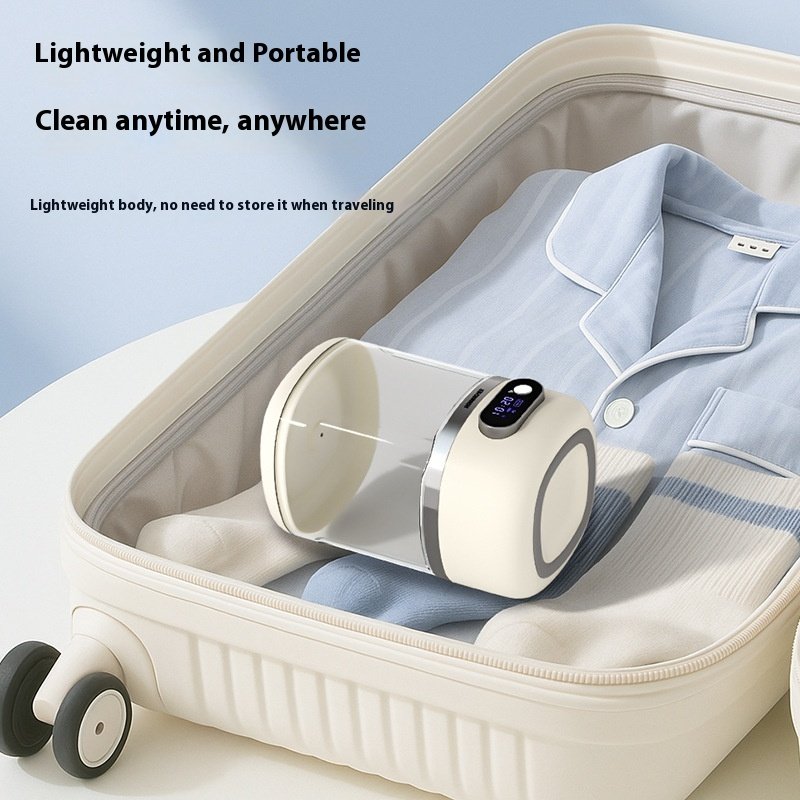
A compact portable washing machine for delicates fills exactly that gap. It’s not trying to replace your main machine — it’s the thing that handles the small loads so your main machine only runs when it’s genuinely full.
How a portable washer works
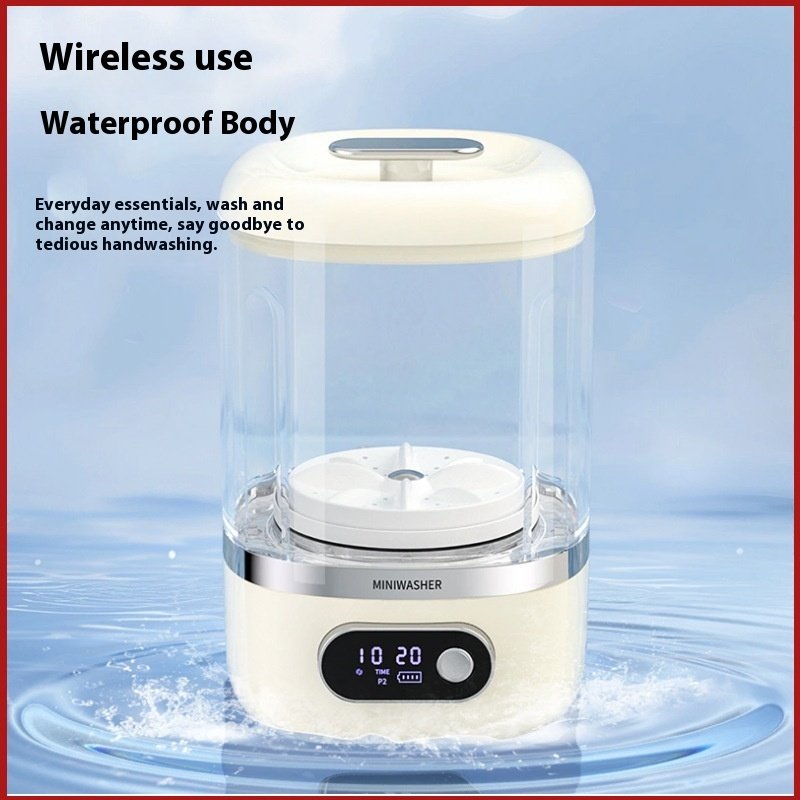
The idea is simple. You add a small amount of water and detergent, drop in your items, and switch it on. It runs an automatic wash cycle — the drum agitates the water so you’re not scrubbing anything by hand. When the wash finishes, a spin stage removes most of the water, so what you lift out is damp, not dripping, and dries on a rack in a fraction of the time a sink-wrung shirt takes.
Because the whole unit is small and light, you fill it at the tap, use it on a counter or bathroom shelf, and tip it out when you’re done. There’s no plumbing to install and nothing to connect permanently.
What it’s genuinely good for
- Underwear and socks, washed daily instead of stockpiled.
- Activewear after the gym, so it doesn’t sit in a bag until laundry day.
- Baby clothes, cleaned in their own small load rather than mixed with the household wash.
- Travel and short stays — a hotel room or a rental with no machine.
What it is not
This is the part the flashy listings skip, so I’ll be blunt. A portable washer is for small items. It will not take a duvet, bath towels, jeans or a week of family laundry. If you try to cram a big load in, it won’t clean well and it won’t spin properly. Buy it for what it is — a small-load machine — and it’s brilliant. Expect it to replace your main washer and you’ll be disappointed. I’d rather you know that before you order than after.
Portable washer vs. the sink vs. the laundromat
It’s worth being clear about where a portable washer actually wins, because it isn’t always the right answer. Against hand-washing in a sink, it’s a clear step up: the agitation cleans more evenly than tired hands, and — this is the real win — the spin cycle leaves clothes damp instead of soaked, so they dry in hours rather than draping wet over a rail all day. Against a trip to a shared machine or a laundromat, it saves you the queue, the coins and the wait for small loads you’d feel silly running a full cycle for.
Where it doesn’t win is volume. If you regularly move big loads, a portable unit is a companion to your main machine, not a substitute. The people who get the most out of a compact washer like this one are the ones who use it for what it’s designed for: frequent small loads that would otherwise clog up the sink or wait days for a proper wash. Bought with that expectation, it pays for itself in saved time and saved hassle within a few weeks.
The mistakes people make
Overfilling it
The single most common error. A portable washer cleans by moving items freely through the water. Pack it tight and nothing moves, so nothing gets clean, and the spin stage can’t balance. A loosely filled drum does a far better job than a stuffed one. Think a handful of items, not an armful.
Using too much detergent
Small drum, small water volume, so it needs only a little detergent — often less than a teaspoon. Too much and you’ll be rinsing out suds forever. Start with a tiny amount and adjust.
Expecting a tumble-dryer
The spin removes most of the water, not all of it. Items come out damp and need to hang. That’s normal and it’s still a huge time saver over hand-wringing — just don’t expect to pull out dry clothes.
Does it really get things clean?
For the job it’s built for, yes. Agitated water plus a little detergent plus time is the same principle a big machine uses; this just does it at small scale. Lightly soiled everyday items — socks, underwear, tops — come out clean and fresh. Heavily stained or greasy items are a different story, and those belong in your main wash with a proper cycle. Match the tool to the load and it performs.
What to expect over time
The honest picture from people who own one: for the first couple of weeks you use it constantly because it’s novel, then it settles into a rhythm — a small load every day or two rather than a big backlog once a week. The parts that matter are the seal and the motor, so treat it gently: don’t overload it, empty the water fully after each use, and let it air out so nothing stays damp inside. Looked after that way, it earns its counter space season after season.
If you live in an apartment, share a laundry, travel often, or just prefer to keep your delicates separate, this is one of those small purchases that quietly removes a recurring irritation. It won’t change your life. It’ll just make one boring chore genuinely easier, which is honestly all I ask of a gadget.
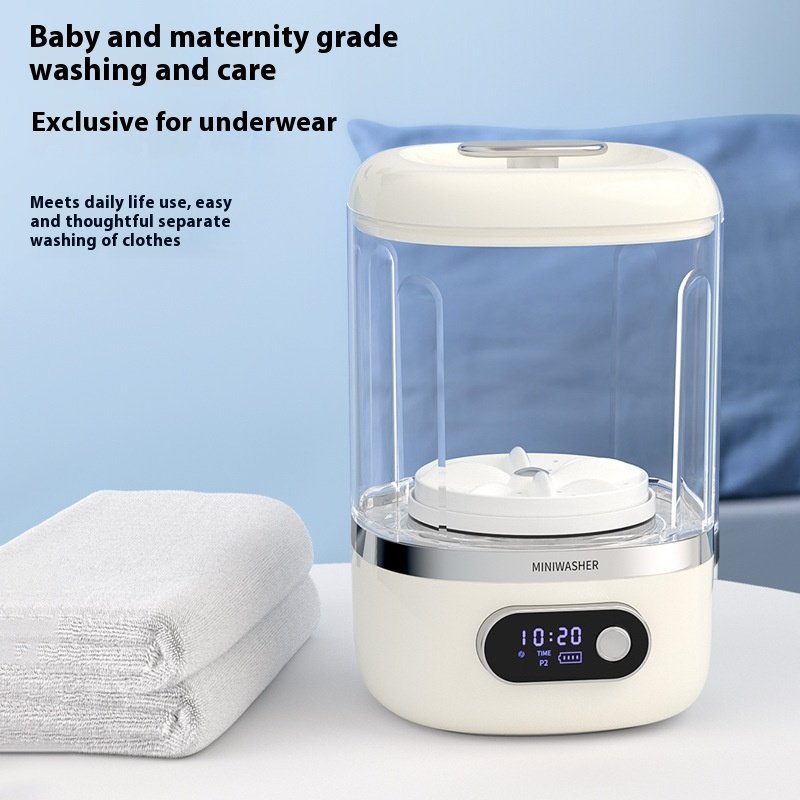
Portable Mini Washing Machine — Wash & Spin Dry
Automatic wash plus spin-dry for underwear, socks, activewear and baby clothes. Compact, light, and made for small loads. secure checkout across the GCC.
$44.99
Submit Your Story
Do you use a portable washer in a flat, a dorm or on the road? I’d like to hear how it fits into your routine — what you wash in it, what you’d tell a first-time buyer, and any mistake you made early on so others can avoid it. Share your story through our contact page and we may feature it in a future article.
How This Article Was Created
This article was written from personal experience with small-load laundry in an apartment and from the practical specifications of the portable washer we stock. It makes no medical or hygiene claims beyond the everyday point that some people prefer to wash delicates separately. Capacity and performance depend on load size and the specific model; the guidance here reflects how compact washers work in general and how to get the best from one. No statistics were invented for this piece.