The worst travel moment I ever had wasn’t a delayed flight or a lost bag. It was standing at an immigration desk, holding up a family of four behind me, unable to find my son’s passport. I had four passports, four boarding passes, a stack of cards and a folded hotel booking distributed across three pockets and a backpack, and under the pressure of a moving queue my system fell apart completely. I found it eventually — in the wrong pocket, of course — but I promised myself I’d never travel disorganised again.
The fix turned out to be embarrassingly simple: one zippered case that holds everything. If you travel as a family, or you’re just tired of the pocket-patting shuffle at every checkpoint, this is the small piece of gear that quietly removes a recurring stress. Here’s how to think about it.
The real problem: documents scatter
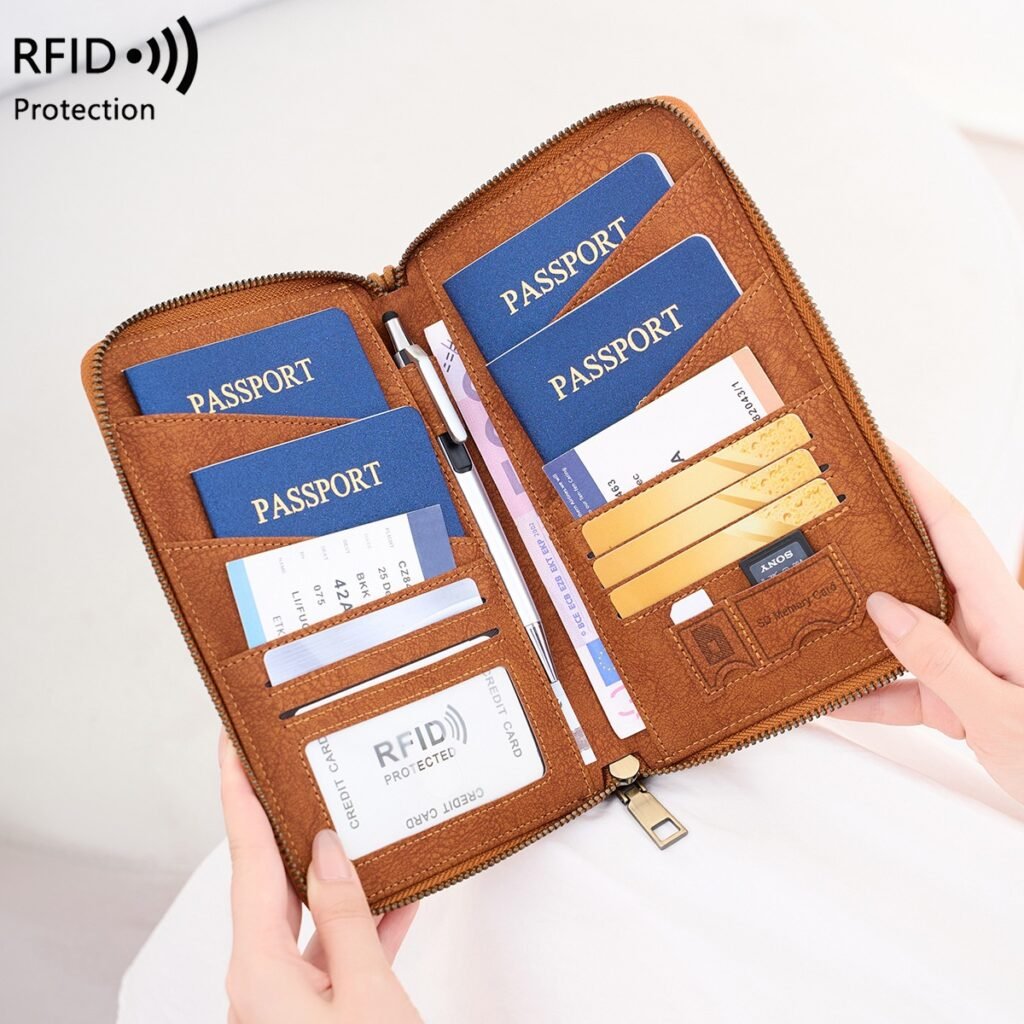
Travel involves a surprising number of small, important, losable things: passports, boarding passes, ID cards, a bit of cash in two currencies, hotel confirmations, SIM cards, loyalty cards. Individually none of them is hard to carry. Together, spread across pockets and bags, they become a low-grade anxiety that follows you from check-in to passport control to the hotel desk.
It’s worse when you travel as a family, because now you’re the keeper of everyone’s documents, and a child’s passport buried in the wrong bag at the wrong moment is exactly the kind of thing that makes a calm trip stressful. A single travel document organiser solves this by giving every one of those items a fixed home. You stop searching because there’s only one place to look.
What “RFID-blocking” actually means
You’ll see “RFID-blocking” on a lot of travel wallets, and it’s worth understanding honestly rather than being sold a scare story.
Many modern passports and contactless bank cards contain a small chip that can be read at very short range by a wireless reader. An RFID-blocking case has a thin metallic shielding layer that blocks those signals, so the chips can’t be read while your documents are zipped inside. That’s the mechanism — simple and real.
The honest part: in the real world, wireless card theft from a pocket is uncommon, and the payment industry has added its own protections over the years. So think of RFID shielding not as protection from a constant threat, but as cheap, passive peace of mind — a feature that costs you nothing to use and closes off one small risk in crowded airports and stations. If a case you like has it, good. It shouldn’t be the only reason you buy, but it’s a sensible bonus on a wallet you’re already carrying through busy places.
How to choose the right one
Match the size to how you travel
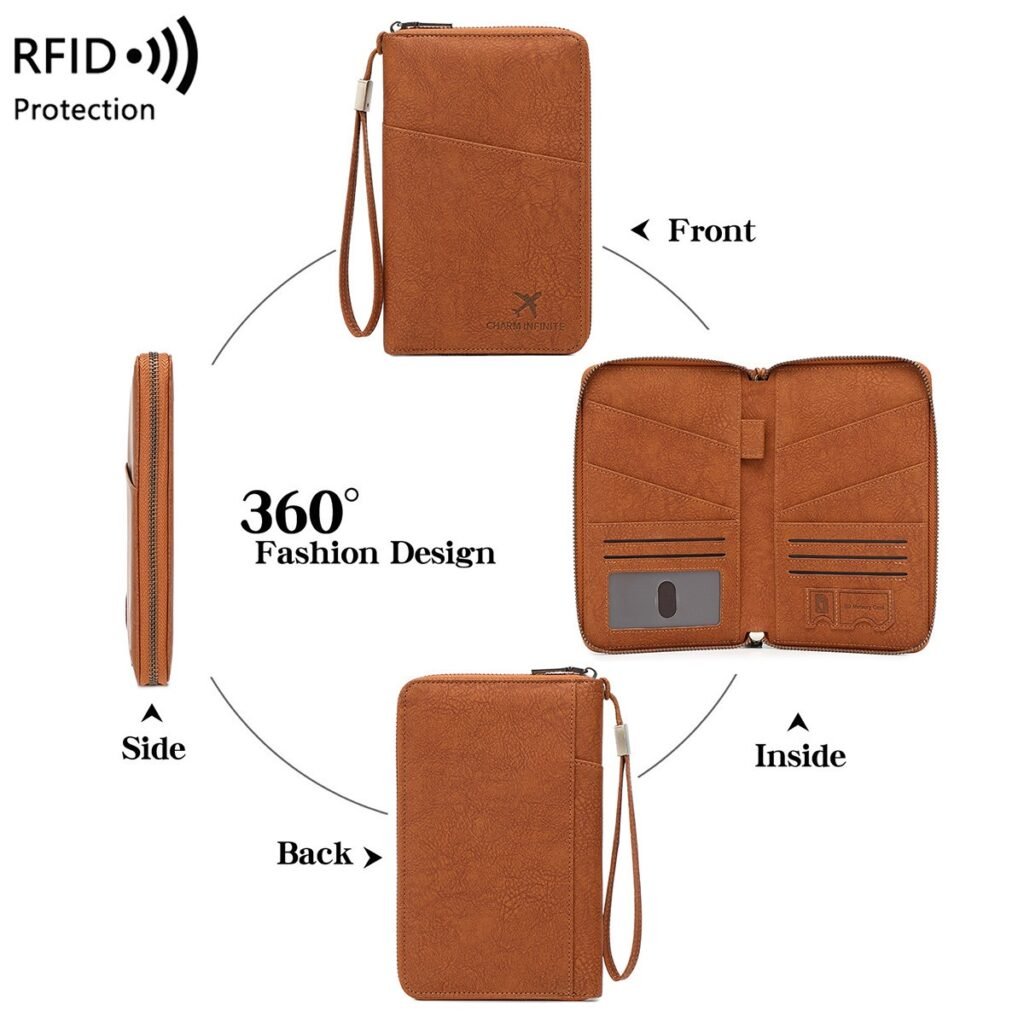
The big decision is capacity. A slim single-passport sleeve is neat if you travel solo and light. But if you carry documents for a partner or a whole family, you want a larger zippered organiser with multiple passport slots and full-length pockets for boarding passes. Buying a small one to save space and then not fitting everyone’s documents in is the most common regret.
Look for a full-length zip
An open-fold wallet spills its contents the moment you tip your bag. A full zip closure keeps everything sealed inside — which matters most in exactly the rushed, distracted moments when things fall out. This is the single feature I’d never skip.
Check the slot layout
Good organisers have dedicated places: passport pockets, a long ticket slot, card slots, a zip pocket for coins or a SIM. A case that’s just one big pouch technically holds everything but leaves you rummaging — which defeats the point.
Weight and material
You’ll carry this thing all day, so lighter is better. A good zippered passport organiser weighs around 200 grams empty and wipes clean with a damp cloth. Avoid anything heavy or stiff enough that you’d leave it behind.
The mistakes people make
Buying too small
Covered above, but it bears repeating because it’s the number one regret. When in doubt, size up. An organiser that comfortably holds the whole family’s documents is far more useful than a sleek one that only fits yours.
Putting everything valuable in one place — then losing the case
The flip side of great organisation is that a single lost case now costs you everything at once. Use the organiser to move through airports and checkpoints, but at the hotel, split things up: passports in the safe, only what you need for the day in the case. Concentration is a convenience while you travel and a risk if you’re careless.
Forgetting it dictates a colour system
If two people in your group carry identical black cases, you’ll mix them up. This is a small thing that becomes a real annoyance. Pick distinct colours per person — it turns “whose is this?” into a glance.
Who gets the most from one
Frequent flyers, obviously. But the people who benefit most are families and anyone travelling for something like Umrah or a group trip, where you’re suddenly responsible for a stack of documents that aren’t all yours. Keeping them together, in order, in one zip, is the difference between gliding through a checkpoint and holding up the queue while you search.
Making it last
A travel organiser lives a hard life — jammed into bags, pulled out with damp hands, left in hot cars. A few small habits keep it looking good and working for years. Empty it out between trips rather than leaving cards and receipts to pile up and stretch the slots. Wipe the outside with a damp cloth when it picks up airport grime, and let it dry fully before you put it away so nothing goes musty inside. Keep it out of prolonged direct sun, which fades colour over time — an easy thing to forget when it’s sitting on a dashboard. None of this is demanding; it’s the same care you’d give a good wallet, and it’s why a well-chosen organiser outlasts the cheap fold-over sleeves people replace every year.
It’s also worth thinking about who in the group carries what. On a family trip, one document organiser held by the designated “document person” beats everyone carrying their own loose passport — but a second case for a travelling partner, in a different colour, adds a sensible backup so you’re not putting every egg in one basket. The colour options make that split easy to manage at a glance.
Is it worth it?
For the price of a couple of airport coffees, yes — provided you buy the right size and use it sensibly. It won’t make your flight cheaper or your layover shorter. It’ll just mean that at every desk, every gate and every border, the thing the official asks for is exactly where you expect it. On a stressful travel day, that small certainty is worth a lot more than it costs.
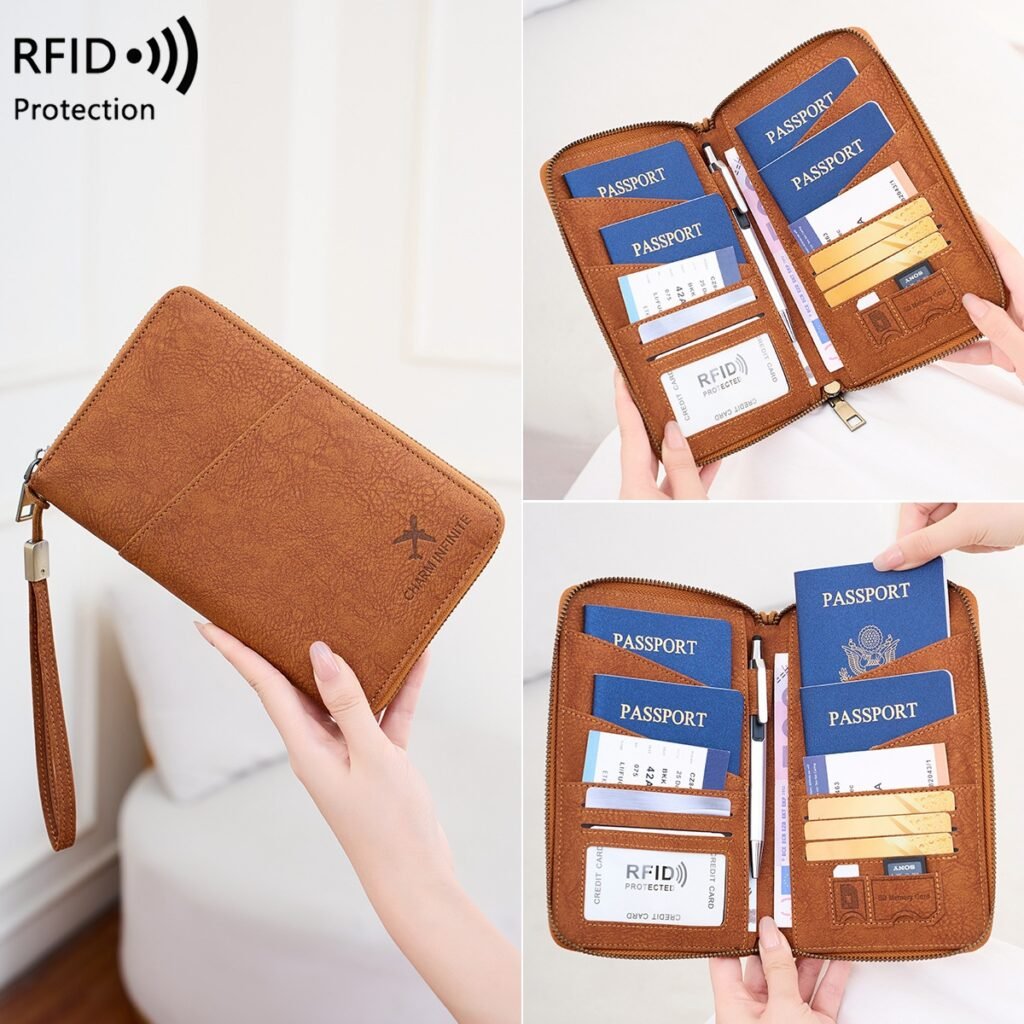
RFID Passport Holder & Travel Document Organizer
A zippered case for the whole family’s passports, tickets, cards and cash, with an RFID-blocking lining. Eight colours, light and slim. secure checkout across the GCC.
$17.99
Submit Your Story
Have a travel-organisation trick that saved you at a border, or a horror story about losing a document mid-trip? I’d love to hear it — what you carry, how you keep it in order, and any mistake you made so others can avoid it. Share your story through our contact page and we may feature it in a future article.
How This Article Was Created
This article was written from personal experience travelling with a family and from the practical features of the travel organiser we stock. The section on RFID blocking is deliberately measured: it describes how the shielding works and notes that real-world wireless card theft is uncommon, rather than overstating the threat. No statistics were invented for this piece, and nothing here is legal or security advice beyond everyday common sense about keeping valuables safe while travelling.