Motorcycle Dash Cams: A Practical Buying Guide
Why a car dash cam does not translate to a motorcycle, what IP ratings actually mean at speed, and the mounting detail most riders overlook.
 By Ahamed Khan
In this guide10
A car dash cam sits behind a windshield, shielded from rain, dust and direct sun. A motorcycle has none of that. The camera sits exposed to weather at speed, vibrates constantly with the engine and road, and bakes in direct sunlight with no cabin to diffuse the heat. Using a car-style dash cam on a bike, or skipping a dedicated one because “any action camera should work,” is how people end up with a camera that fogs, cuts out, or simply fails within a season.
A motorcycle-specific dash cam is built around that difference from the start. Here is what actually matters when choosing one, and why the specs that sound similar to a car dash cam are not actually equivalent.

Why Waterproofing Ratings Are Not All Equal
IP ratings look like a simple number, but the two digits mean different things: the first is dust resistance, the second is water resistance. IP66 means protected against powerful water jets from any direction, which covers rain and road spray at speed. IP67 adds protection against brief full submersion, useful if the bike ever goes down in standing water. For a motorcycle specifically, the second digit matters more than most buyers realise, since a windshield-mounted car dash cam is rated for splashes, not the direct, sustained spray a motorcycle camera faces in real rain at highway speed.

Loop Recording and Storage
Loop recording means the camera keeps filming continuously, automatically overwriting the oldest footage once the memory card fills, so you never have to manually manage storage or remember to clear space before a ride. A larger card simply means more hours of history before old footage gets overwritten; 32GB typically holds somewhere in the range of several hours of continuous 1080p footage depending on bitrate, which is enough for most day rides, while frequent long-distance riders benefit from stepping up to a larger card.
Most cameras also support a G-sensor, which automatically locks and protects the current clip if it detects a sudden impact, so that footage of an incident does not get overwritten by the loop before you have a chance to save it manually.
Mounting and Vibration
A camera that is perfectly sharp on a test bench can still produce blurry footage once mounted, because motorcycle vibration at speed is far more constant and higher-frequency than anything a car transmits to a windshield mount. A secure handlebar or mirror-stem mount with some vibration dampening in the bracket itself makes a bigger difference to footage quality than almost any camera spec. Check the mounting hardware before buying, not just the camera, since a flimsy included mount is one of the most common reasons riders end up disappointed with otherwise capable cameras.
Night Vision: What It Actually Improves
Night vision on a dash cam does not mean the footage looks like daylight after dark. It means the sensor is more sensitive to available light, so a plate number or another vehicle’s outline stays identifiable in low light that would otherwise just look like noise on a standard sensor. For night riders or anyone who regularly rides at dawn or dusk, this is worth prioritising over resolution; a lower-resolution camera with a genuinely better low-light sensor often records more USEFUL footage after dark than a higher-resolution one that was not built for it.
Battery and Power Draw
Unlike a car dash cam that almost always wires into the vehicle’s constant power, many motorcycle cameras run on an internal battery for portability, which brings its own trade-off: a built-in battery typically records for one to three hours before needing a recharge, fine for a commute but not for a full day’s ride. If you ride long distances regularly, check whether the model supports hardwiring to the bike’s electrical system as an option, since that removes the battery-life ceiling entirely and the camera simply runs as long as the engine does.
A Common Misconception
“More megapixels means better footage” is not reliably true once you factor in low light and compression. A camera that records at a lower resolution but handles motion and low light well can produce clearer, more useful footage for an insurance claim or dispute than a higher-resolution camera that smears detail in anything other than bright daylight. Resolution is one spec among several, not the deciding one.
Buying Online With Confidence
Motorcycle dash cams span a wide price range on the GCC market depending on channels (single vs front-and-rear) and brand: single-channel models start around 25 to 70 US dollars, while dual-channel front-and-rear models from established brands, like this dual-channel model listed on Amazon.ae, commonly run from the mid-range upward. Checkout at AKNB Global is secure and encrypted, with the exact delivery cost and timeframe for your country shown before you confirm, and tracked delivery across Saudi Arabia, the UAE, Qatar, Kuwait, Bahrain and Oman. If you drive as often as you ride, our guide to car dash cams covers the four-wheel equivalent of this same decision.
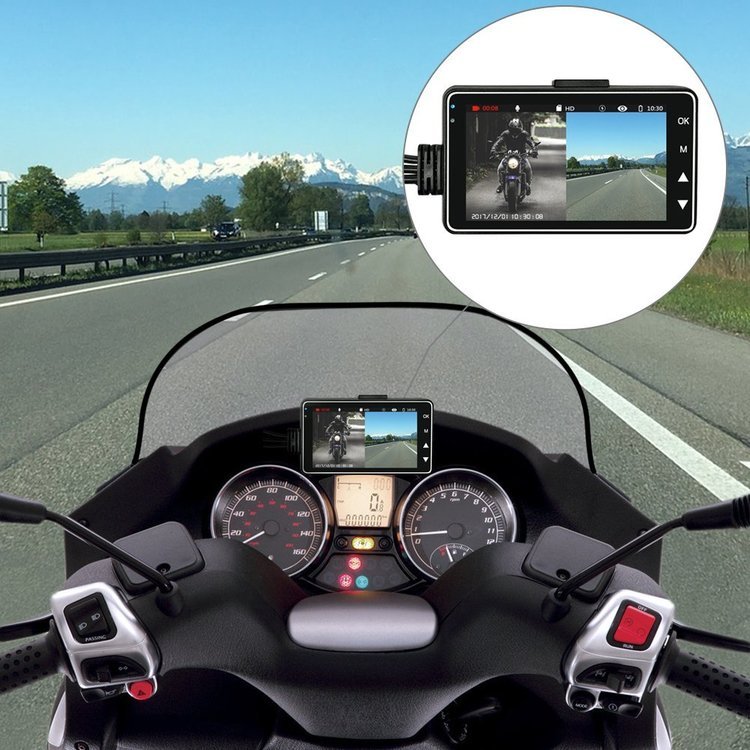
Motorcycle Dash Cam
A motorcycle dash cam that records the road ahead in loop so you always have footage of the ride, with night vision and IP66 waterproofing built to handle rain, dust and vibration on real roads. Card payments via secure checkout.
Price range: $87.99 through $135.99
View productSubmit Your Story
Has dash cam footage ever settled a dispute or an insurance claim for you? Share it through our contact page and we may feature it in a future update to this guide.
How This Article Was Created
This guide is based on general, well-established practice around IP water-resistance ratings, loop recording and motorcycle camera mounting. Pricing context was checked directly against live Amazon.ae listings at the time of writing, linked above. We do not publish invented statistics or unverifiable claims.
Frequently Asked Questions
Are motorcycle dash cams waterproof?
Purpose-built motorcycle cameras are weather-sealed to a rating like IP66 or IP67 so they handle rain and spray, unlike most car dash cams. Always confirm the rating.
Do motorcycle dash cams record front and rear?
Many are two-channel kits with a front and rear camera, which captures incidents from both directions. Single-channel front-only options cost less.
How are motorcycle dash cams powered?
Most wire into the bike so they start with the ignition. Look for parking protection and a capacitor rather than a battery, since heat shortens battery life.