I used to think a soggy bar of soap was just something you put up with. You buy a decent bar, set it in a dish by the sink, and within days it has slumped into a soft grey puddle. Half of it never touches your hands — it simply dissolves and drains away.
It bothered me enough to start paying attention. And once I understood why it happens, the fix turned out to be simple.
Why bar soap turns to mush
Soap is designed to dissolve. That is the entire point — it has to break down in water to lift oils off your skin. The problem is that it cannot tell the difference between the water on your hands and the water sitting underneath it in a dish.
Leave a bar in standing water and it keeps dissolving long after you have walked away. This is why the underside of a bar goes soft first: it is the part in permanent contact with moisture.
How bad does it actually get?
There are roughly three stages, and most people recognise all of them.
Stage one: surface softening
The bar feels slightly tacky. Nothing is really wrong yet — it will firm up again if it gets a chance to dry.
Stage two: the slump
The base has gone gel-like and the bar loses its shape. At this point you are losing soap steadily. It still washes, but you are paying for something that is draining away.
Stage three: the split
The bar cracks into pieces, the small ones vanish down the plughole, and what is left sits in a cloudy film at the bottom of the dish. Most people throw this away and open a new bar.
The frustrating part is that stage three usually arrives long before the soap is actually used up.
What actually helps
These are the things that genuinely make a difference, roughly in order of effort.
Let it drain
A flat dish is the worst possible surface. Anything with ridges, slots or a raised grid lets air reach the underside. This alone extends a bar noticeably.
Move it away from the spray
Soap kept inside a shower enclosure is constantly re-wetted, even when nobody is using it. A shelf outside the spray zone stays far drier.
Keep it enclosed and dry between uses
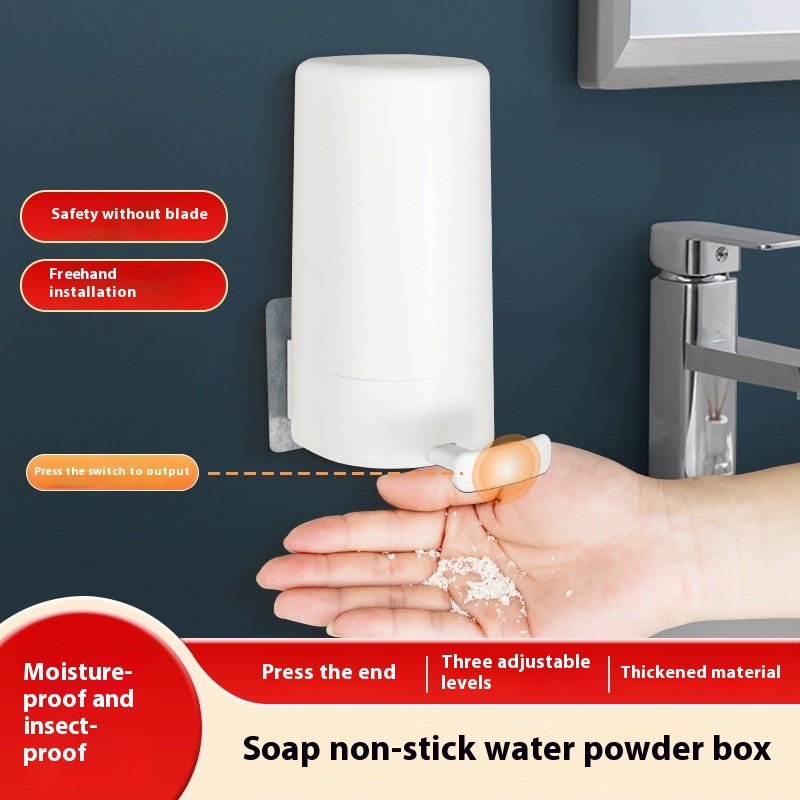
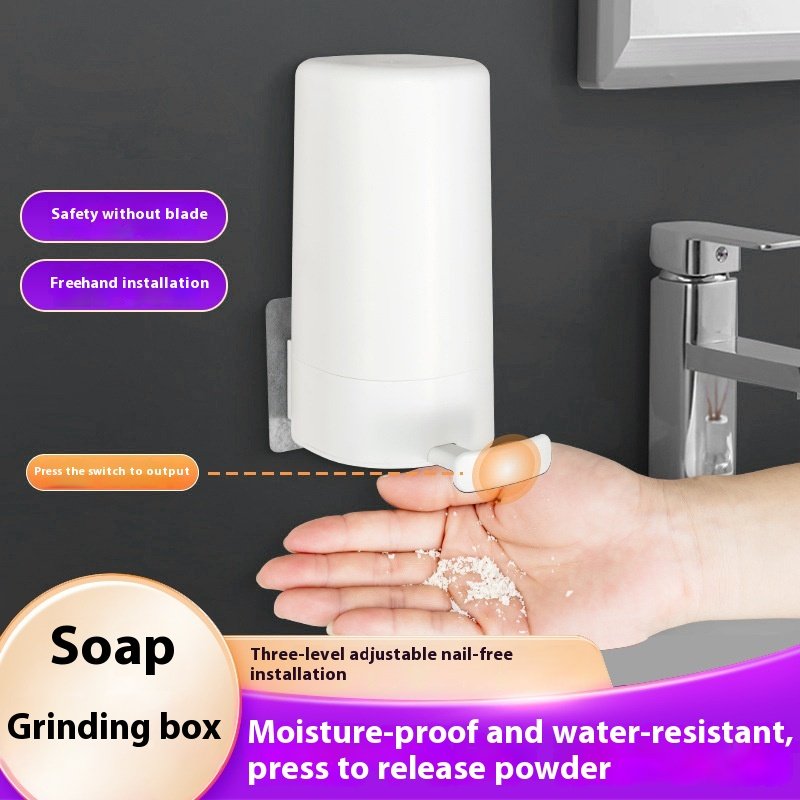
This is the step most people skip. If the bar lives in a sealed container that keeps steam out, it stays hard, and a hard bar barely wastes at all. A grinder-style dispenser takes this further — the bar stays sealed and you shave off only the powder you need.
Use less than you think
Lather comes from agitation and water, not from quantity. Most of us take far more soap than a wash requires, largely out of habit.
What does not help
- Cutting the bar into pieces. More cut surfaces means faster dissolving, not slower.
- Squashing leftovers onto a new bar. They rarely bond properly and the join traps water.
- Buying a bigger bar. A bigger bar in a wet dish simply gives you more soap to lose.
Where you keep it tells you what will go wrong
The location of the problem is a useful clue.
- Soft only on the bottom — standing water. Change the dish.
- Soft all over — humidity. The bathroom is not clearing steam.
- Cracked and crumbling — repeated wet-dry cycling, common near a window or in air conditioning.
- Slimy film around it — soap scum, which is dissolved soap reacting with minerals in hard water. Much of the Gulf has hard water, so this is common here.
When to stop reading and just replace it
Some situations are not worth troubleshooting.
- Anything visibly growing on the bar or dish. Discoloured patches or a musty smell mean bacteria and mould have taken hold in the residue. Throw it out and clean the dish thoroughly.
- Shared bars in a household where someone has a skin infection. Move to a dispenser or liquid soap until it clears.
- A bar that has sat in water for days. It has absorbed more than it can recover from.
None of this is dramatic. But a soap dish is a warm, wet, residue-rich place, and it deserves the same attention as any other surface you touch daily.
Three things people get wrong
“Bar soap is unhygienic”
The bar itself is not the issue. Public health guidance has long held that ordinary handwashing with soap and water is highly effective, and the mechanical action of washing and rinsing is what removes microbes. What matters far more is that the bar drains and dries between uses — a bar sitting in a pool of water is a different proposition to a dry one.
“Liquid soap is more economical”
It usually is not. Pump dispensers deliver a fixed dose regardless of what the task needs, and you are paying to ship water and packaging. A bar that stays dry tends to outlast an equivalent spend on liquid — the waste problem is storage, not the format.
“Antibacterial soap works better”
For everyday handwashing, regulators have found no evidence that antibacterial bar and liquid soaps outperform plain soap and water. The US Food and Drug Administration ruled in 2016 that manufacturers had not demonstrated these ingredients were safer or more effective than plain soap for consumer use. Plain soap, used properly, is enough.
What to expect over the coming months
If you change nothing, the pattern repeats: a bar lasts a couple of weeks, most of it goes down the drain, and soap scum builds up on the dish and basin. Over a year that is a meaningful amount of money for something you never used.
Change the storage and the difference shows up within the first bar. It keeps its shape, it does not leave a film, and it lasts considerably longer — because you are finally using the soap rather than dissolving it.
The longer-term benefit is the one people mention most: the basin area simply stays cleaner. No puddle, no scum ring, no weekly scrub of a slimy dish.
Submit your story
I would genuinely like to hear how you handle this. Have you found a soap that holds up better in humid weather? A storage trick that works in a small bathroom with no ventilation? Or a shared-bathroom setup that keeps everyone happy?
Send it through our contact page. I read everything, and the practical tips readers send are often better than anything I would think of alone.
How this article was created
I wrote this from hands-on experience with the problem and from published guidance rather than invented figures. The point about antibacterial soap reflects the US Food and Drug Administration’s 2016 final rule on consumer antiseptic washes, which found insufficient evidence that these ingredients outperform plain soap and water for everyday use. The handwashing points reflect long-standing public health guidance from bodies including the CDC and WHO.
Where I did not have a verifiable figure, I have not invented one. You will not find survey percentages or lifespan statistics here, because I could not source them credibly. If you spot something you believe is wrong, please tell me and I will correct it.