Cat Litter Mats: A Practical Buying Guide
How litter-trapping mats actually work, what size fits your setup, and the one thing most owners get wrong about multi-cat households.
 By Ahamed Khan
In this guide10
Litter tracked across tile and carpet is one of those problems every cat owner eventually tries to solve, usually after finding gritty litter underfoot in the hallway for the third time in a week. The fix is not a better litter or a taller box. It is almost always what sits between the box and the rest of your floor.
A cat litter mat placed right at the box entrance catches the grains stuck to your cat’s paws before they ever reach the rest of the house. It sounds almost too simple, but the mechanics of how these mats work, and the mistakes that make them useless, are worth understanding before you buy one.
How a Trapping Mat Actually Works
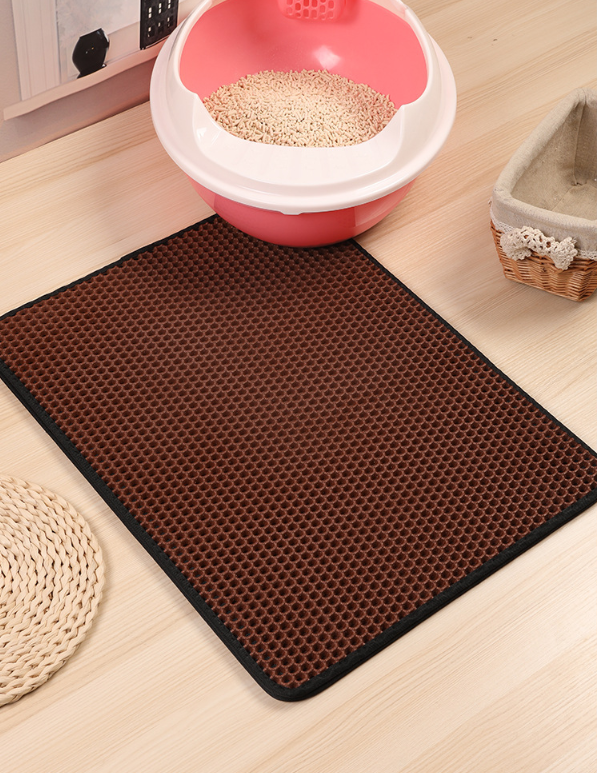
The honeycomb double-layer design that most good mats use is not decorative. The top layer has holes just large enough for stray litter granules to fall through when your cat steps on them, but too small for the granules to climb back up. They collect in the bottom layer, out of sight, until you shake the mat out over the litter box. A flat mat with no structure just moves litter around rather than trapping it.
Material matters almost as much as structure. EVA foam is soft enough that cats do not avoid stepping on it (a real issue with stiff plastic mats), waterproof so it does not absorb odor, and flexible enough to shake out over a bin without cracking.

Getting the Size Right
A mat that is too small defeats the purpose, since most of the litter transfer happens in the first two or three steps after leaving the box. As a rough guide: a small mat around 30x30cm suits a single small cat in a tight utility space, a medium 40x50cm covers most single-cat households, and anything larger (45x60cm and up) is worth it if you have more than one cat or a box tucked in a corner your cat has to walk further from.
It is also worth placing the mat so the box sits fully on top of it rather than just in front, if your floor space allows. That catches litter kicked out during digging, not just litter stuck to paws on the way out.
Keeping a Mat Working Long-Term
Shake it out daily, directly over the litter box, and it keeps working indefinitely. Skip that step for a week and the bottom layer fills up, so the mat stops trapping anything new and just sits there looking dirty. For a deeper clean, EVA mats generally tolerate a rinse under a tap or a quick wipe with a damp cloth; always let them air dry fully before putting them back down, since trapping moisture against a floor invites mildew.
What a Mat Will Not Fix
Worth being upfront about: a trapping mat reduces tracked litter, it does not eliminate it completely, and it does nothing for odor control, which is a separate problem solved by the litter itself and how often you scoop. If your cat is a digger who flings litter well past the mat’s edges, sizing up and making sure the box itself sits on the mat (not just beside it) closes most of that gap, but a cat determined to fling litter two feet in every direction will always need a bit more cleanup than the mat alone can absorb.
Multiple Cats, Multiple Mats
In a multi-cat household the usual advice for litter boxes themselves (one per cat, plus one extra) does not strictly apply to mats, since cats will happily share a mat the way they will not always share a box. What matters more is placement: if boxes are spread across different rooms, each one needs its own mat rather than relying on a single mat doing double duty near one box while the other sits bare. A color per mat (if boxes are in different rooms) also makes it easy to keep track of which one needs shaking out next during a quick cleaning round.
A Myth Worth Correcting
“Any mat by the litter box works” is the assumption that leads most people to buy a plain bath mat or an offcut of carpet instead of a purpose-built trapping mat. Flat fabric does catch some loose litter, but it does not SEPARATE trapped litter from your floor, so every time the mat gets kicked or shaken it releases everything back out. A double-layer design is the difference between a mat that reduces tracking and one that just delays it by a few seconds.
Buying Online With Confidence
Litter mats are a genuinely low-cost category: basic mats on the GCC market run from roughly 5 to 15 US dollars, with honeycomb double-layer designs like this one listed on Amazon.ae sitting toward the upper end of that range once you factor in the double-layer build quality. Checkout at AKNB Global is secure and encrypted, with the exact delivery cost and timeframe for your country shown before you confirm, and tracked delivery across Saudi Arabia, the UAE, Qatar, Kuwait, Bahrain and Oman. If you are setting up a full feeding and litter routine, our guide to automatic pet feeders is a useful next read.

Pet Cat Litter Mat
A washable EVA litter mat that traps litter at the door of the box instead of letting it scatter across your floor, with a soft double-layer design that's gentle underpaw and easy to shake clean daily. Card payments via secure checkout.
Price range: $21.99 through $27.99
View productSubmit Your Story
Found a placement trick or cleaning routine that keeps your floors litter-free? Share it through our contact page and we may feature it in a future update to this guide.
How This Article Was Created
This guide is based on general, well-established pet-care practice around litter mat design, sizing and cleaning. Pricing context was checked directly against live Amazon.ae listings at the time of writing, linked above. We do not publish invented statistics; where we were not confident in a figure, we described it as a rough guide rather than an exact number.
If you are still comparing options, our cat tree for indoor cats guide breaks down what matters before you buy.
Frequently Asked Questions
Do cat litter mats really reduce tracking?
Yes. A textured or honeycomb mat catches litter from your cat paws as they step off, so far less scatters across the floor. No mat stops it completely.
What material is best for a litter mat?
Soft EVA foam is gentle on paws and easy to shake out, while rubber-backed mats stay put. Pick one large enough to sit in front of the box.
How do you clean a cat litter mat?
Shake or vacuum loose litter daily, and most mats can be rinsed or wiped down. Waterproof layers stop urine soaking through to the floor.