
I ignored my neck for about two years. I worked from a laptop on a kitchen table, then a sofa, then a desk, and by early evening there was a dull ache across my shoulders that I put down to stress. It was not stress. It was the angle of my head.
Once I understood the mechanics, the fix took about a week to feel. Here is what is actually going on, and what genuinely helps.
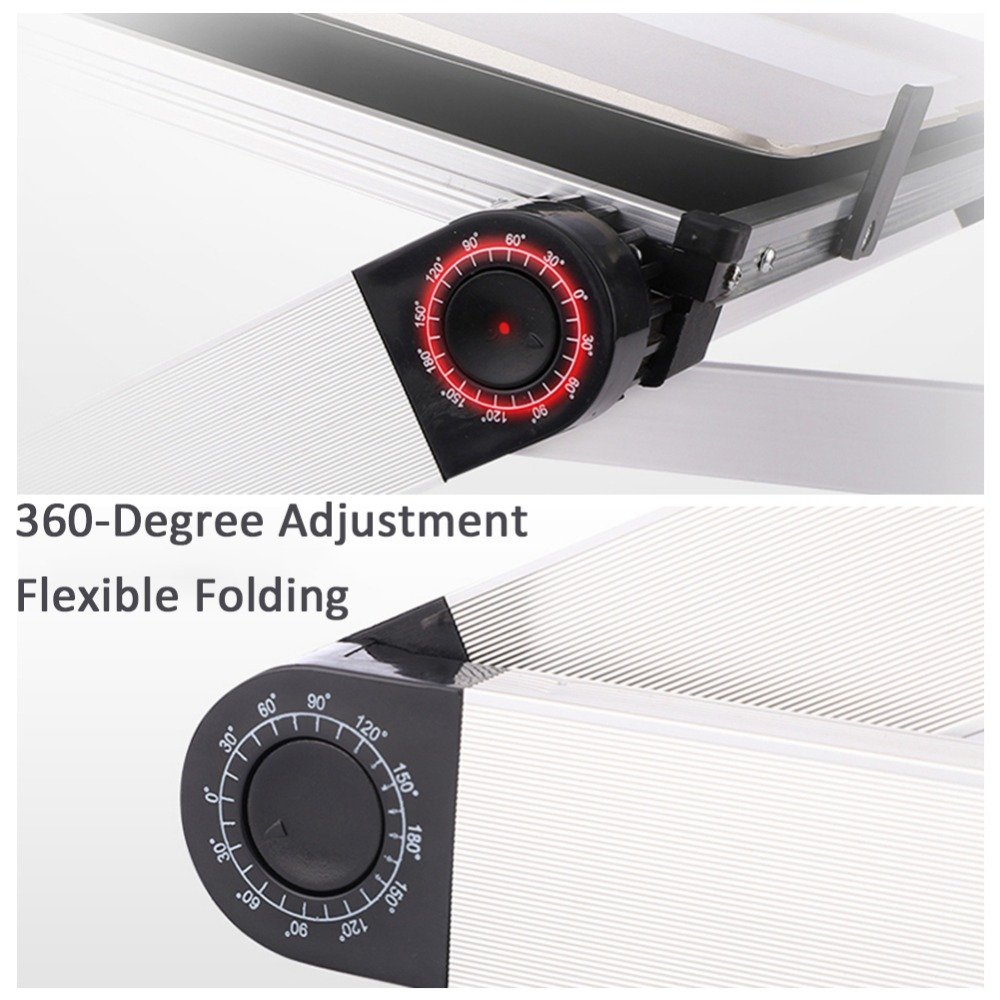
Why laptops hurt necks
A laptop welds the screen to the keyboard. That single design decision forces a compromise: either the keyboard sits at a comfortable height and the screen is too low, or the screen is at eye level and you cannot type.
Almost everyone chooses the keyboard, and looks down all day.
Your head is heavy — roughly 4 to 5 kilograms. Held upright, your spine carries it efficiently. Tilt it forward and the muscles at the back of your neck take an increasing share of the load, holding it there for hours.

Three stages of the same problem
Stage one: end-of-day stiffness
Your neck feels tight by evening and loosens overnight. Easy to dismiss.
Stage two: it is there in the morning
The stiffness no longer clears with sleep. This is the point most people start noticing but still do nothing.
Stage three: it spreads
Ache across the shoulders, sometimes headaches at the base of the skull. At this point it is affecting your work, not just your comfort.
I reached stage two before acting. If you are already at stage three, the setup change still helps, but see a physiotherapist rather than relying on a stand alone.
What actually helps, in order
1. Raise the screen
The single highest-impact change. The widely taught guideline is that the top of the screen should sit at or just below eye level, so your gaze drops slightly rather than your head tipping forward.
2. Add a separate keyboard
This is the step people skip, and skipping it undoes the first one. If you raise the laptop and keep typing on its built-in keyboard, your arms end up too high and you trade a neck problem for a shoulder one. A stand and an external keyboard are one purchase, functionally.
3. Get the chair height right
Feet flat, knees roughly level with hips, forearms roughly parallel to the floor. If your chair cannot manage that, a cushion and a box under your feet will do.
4. Move regularly
No posture is good for three hours. Standing up every half hour does more than any accessory.
What does not help
- A stack of books. It raises the screen but blocks airflow underneath and slides at the worst moment.
- Working from bed with a pillow. The most comfortable option for twenty minutes and the worst for two hours.
- Buying a bigger monitor and leaving it low. Size is not the issue; height is.
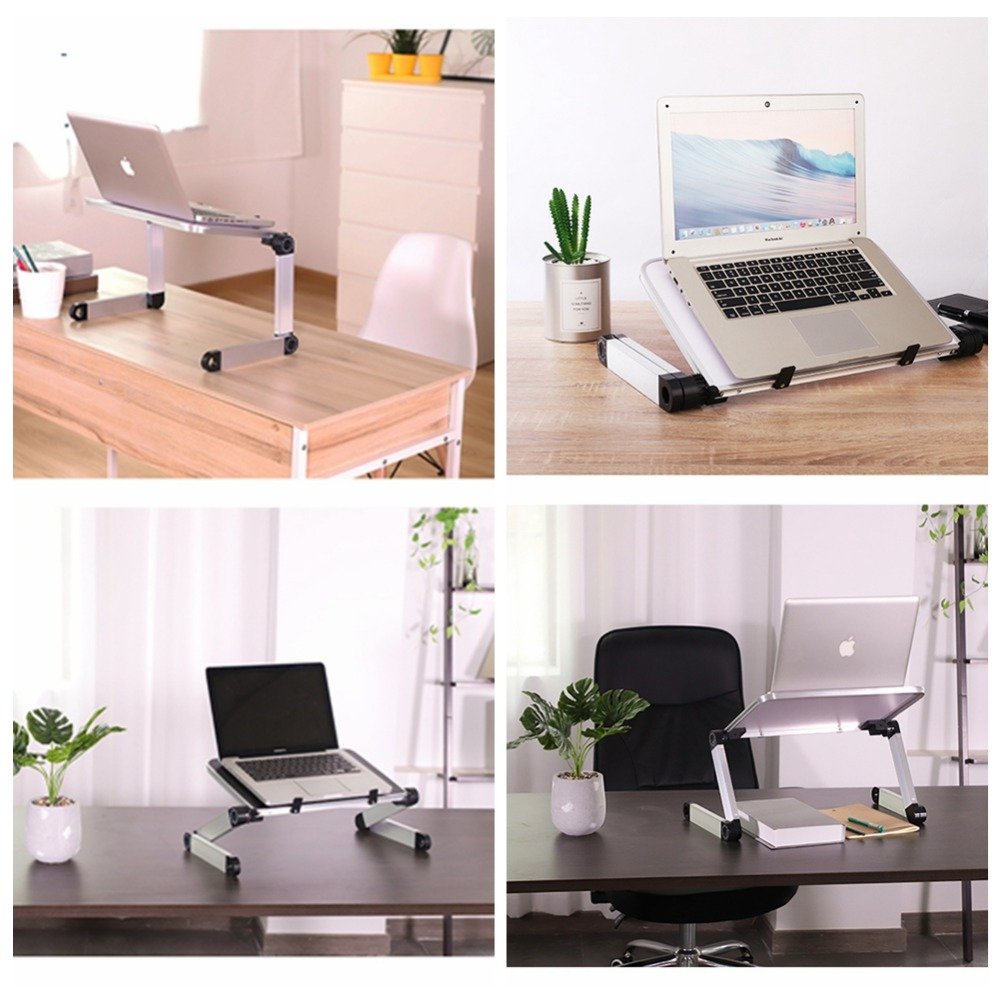
- A stand you cannot adjust. Fixed-height stands suit one person at one desk. If you move between spaces, adjustability matters.
Where the ache sits tells you something
- Back of the neck — classic forward head posture. Screen too low.
- Between the shoulder blades — usually reaching forward for a keyboard that is too far away.
- One shoulder only — often mouse position, or a laptop set off-centre.
- Wrists and forearms — keyboard height, not screen height. Lower the typing surface.
When to stop adjusting and see someone
A stand is an ergonomics tool, not treatment. Please see a doctor or physiotherapist if you have:
- Numbness, tingling or weakness in an arm or hand
- Pain that radiates down the arm
- Neck pain that wakes you at night
- Headaches that are new, frequent or worsening
Those symptoms can indicate nerve involvement, and no amount of desk rearranging is the right response. I am writing about equipment, not medicine — that distinction matters here.
Three misconceptions
“Good posture means sitting rigidly upright”
Holding any single position rigidly creates its own fatigue. What ergonomics guidance actually encourages is a neutral, relaxed position and regular movement. The best posture is the next one.
“Standing desks solve everything”
Standing all day brings its own problems — leg and lower back fatigue. The benefit comes from alternating, not from standing permanently.
“It is too late, the damage is done”
Posture-related muscular discomfort generally responds well to changing the underlying cause. This is not a permanent structural verdict. It is worth fixing the setup regardless of how long it has been wrong.
What to expect
The first two days often feel worse, not better. Muscles that have been shortened for months object to a new position. That usually settles within a week.
After a couple of weeks, most people notice the absence of something rather than a positive change — the evening ache simply stops arriving. That is the goal.
Left unchanged, the pattern rarely stays static. Discomfort tends to become more constant and start intruding on sleep, which is when it stops being an inconvenience.
Submit your story
I would like to hear what worked for you. Have you found a setup that survives switching between desk, sofa and travel? A keyboard that made the difference? A small change that fixed something stubborn?
Send it via our contact page.
How this article was created
This is written from personal experience and from long-standing, widely published ergonomic guidance — screen at or slightly below eye level, forearms roughly parallel to the floor, feet supported, and regular movement. Those principles appear consistently across occupational health guidance internationally.
I have not included statistics on how many people experience neck pain, because figures vary enormously by study and population and I could not cite one honestly. The section on when to seek help reflects standard advice to treat neurological symptoms as a medical matter. I am not a clinician; where symptoms are involved, please ask one.