The first time the desert cold caught me out, I was sitting on a folding chair somewhere past the last streetlight outside Riyadh, watching the fire die and pretending I wasn’t freezing. It was maybe 8°C. That sounds mild until you’ve felt it — dry Gulf cold with a bit of wind behind it, an hour after a 30°C afternoon. I had a hoodie and a windbreaker on and I was still miserable. The guy next to me, who did this every weekend, just reached into his jacket, pressed a button, and carried on with his tea.
That was my introduction to heated clothing, and it reshaped how I think about staying warm. So this is the guide I wish someone had handed me that night: what these jackets actually do, who they’re for, and the mistakes that make people give up on them too early.
Why a normal coat lets you down here
A regular coat doesn’t make heat. It traps the heat your body already produces. That works fine when you’re moving — walking, hiking, hauling gear. It works badly when you’re sitting still in the cold, which is exactly what we do on camping trips, fishing mornings, long drives and late nights outdoors. Sit still long enough and there’s less body heat to trap, so the coat has less to work with, and you get cold inside a jacket that’s technically doing its job.
The Gulf makes this worse in a sneaky way. Our winters are short and our days are warm, so nobody dresses for real cold. Then the sun drops, the temperature falls faster than you expect, and a thin jacket that was perfect at 5pm is useless by 9pm. I stopped fighting that with more layers and switched to a USB-powered heated jacket that makes its own warmth on demand — and the difference is that I dress for the afternoon and let the jacket handle the night.
How heated jackets actually work
The idea is old. According to the U.S. National Highway Traffic Safety Administration, electrically heated clothing has been used by motorcyclists for decades to fight cold-weather fatigue, powered from the bike’s own battery. What changed recently is the power source. Instead of wiring into a vehicle, modern jackets run off the same 5V USB power bank you already use for your phone.
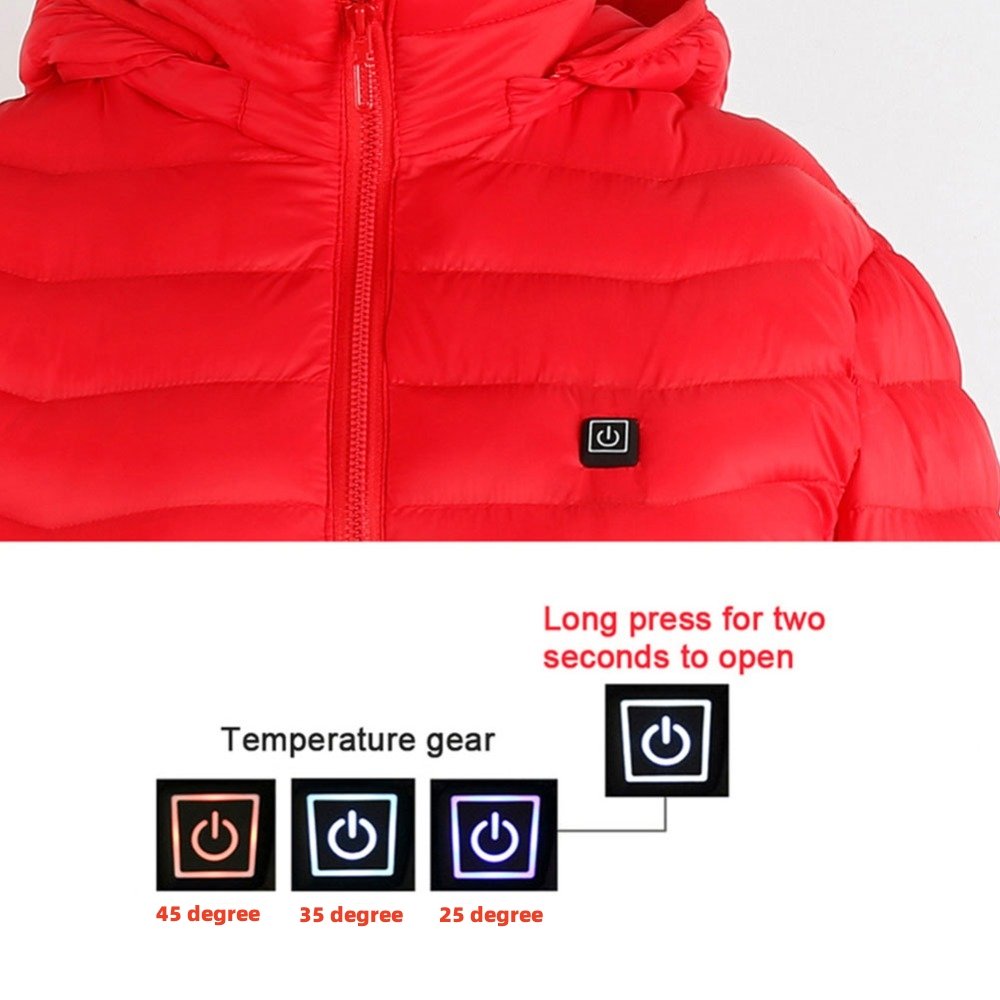
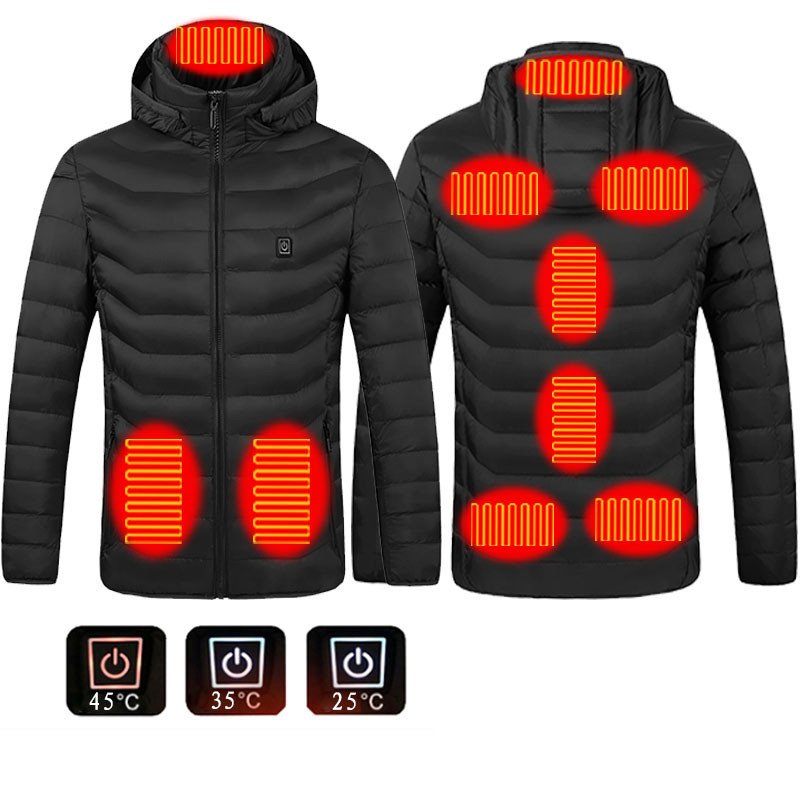
Thin carbon-fibre heating panels sit in the lining over the areas that make you feel cold fastest — the mid-back, and on higher-end models the collar, chest and lower back. You plug in a power bank, press a button, and those panels warm up in seconds. Most jackets give you three heat levels: a hot setting for the first freezing minutes, a medium cruise setting, and a low setting that just takes the edge off and stretches your battery for hours.
What the heat feels like
It’s not a furnace. It’s more like leaning back against a warm car seat — a steady, gentle heat spread across your back and core. On the high setting you feel it within about ten seconds. Because it warms your body directly instead of relying on trapped air, one light heated layer can replace a bulky coat, which is why so many people end up wearing them under a normal jacket in serious cold rather than instead of one.
Choosing the right one
Two numbers matter more than the marketing: how many heating zones the jacket has, and what powers it.
Heating zones. More zones means heat reaches more of your body. Two zones (back and stomach) is plenty for cool evenings, commutes and draughty rooms. Four adds the collar and mid-back for colder mornings. The eight- and nine-zone versions wrap heat around your neck, chest, back and waist, and that’s what you want for genuine winter, hunting, high-altitude trips or standing around at night in the cold.
The power bank. This is where people get tripped up. Most heated jackets do not include a battery — you supply a standard 5V/2A USB power bank. That’s usually a good thing: you avoid paying for a proprietary battery you’d only lose, and you can swap in a fresh pack to keep going. But you have to actually own one. A 10,000mAh pack will run a jacket for roughly 8 to 12 hours on the low setting. If you’d rather not think about it, buy the version that ships with the battery included.
The mistakes that make people quit
I’ve watched more than one friend buy a heated jacket, use it twice, and shove it in a cupboard. It’s almost always one of these:
Using a weak or slow power bank
The heating panels want a steady 2A. A cheap, low-output power bank can’t deliver it, so the jacket feels lukewarm and people assume it’s faulty. Check that your power bank does 5V/2A output before you blame the jacket.
Buying the wrong size
These jackets are cut to sit as a mid-layer, and a lot of them run small compared with what we’re used to in Gulf stores. If you’re between sizes, or you plan to wear something thick underneath, size up. A heated jacket that’s too tight can’t trap the warmth it makes.
Being scared of washing it
People assume electronics plus water equals disaster, so they never clean the jacket and it starts to smell. The heating element is sealed. Unplug the power bank, hand wash the jacket in cold water, and hang it to dry — don’t iron the panels. Treated normally, it lasts season after season.
Is it safe?
This is the question everyone asks, so let’s be straight about it. A heated jacket runs on 5V from a USB power bank — the same low voltage that charges your phone against your body all day. It is nothing like mains electricity. The realistic risks are the boring ones: use the charging cable and power bank the maker specifies, don’t keep wearing it if a panel ever feels unusually hot in one spot, and unplug it before washing. Treat it like any other rechargeable gadget and it’s an unremarkable piece of kit.
What to expect over a season
The honest picture: for the first week you’ll overuse the high setting because it’s fun, and you’ll drain your power bank faster than you’d like. After that you settle into the low or medium setting for most of the time and only reach for high in the first cold minutes. The novelty wears off; the usefulness doesn’t. Mine lives in the car from November onward and comes out for every camping trip, every early fishing start, and every flight to somewhere colder than home.
If you travel from the Gulf to a real winter — Europe, the mountains, anywhere that actually snows — this is the single most packable piece of warmth you can bring. It weighs almost nothing, squashes into a daypack, and does the work of a coat twice its size.
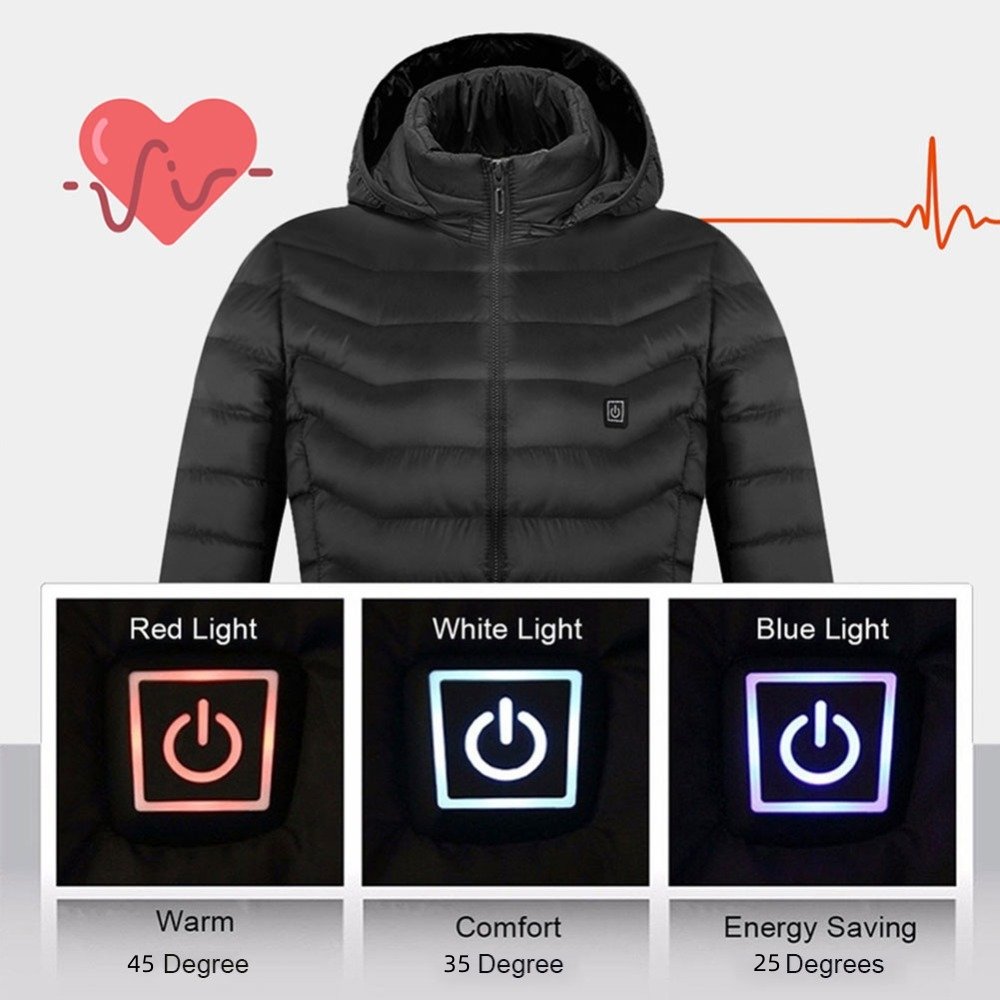
Winter Heated Jacket for Men — USB Rechargeable
Carbon-fibre heating, 3 heat levels, 2 to 9 zones. Runs off any USB power bank. Black, Blue or Red in sizes S–6XL, with secure checkout across the GCC.
Price range: $42.99 through $69.86
Submit Your Story
Have you used a heated jacket on a desert camp, a fishing morning or a winter trip abroad? I’d genuinely like to hear how it went — what worked, what you’d tell someone buying their first one, and any mistake you made so others can skip it. Share your story through our contact page and we may feature it in a future article.
How This Article Was Created
This article was written from personal experience with heated clothing in the Gulf and from the practical specifications of the jackets we stock. Where a factual claim is made about the history of heated clothing, it references publicly available guidance from the U.S. National Highway Traffic Safety Administration on heated motorcycle gear. Nothing here is medical advice; the safety notes reflect ordinary manufacturer guidance for low-voltage USB-powered garments. Product details such as heat levels, zones and battery runtime describe the items sold on this store and may vary slightly between models.