The quiet misery of pitting fruit by hand
You buy a bag of cherries with good intentions. Then you remember what stands between you and a bowl of them: the pitting. Twenty minutes hunched over the sink, digging stones out with a knife or a bent paperclip, red juice running down your fingers and freckling the worktop. By the time you finish, you have half a bowl, stained hands, and a strong feeling you will just buy the pitted ones in a jar next time.
Here is the thing worth saying plainly: this is a tool problem, not a you problem. Pitting fruit one piece at a time with whatever is in the drawer is slow and messy by design. Give the job the right tool and it stops being a chore you avoid.
How bad does it actually get?
Worse than it sounds, because the cost is spread out in small annoyances rather than one big one.
Your fingers pay for it
Cherry and pomegranate juice stains skin and grout, and a paring knife slipping around a small wet stone is exactly how kitchen nicks happen. The job is fiddly enough that most people rush it, which is when the knife slips.
You stop making the things you like
Fresh cherry jam, a proper fruit crumble, olives for a mezze board, stuffed dates for guests – all of it starts with pitting. When pitting is a 20-minute grind, those dishes quietly drop off your list. The tool you do not have shapes the food you do not make.
And there is the stone you do not want to bite
Hand-pitting misses stones, and a missed cherry or date stone is a genuine way to chip a tooth – and a real choking hazard for small children. Doing it by hand, in a hurry, is precisely when one gets left behind.
What actually helps
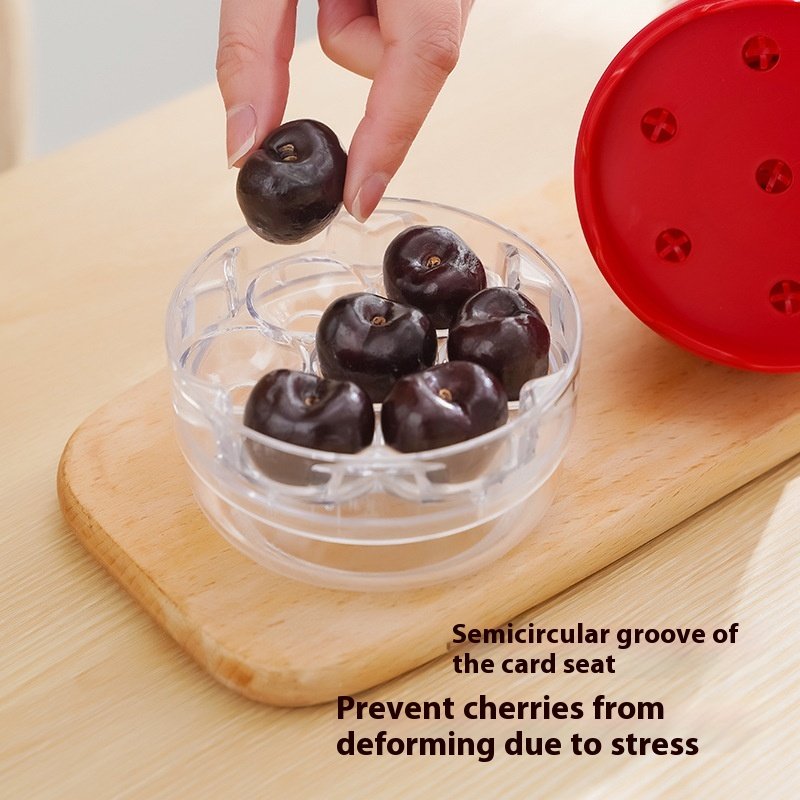
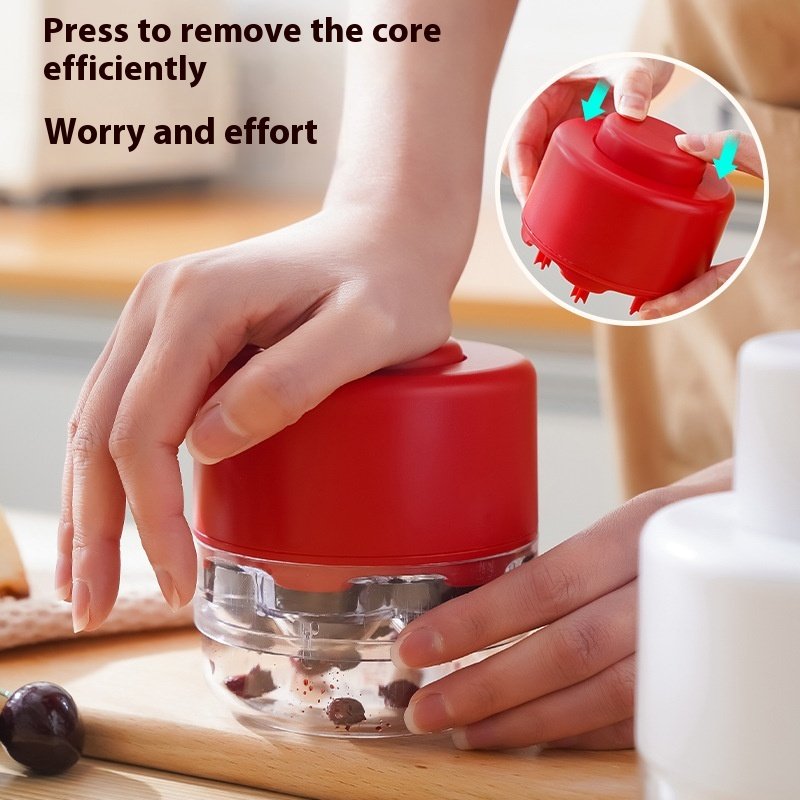
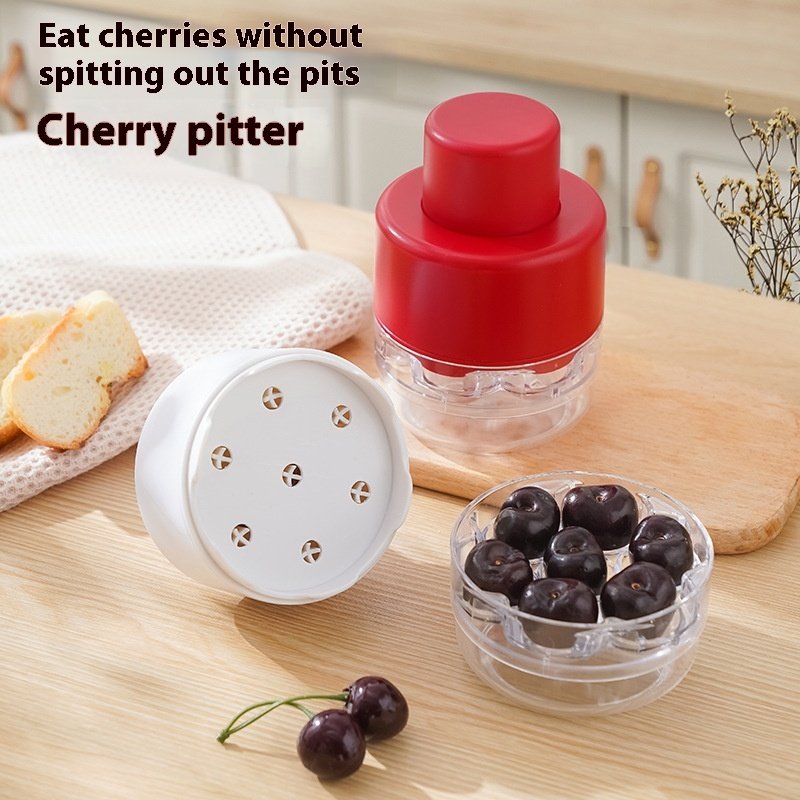
The fix is a dedicated press pitter, and the single biggest improvement is doing several at once instead of one at a time. A 7-hole press pitter like the one we stock holds a row of fruit and pushes the stones straight out with light pressure on the lever – a handful cleared in one squeeze, juice dropping into the tray rather than onto you.
Work in batches
Load the tray, press, tip the pitted fruit into your bowl, repeat. A bag of cherries that used to be a twenty-minute job becomes a couple of minutes, which is the difference between “I will make the jam” and “I did.”
Match the tool to what you actually pit
In a Gulf kitchen this is not really a cherry tool – it is an olive and date tool that also does cherries. The same pressing pins clear stones from olives for a platter and soften-pitted dates for stuffing or baking, two things many households here go through constantly. Small plums and jujube work too. If the only thing you pictured was summer cherries, you were underselling it.
Keep the juice where it belongs
Because the fruit sits in a tray while the stone is pushed through, the juice collects instead of spraying. Less mess on the counter, less on you, and more of the fruit actually making it into the dish.
What does not help
A sharper knife (still one at a time, still slippery). Chopsticks or a piping tip pushed through by hand (works, barely, and your thumb hates it). And squeezing cherries by hand “to pop the stone out,” which mostly produces pulp and a wall you now need to wipe.
Three things people get wrong
“A pitter is a single-use gadget”
It would be, if it only did cherries for a few weeks a year. Treated as an olive-and-date tool, it earns its drawer space all year round – which is the honest case for owning one.
“You need an expensive one”
For home use, a simple ABS press pitter does the job. The expensive part of pitting is the twenty minutes you keep spending by hand, not the tool.
“It only handles cherries”
Cherries, olives, small plums, jujube and soft dates all fit the pressing holes. Very large or rock-hard stones are the exception and may need a second press.
What to expect the first time you use it
The first bowl is the convincer. What used to be a resented twenty minutes is suddenly two, your fingers stay clean, and you find yourself thinking of things to make rather than reasons not to. Over the following weeks the real change is quieter: fruit you would once have skipped – a plate of olives, a tray of stuffed dates – becomes something you will actually bother to prepare.
It is the same small-kitchen logic we wrote about with the wall-mounted spice rack: the right tool, within reach, quietly changes what you cook. You will find more of these practical guides on our Learn hub.
Submit your story
I would like to hear how you handle pitting. A trick for getting stones out of soft dates cleanly? A favourite thing you make once cherries are actually pitted? Or a small kitchen tool that quietly changed a job you used to dread? Send it through our contact page. I read everything, and readers’ tips are often better than mine.
How this article was created
I wrote this from hands-on experience with the mess of pitting fruit by hand, and I have kept the claims to things that are plainly true rather than invented figures. The points about stones being a choking hazard for young children and a way to chip a tooth reflect ordinary food-safety common sense, not a specific statistic. Where I could not state a number honestly, I have not put one in – you will not find “saves X minutes” precision here, because the honest answer is “a lot, and it depends on the fruit.” If you think I have got something wrong, tell me and I will correct it.