Galaxy Projector Guide 2026: Easy Tips to Avoid a Bad Buy
A galaxy projector night light throws rotating planets across your ceiling. Here is how to choose one, place it and look after it.
 By Ahamed Khan
In this guide17
- 01Table of Contents
- 02What a galaxy projector actually does
- 03Decide where it will sit
- 04Check how many scenes you really get
- 05Understand the power setup
- 06Think about the room’s darkness
- 07Look at the rotation and the shape
- 08Pay attention to materials and build
- 09Mistakes to avoid
- 10Care and cleaning
- 11Who this kind of projector suits
- 12Delivery and what to check at checkout
- 13The bottom line on galaxy projector
- 14Submit Your Story
- 15How This Article Was Created
- 16Related guides
- 17Related products
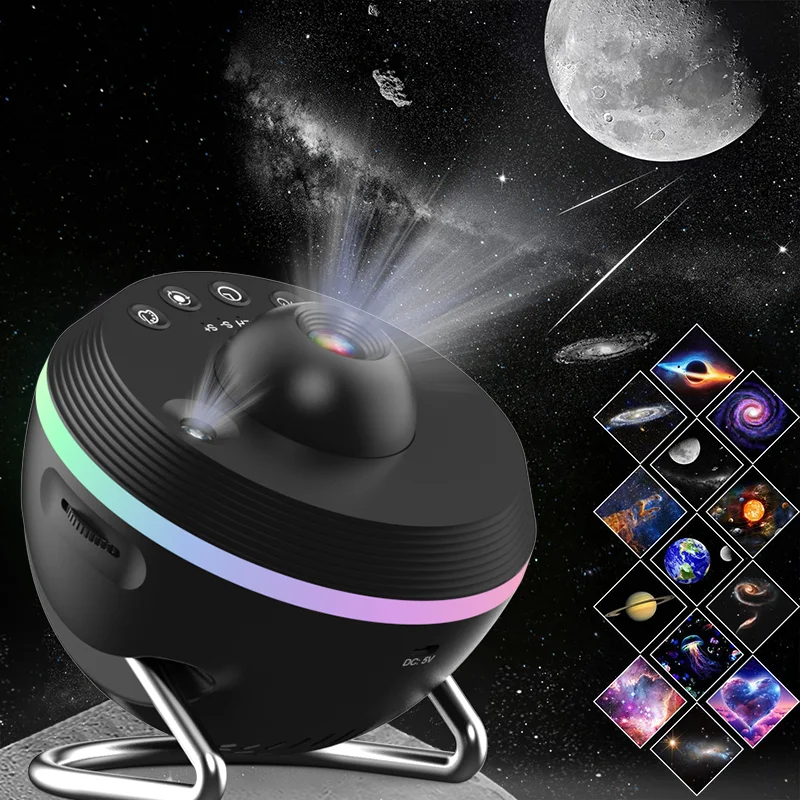
A galaxy projector night light turns a plain ceiling into a slow-moving space scene. It is a small ball-shaped device that throws planets and nebula patterns across a room, and it keeps turning while it does it. People buy one for a child’s bedroom, a nursery corner, a gaming setup or just a calmer evening at home.
Before you buy any projector of this type, it helps to know what separates a good one from a disappointing one. This guide walks through the practical points: where it sits, how the discs work, how it is powered, what the room needs to look like and how to look after it. If you want to see one that matches these points, the 13-in-1 galaxy projector with rotating planets is the listing we had in mind while writing.
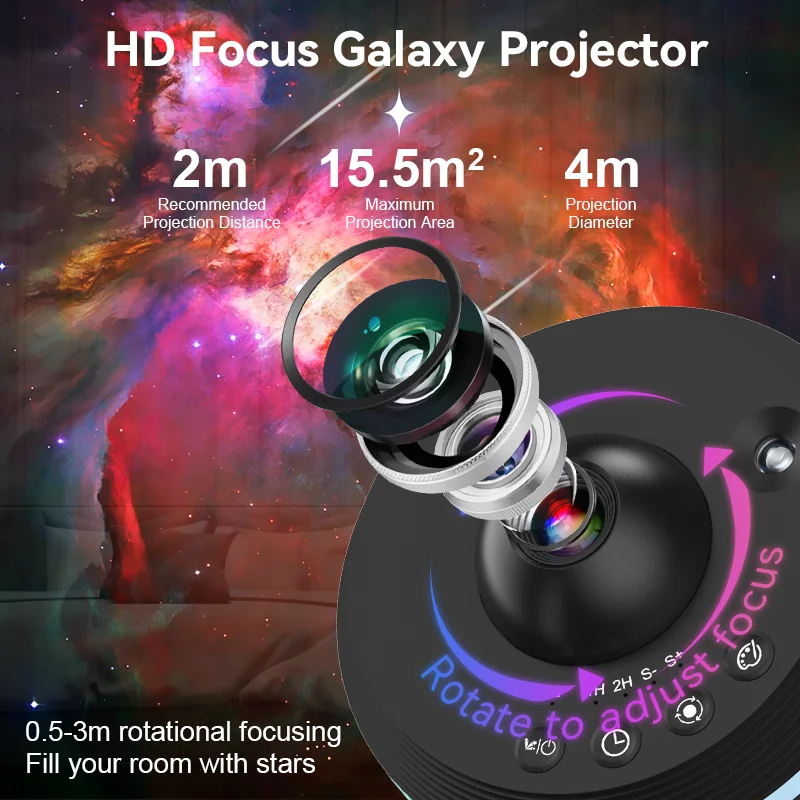
Table of Contents
What a galaxy projector actually does
The idea is simple. A small light sits inside a ball. A disc with a printed scene sits in front of the light, and the lens throws that scene onto the nearest wall or ceiling. Because the ball turns, the picture drifts across the surface rather than sitting still.
That movement is the main reason people choose this style over a plain lamp. A static glow fades into the background within minutes. A slowly rotating scene gives the room something to look at without being loud or bright. It is a decorative light first and a practical one second.
Decide where it will sit
Placement matters more than most buyers expect. The projector throws its image in whatever direction the lens points, so the surface it hits decides how good the result looks. A flat, plain, light-coloured ceiling or wall works best. Heavy texture, dark paint or busy wallpaper breaks the picture up.
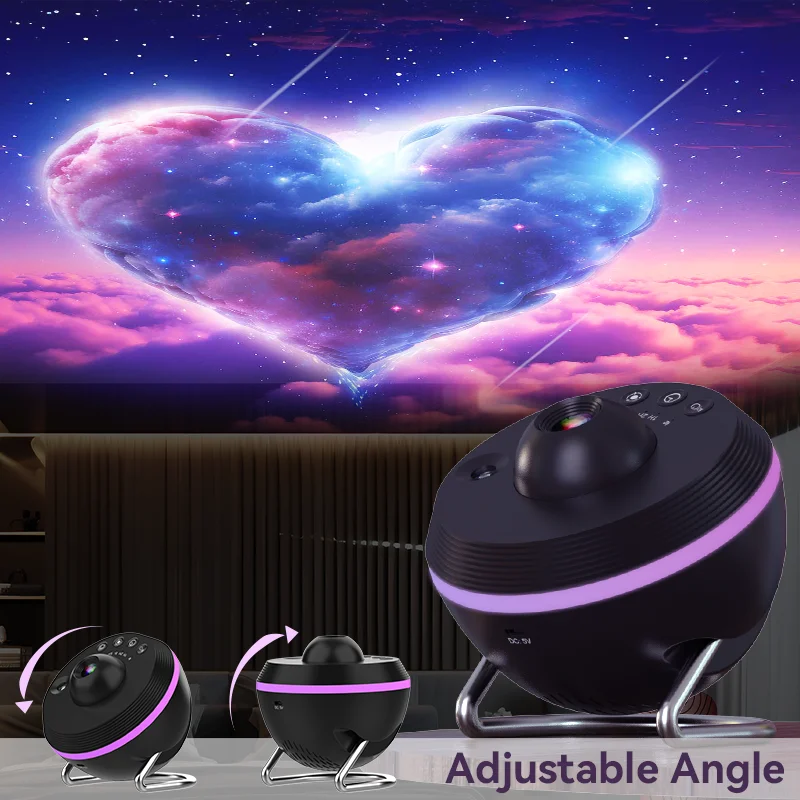
Stand the device on a stable shelf, bedside table or desk where it will not get knocked. Leave a little clear space around the ball so nothing blocks the light. If it sits too close to a wall, the image will be small and sharp. If it sits further back, the image grows larger and softer. Try a couple of spots on the first night and keep the one you like.
Check how many scenes you really get
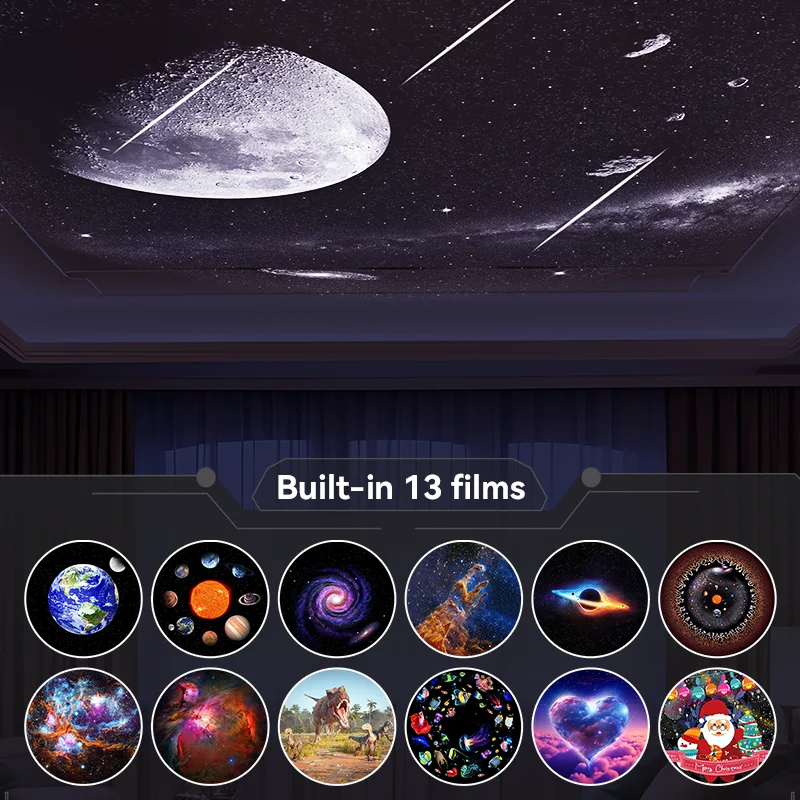
Some projectors fix a single pattern inside the unit. Others use swappable discs, so you can change the scene whenever you want. The listing for this model describes 13 interchangeable discs with space scenes, which means you can switch between planets and nebula patterns instead of living with one picture.
If you buy for a child, this is a real advantage. Interest in a single image fades quickly, and a new disc brings the novelty back. If you buy for yourself, think about whether you want variety or one scene you can set and forget. Either choice is fine. Just know which one you are buying.
Understand the power setup
The product page lists 5V DC power over USB, with a maximum of 5 watts. In plain terms, you power it from a USB source rather than from batteries. The listing says batteries are not required and that the bulb is included.
That affects where you can use it. You need a USB power source within reach of wherever you want the ball to sit. Check that your cable reaches your preferred shelf or bedside table, and think about how the cable will run so nobody trips on it. A low-wattage device like this is gentle on a power strip, but it is still sensible to keep the plug somewhere easy to reach so you can switch it off.
Think about the room’s darkness
Projected images need contrast. In a bright room the scene looks washed out, because the ambient light overpowers the projector. In a dim room the colours stand out and the edges look crisp.
That does not mean you need a pitch-black space. Evening use with the main light off is usually enough. If your bedroom gets strong light from a street lamp or from the hallway, curtains help a great deal. Our guide on Star Projectors: Why Your Ceiling Matters More Than the Device covers how much a ceiling and room matter for any star-style projector, and the same thinking applies here.
Look at the rotation and the shape
The product is described as a rotating ball projector. Rotation is what gives the display its life, so check that the listing clearly says the unit turns. A fixed projector can still look nice, but it feels flat after the first evening.
The ball shape also has a small practical benefit. A round body sits securely on most surfaces and does not tip as easily as a tall, narrow device. It still needs a flat spot, so avoid soft surfaces such as a folded blanket or the edge of a bed, where it can roll or lean and point the beam at the wrong place.
Pay attention to materials and build
The listing gives the body material as ABS plastic. ABS is a common, light and durable plastic used in many household electronics. It does not feel premium, but it handles everyday knocks well, which suits a gadget that might sit in a child’s room.
Be realistic about what that means. A plastic body is light, so a pulled cable can drag it off a shelf. It also marks if left in direct sun for long stretches. Put it somewhere shaded and out of harm’s way, and it will look the same for a long time.
Mistakes to avoid
A few errors come up again and again with projectors like this one.
- Pointing it at a dark or heavily patterned surface, then blaming the device for a weak picture.
- Leaving it in a bright room and expecting a vivid scene.
- Placing it on a soft surface where it can tilt.
- Running the cable across a walkway.
- Covering the ball or the lens with fabric or paper, which blocks the beam and can trap heat.
None of these are hard to avoid. A little thought on the first evening saves a lot of frustration.
Care and cleaning
Unplug the unit and let it cool before you handle it. Wipe the body with a soft, dry cloth. A lens full of dust or fingerprints blurs the picture, so a gentle wipe now and then keeps the image sharp. Avoid water and strong cleaning sprays near the lens or the openings.
Store the spare discs together somewhere dry, so they do not scratch or get lost. If you swap discs often, handle them by the edges. The scene is in the disc, and a scratch there shows up on your ceiling.
Who this kind of projector suits
It suits anyone who wants atmosphere rather than strong light. Parents choosing a decorative light for a child’s room, students who want something calm beside a desk and gamers who like a themed corner all fit well. It also makes a simple gift, because the idea is easy to understand.
It is less suited to anyone who needs real task lighting. A 5 watt projector will not help you read or work. Treat it as a mood light and you will be happy with it. If you already use a star projector, you may enjoy comparing how a disc-based unit differs from the single-pattern type.
Delivery and what to check at checkout
This item ships from a US warehouse to US addresses only, with tracking. You can see live delivery options and the exact cost at checkout before you pay. If you are browsing other items that ship from the same place, the US store lists them together, and the Night Lights category shows more lights.
The bottom line on galaxy projector
A good galaxy projector is simple: a stable ball, a USB power source, a set of discs you enjoy and a room dark enough to show them off. Pick a good spot, keep the lens clean and use it as a mood light. If that sounds right, take a look at the galaxy projector night light with 13 discs and read the listing details for current options and price.
For independent guidance on product safety, see the U.S. Consumer Product Safety Commission safety education pages.
13-in-1 Galaxy Projector Night Light with Rotating Planets
A galaxy projector night light that casts a slowly rotating space scene across your ceiling and walls, with 13 swappable planet discs. Ships from a US warehouse to US addresses. Card payments via secure checkout.
$48.99
View productSubmit Your Story
What scene would you choose to project on your ceiling? Share it through our contact page and we may feature it in a future article.
How This Article Was Created
This article was written from the product details on our listing and widely known buying considerations for this type of product. It uses no unsourced statistics, and it mentions only features shown on the product page. Please check the page for current options and prices. This item ships from a US warehouse to US addresses only.