Electric Percolator 2026: Easy Tips to Avoid a Bad Buy
Choosing an electric percolator? Check capacity, material, power, grind size and cleaning before you buy.
 By Ahamed Khan
In this guide16
- 01Table of Contents
- 02How a percolator differs from other coffee makers
- 03Capacity: think about cups honestly
- 04Material matters: stainless steel
- 05Power and heating speed
- 06Filters, grounds and flavor control
- 07Getting the brew time right
- 08Cleaning and care
- 09Safety around a hot pot
- 10Size and storage
- 11Common mistakes to avoid
- 12Who it suits
- 13Delivery from the US warehouse
- 14The bottom line on electric percolator
- 15Submit Your Story
- 16How This Article Was Created
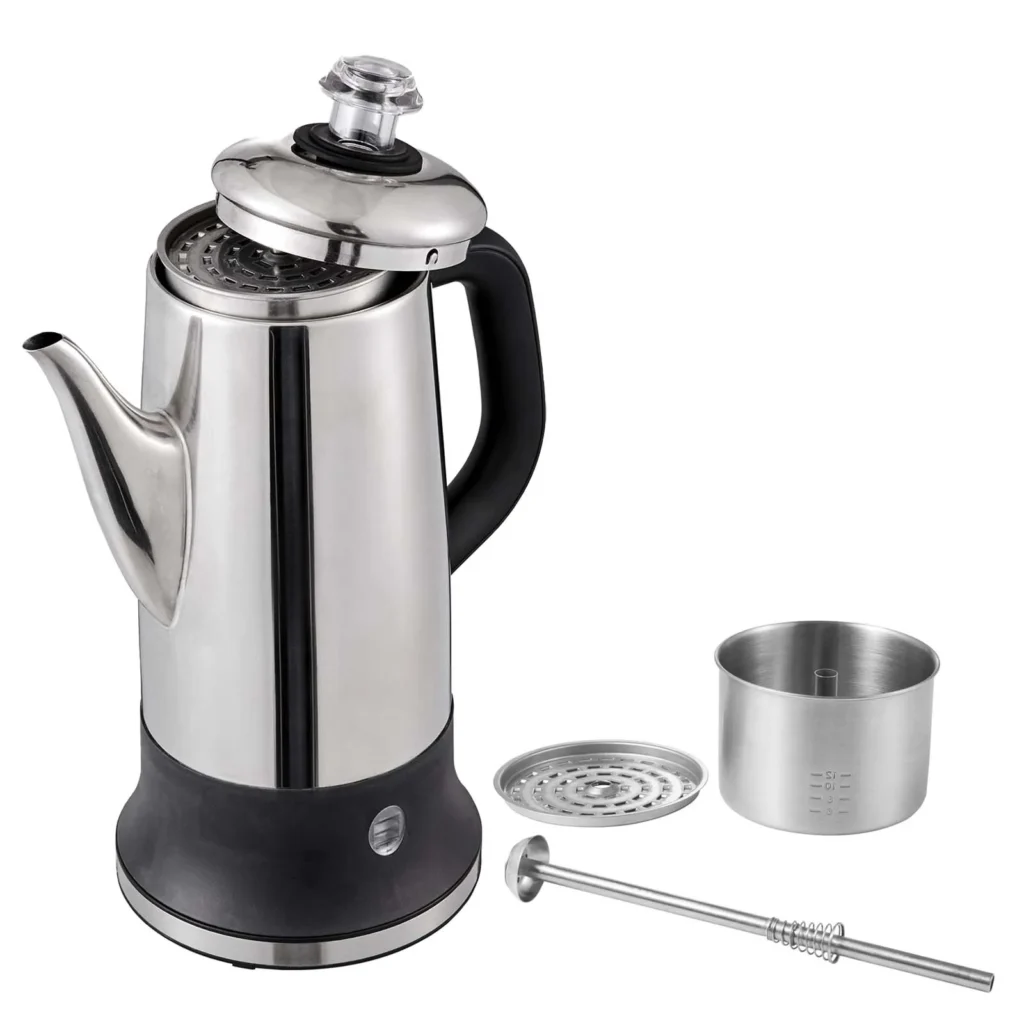
An electric percolator brews coffee the old-fashioned way without a stove: water rises, passes through the grounds and drips back down until the pot reaches the strength you like. It suits big households, camping houses, offices and anyone who prefers a bold cup. This guide covers what to check before you buy.
Percolators are simple machines, which makes the details matter. Material, capacity, heating power and how easy the pot is to clean decide whether you enjoy it for years or abandon it after a month. We use the 12-cup electric percolator on our listing as a worked example throughout.
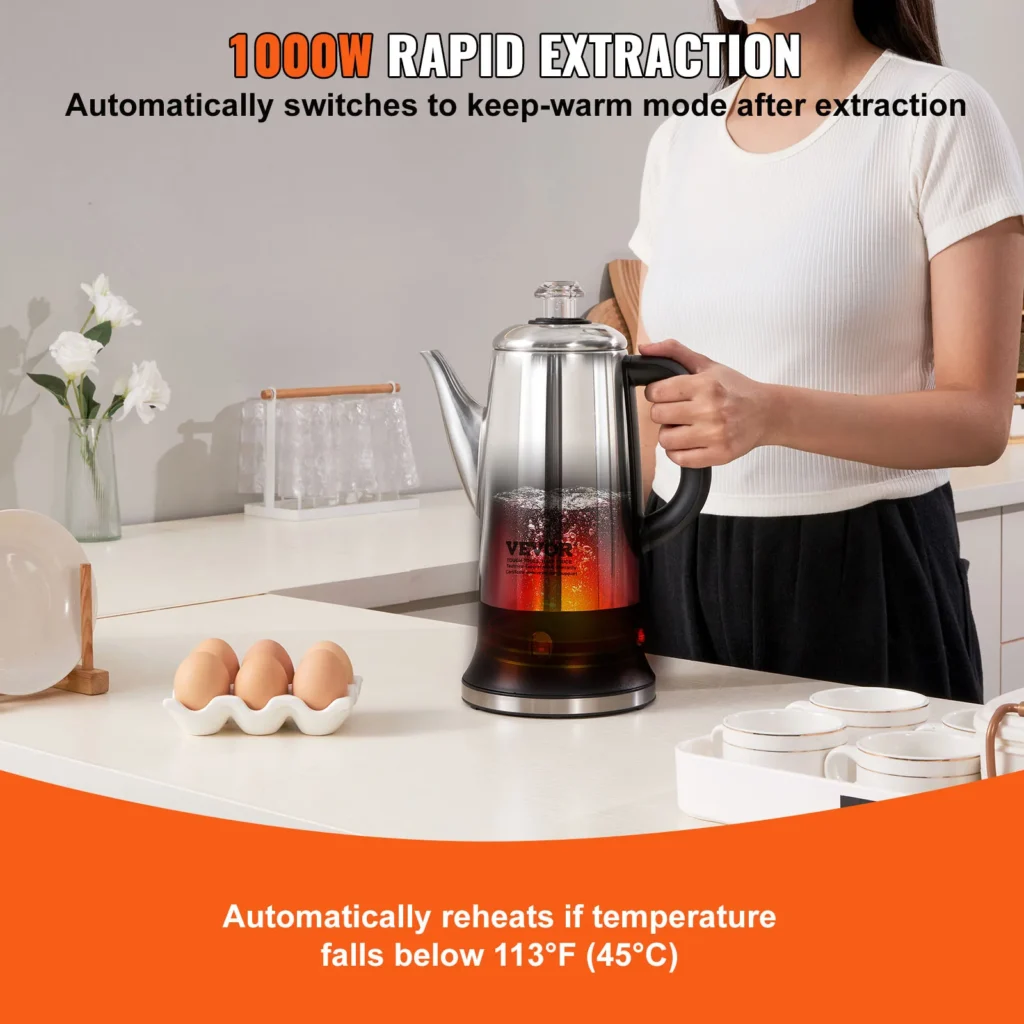
Table of Contents

How a percolator differs from other coffee makers
A drip machine passes water over the grounds once. A percolator cycles the brew repeatedly, which tends to give a stronger, hotter and more robust cup. That repeated cycling also means you have more control, because stopping early gives a milder pot and letting it run longer deepens the flavor. The trade-off is that a long cycle can taste harsh if you leave the grounds in contact with hot water for too long.
Compared with a French press, there is no plunging and no waiting for a timer. Compared with a capsule machine, there is no ongoing cost for pods. What you give up is speed for a single cup and fine control over temperature, so be clear about which trade-offs suit your mornings.
Capacity: think about cups honestly
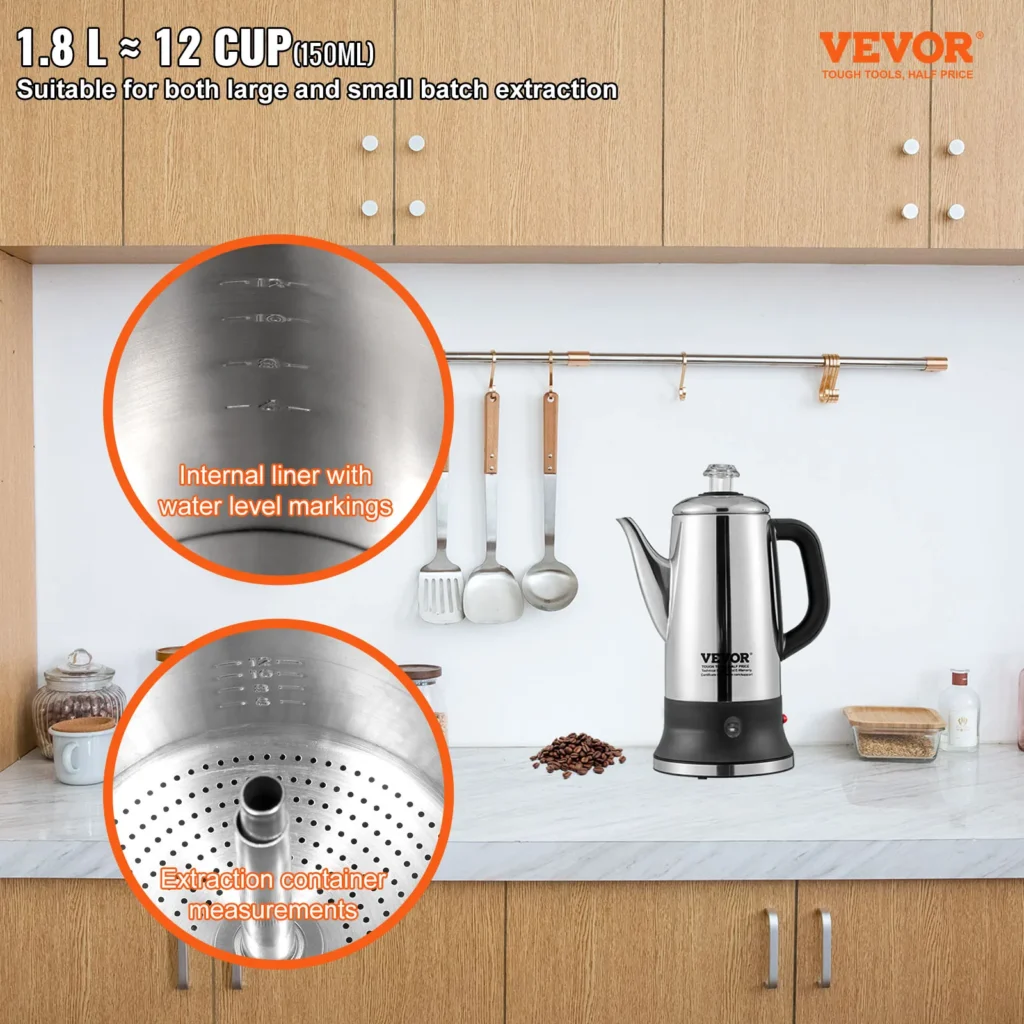
Cup ratings on coffee makers use small measures, so a 12-cup pot does not mean twelve large mugs. The listing gives a capacity of 1.8 L, which is a sensible figure to plan around. If you usually brew for two people, a pot this size will often be more than you need, though it is excellent for gatherings, breakfast tables and long mornings when everyone helps themselves.
A useful rule is to size the pot for your busiest occasion, not your quietest. You can always brew a smaller amount in a big pot, but you cannot stretch a small pot to serve a crowd. Just check the minimum fill line, because brewing below it can leave the basket dry.
Material matters: stainless steel
The product page lists 304 stainless steel. Stainless is durable, does not hold flavors from earlier brews and resists dents better than many alternatives. It also means no plastic touching hot coffee inside the pot body. Check the lid, spout and handle as well, since those are the parts you handle every day. A comfortable, heat-safe handle makes pouring a full pot far safer.
Power and heating speed
The base on this model is rated at 1000 W. In general, higher wattage heats water faster, but the percolation itself still takes several minutes. Check that your socket and any extension lead can handle the load, and plug directly into a wall outlet where you can. Always keep the base dry and never immerse it in water.
Filters, grounds and flavor control
The listing notes that no paper filters are needed. Instead, the grounds sit in a basket inside the pot, so grind size matters. Use a coarse grind: fine grounds slip through the basket holes and leave sediment in your cup. Measure by weight if you can, since a consistent ratio is the quickest way to make every pot taste the same. Start with a moderate amount and adjust over a few brews.
Fresh beans ground just before brewing make the biggest difference to flavor. If you buy pre-ground coffee, look for one labeled for percolators or coarse grinds, and store it in an airtight container away from heat and light.
Getting the brew time right
Most people find that a short, steady percolation gives the best balance. Once the brew begins to bubble through the glass knob or lid, give it a few minutes, then switch off and let the grounds settle before you pour. If your first pot tastes too strong or bitter, shorten the time or use fewer grounds. If it tastes thin, add a little more coffee or let it run slightly longer. Keep notes for the first few pots, and you will quickly find your own recipe.
Cleaning and care
Rinse the pot, stem and basket after every use, because coffee oils turn rancid and spoil the next brew. Wash the parts by hand with warm water and mild soap, and dry them before storing. Every few weeks, descale the inside if your water is hard. Wipe the base with a damp cloth only. Keep the cord untangled and away from hot surfaces, and check it regularly for damage.
Safety around a hot pot
A full pot of near-boiling coffee deserves respect. Place it on a stable, heat-resistant surface away from the edge of the counter, keep the cord out of reach of children and pets, and never lift the pot while it is still brewing. Let it cool before moving it, and unplug it when you are finished. Treat the outside of the pot as hot, as it can stay warm for a while after use.
Size and storage
The listing gives dimensions of about 240 x 157 x 340 mm and a weight of about 1.2 kg. That is a tall pot, so measure under your cabinets and check that it will fit on your counter close to an outlet. It is light enough to carry to a table or into another room, which makes it handy for entertaining.
Common mistakes to avoid
The most common error is using a grind that is too fine, which gives bitter, gritty coffee. The second is running the cycle too long. Others include filling the pot above the maximum line, leaving coffee sitting on the base for hours, and skipping the deep clean. If you want to improve your results further, our article on digital kitchen scales explains why measuring beats guessing.
Who it suits
An electric percolator suits large families, hosts, holiday houses, small offices and people who like strong, hot coffee. It is less suited to anyone who wants a single quick cup or fine control over water temperature, who may prefer a pour-over or capsule machine. You can see similar kitchen appliances in the Small Appliances collection.
Delivery from the US warehouse
This percolator ships from a US warehouse to US addresses only, with tracking. Live delivery options and the exact cost appear at checkout before you pay. You can browse everything that ships this way in our US store.
The bottom line on electric percolator
Choose a percolator for capacity, a sturdy build and a design that is easy to clean. If you want a stainless pot that brews a full batch on a 1000 W base, the 12-cup electric percolator is a good place to start.
For independent guidance on home fire safety, see the NFPA home fire safety resources.
12-Cup Electric Percolator, 304 Stainless Steel, 1000W
An electric coffee percolator in 304 stainless steel that brews up to 12 cups from a 1.8L pot, with 1000W of power.
$57.99
View productSubmit Your Story
What is your favorite way to make a big pot of coffee for a crowd? Share it through our contact page and we may feature it in a future article.
How This Article Was Created
This article was written from the product details on our listing and widely known buying considerations for this type of product. It contains no unsourced statistics and mentions only features shown on the product page. Check the page for current options and prices. This item ships from a US warehouse to US addresses only.