Bifacial Solar Panel 2026: Easy Tips to Avoid a Bad Buy
A bifacial solar panel collects light on both sides. Learn what to check before buying a 100W rigid panel.
 By Ahamed Khan
In this guide13
- 01Table of Contents
- 02What bifacial actually means
- 03N-type cells in plain terms
- 04How much can 100W run?
- 05Voltage and 12V systems
- 06Size, weight and mounting
- 07Placement, shade and tilt
- 08Care and safety
- 09Related reading and where to look next
- 10The bottom line on bifacial solar panel
- 11Submit Your Story
- 12How This Article Was Created
- 13Related guides
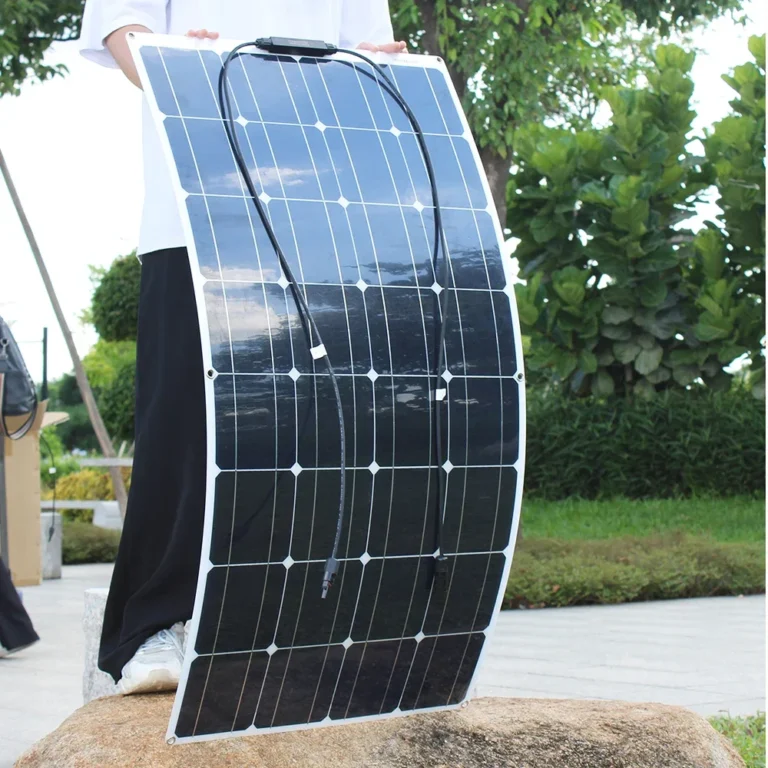
A small off-grid system does not need a roof full of glass. For a shed, an RV or a garden project, a single rigid 100W panel can be all you need. A bifacial solar panel adds one extra twist: it can collect light on the back as well as the front.
That sounds like free power, but the details matter. This guide explains what bifacial and N-type mean, how to size a 12V system, where to mount the panel and what to avoid. We use a 100W rigid panel as the example, so you can judge whether this kind of panel fits your project.
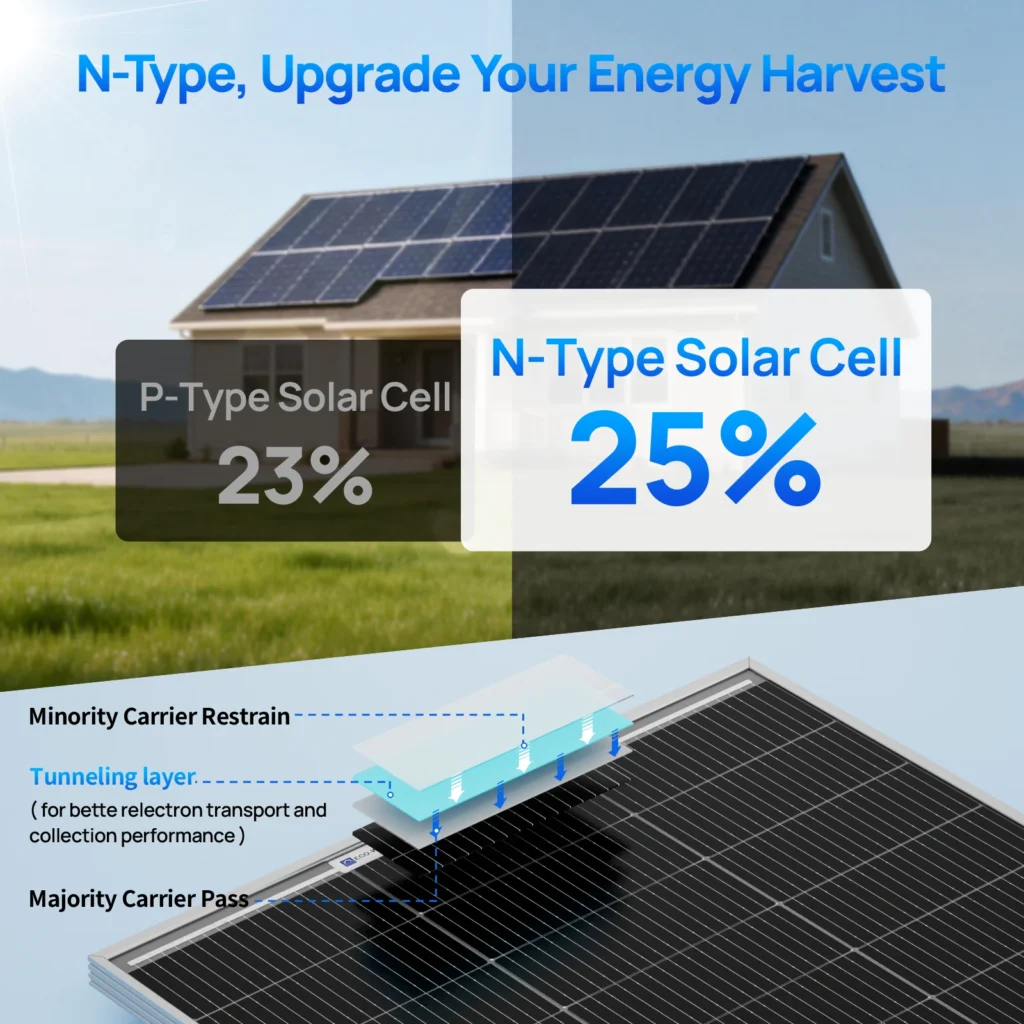
Table of Contents
What bifacial actually means
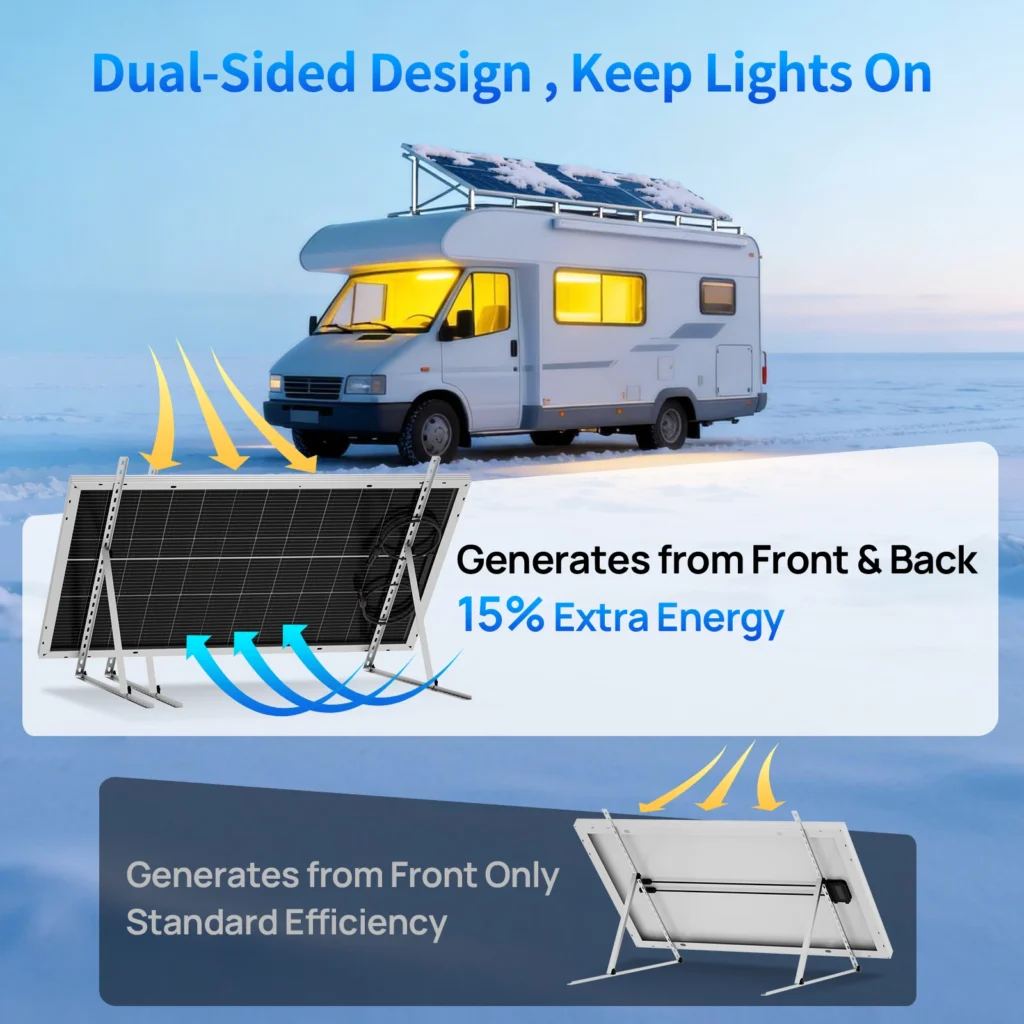
A standard panel collects sunlight on the front only. A bifacial panel can also pick up light that bounces onto the back, from the ground, a wall or a nearby surface. The listing describes the cells as bifacial, collecting light on both sides.
The extra gain depends on what is behind the panel. Light-coloured ground, a reflective roof or pale gravel gives the back more to work with. A dark roof pressed flat against the panel gives it almost nothing. So bifacial is a bonus, not a promise, and you should size your system on the rated power rather than on hoped-for extra output.
N-type cells in plain terms
N-type describes the kind of silicon used in the cells. It is a newer technology that is often chosen for good performance, and the panel in our example pairs it with monocrystalline cells. You do not need to know the chemistry to shop well. What you need to know is the rated power, the voltage, the size and how the frame is built.
Be wary of any listing that makes big promises about lifespan or output without showing the details. Stick to the figures you can check on the product page, and compare them across panels of the same wattage. If two panels list the same power, the better buy is usually the one with clearer specifications, a size that fits your space and delivery details you can trust.
How much can 100W run?
The 100W rating is the output under standard test conditions. Real days are cloudier, hotter or shadier, so expect less on average. A single panel suits small loads: LED lights, a phone or laptop charger, a small fan, a water pump that runs briefly, or a trickle charge for a stored battery.
To size it properly, list each device, note its wattage and how long you use it each day, and add them up. Compare that with what one panel can realistically supply across a day. If the total is close to or above the panel’s ceiling, plan for a second panel or a bigger battery, and use power-hungry devices sparingly.
Voltage and 12V systems
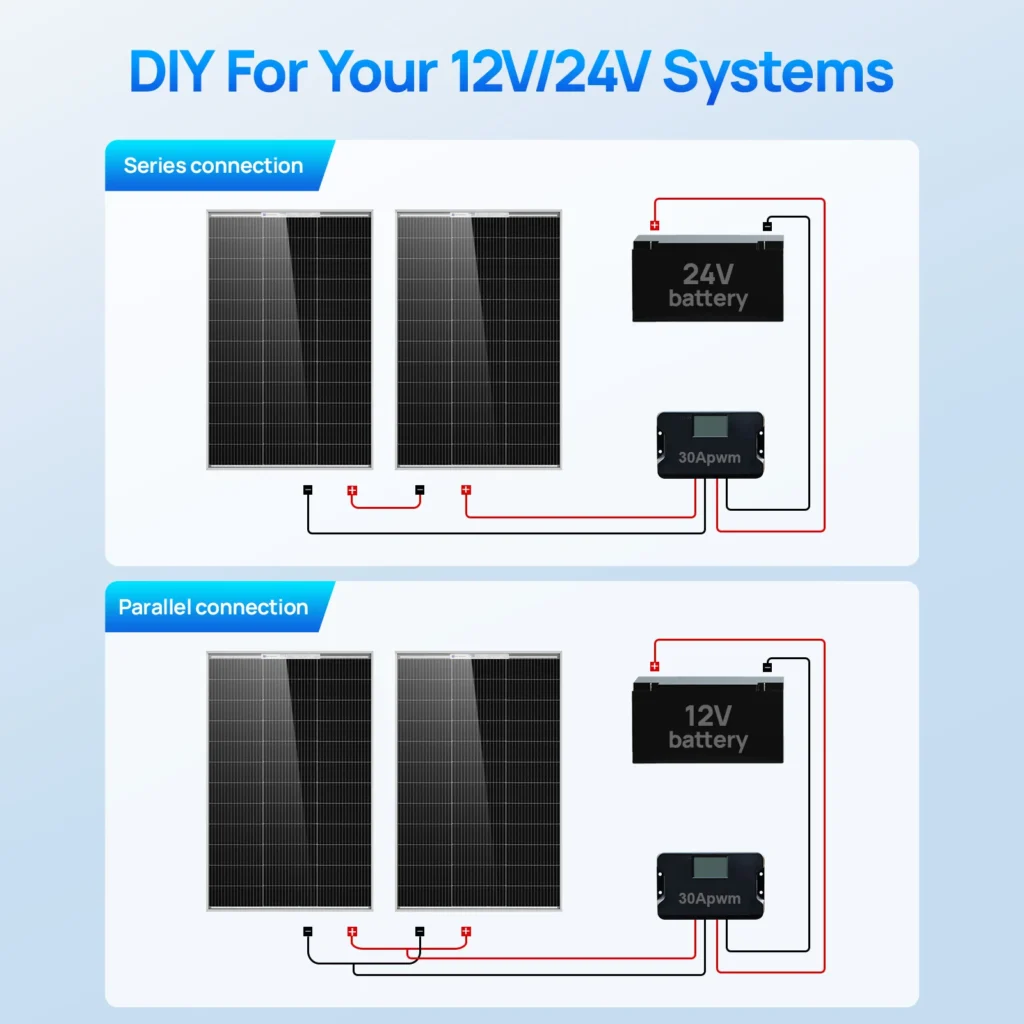
The listing gives an output voltage of 18 V and says the panel is built for 12V systems. This is the normal pairing: a panel of around 18 V is used to charge a nominal 12V battery through a charge controller. The controller regulates the charge and protects the battery.
Do not wire a panel straight to a battery and walk away. Check the product page for what is included, choose a controller rated for the panel’s current, and use cables thick enough to keep losses low. Fit a fuse where your battery wiring guidance says to. If you are not comfortable with electrical work, ask a qualified installer, particularly for anything permanent.
Size, weight and mounting
The rigid frame measures about 35.2 x 23 x 1.4 inches and weighs about 6.6 kg boxed. That is small enough for most shed roofs and RV roofs, and light enough for one person to carry. Measure your mounting area before you buy, and leave room around the panel for cables and airflow.
Mount it on a solid surface using brackets made for the job. To make use of the bifacial back, raise it a little so air and light can reach underneath, and avoid placing it flat against a dark surface. A ground mount or a tilted bracket works well in a garden, while on a shed roof a short stand-off bracket does the job.
Check the strength of whatever you fix it to. A thin shed roof may need a timber batten under the bracket, and an RV roof may have rules about drilling. Seal any screw holes properly so water cannot get in, and remember that wind puts a surprising amount of force on a panel, so use sturdy fixings.
Placement, shade and tilt
Shade is the main thing that cuts output. Even a small shadow from a branch, aerial or wall can drop the power a lot, because the cells are connected in series. Pick a spot with open sky for most of the day.
Tilt matters too. Pointing the panel toward the sun, and angling it to suit your latitude and the season, raises output compared with lying it flat. A simple adjustable bracket lets you change the angle through the year. Keep the surface clean, since dust, leaves and bird droppings reduce what reaches the cells.
Care and safety
Rigid panels need little upkeep. Wipe the glass with water and a soft cloth, check the cable connections and fasteners every few months, and look for cracks or loose parts after storms. Do not step on the panel or lean ladders against it.
Keep wiring tidy and protected from sharp edges and sun damage, and never cover the panel while it is connected to a live system without checking your controller’s guidance. If something looks damaged, stop using it and have it checked rather than hoping it will be fine.
Storage matters if you only use the panel seasonally. Disconnect it from the controller first, keep it dry and flat, and store it somewhere it cannot be knocked or bent. When you bring it back into service, inspect the glass and the cable ends before reconnecting, and clean the surface so it starts the season at full strength.
Related reading and where to look next
If you want storage that works with solar, our guide to portable power stations covers how to size a battery for your loads. You can also browse our Fitness & Outdoors category and the US store for items that ship from a US warehouse to US addresses.
The bottom line on bifacial solar panel
Choose a rigid panel when you have a flat spot to mount it and want a sturdy frame. Check the power against your real loads, measure the space, plan for a charge controller and keep the panel clear of shade. The 100W bifacial N-type solar panel on our listing is a rigid, 12V-ready option at about 35 x 23 inches, suited to sheds, RVs and cabins.
For independent guidance on solar basics, see the U.S. Department of Energy solar guidance.
100W Bifacial N-Type Solar Panel, Rigid 12V Monocrystalline
A rigid 100W bifacial N-type panel, about 35 x 23 inches, for sheds, RVs and off-grid setups.
$75.99
View productSubmit Your Story
What would you power first with a small solar setup? Share it through our contact page and we may feature it in a future article.
How This Article Was Created
This article was written from the product details on our listing and widely known buying considerations for solar panels. It contains no unsourced statistics, and we only describe features shown on the product page. Please check the page for current options and prices. This item ships from a US warehouse to US addresses only.