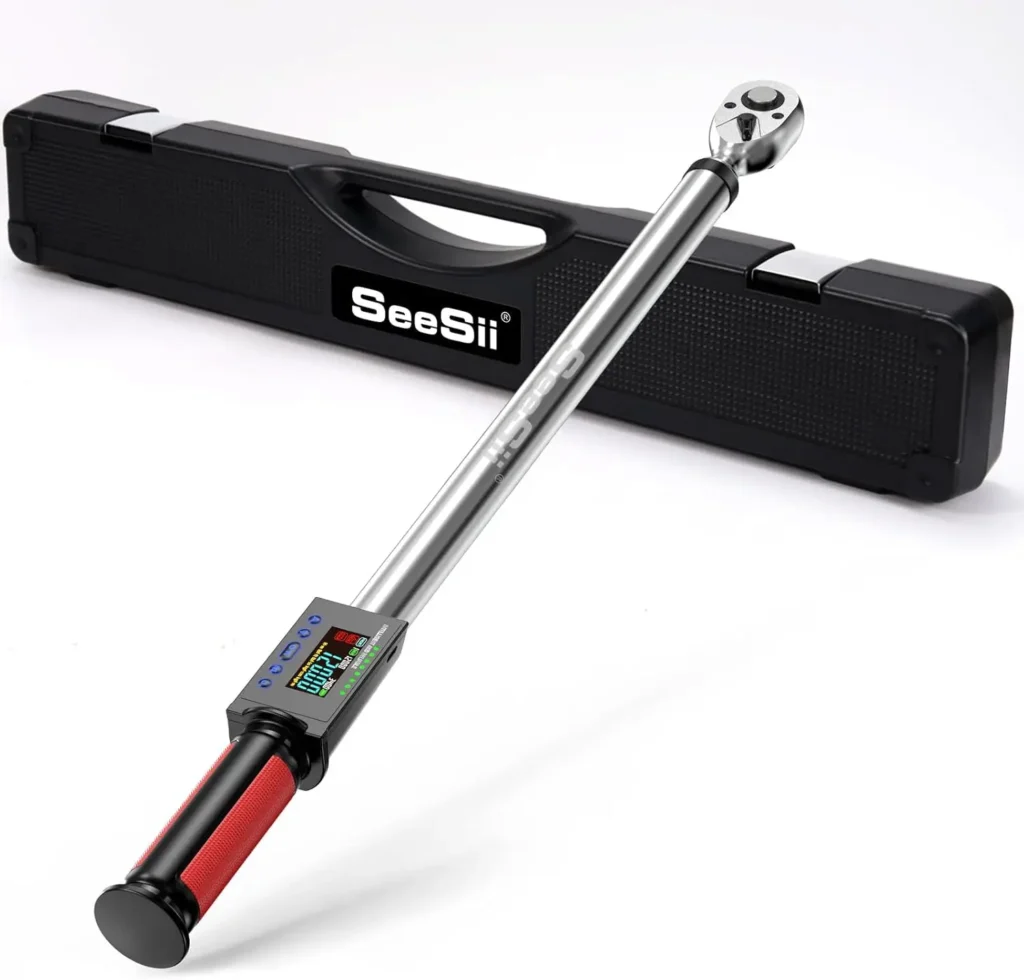
Torque Wrench Guide 2026: Easy Tips to Avoid a Bad Buy
A practical guide to choosing a digital torque wrench: drive size, range, accuracy, modes, battery and care, plus mistakes to avoid when tightening wheel nuts.
 By Ahamed Khan
In this guide14
- 01Table of Contents
- 02What a torque wrench actually does
- 03Choose the drive size that fits your sockets
- 04Check the torque range
- 05Understand the accuracy figure
- 06Why modes are useful
- 07Battery power and display
- 08Size, weight and handling
- 09How to use it properly
- 10Common mistakes to avoid
- 11Who this tool suits
- 12The bottom line on torque wrench
- 13Submit Your Story
- 14How This Article Was Created
Tightening a bolt by feel works until it does not. Too loose and a wheel nut can work free. Too tight and you can stretch a bolt or strip a thread. A digital torque wrench takes the guesswork out by showing the torque on a display as you pull, so you stop at the number the job calls for.
This guide covers what to check when you shop for one: drive size, range, accuracy, modes, power and care. It uses the details on our 1/2 inch drive electronic torque wrench listing as an example, and it sticks to what a listing can reliably tell you.

Table of Contents
What a torque wrench actually does
Every fastener has a tightening value set by whoever designed the part. That value is called torque, and it is usually measured in newton metres (Nm) or pound-feet. A torque wrench measures how hard you are turning and tells you when you have reached the target.
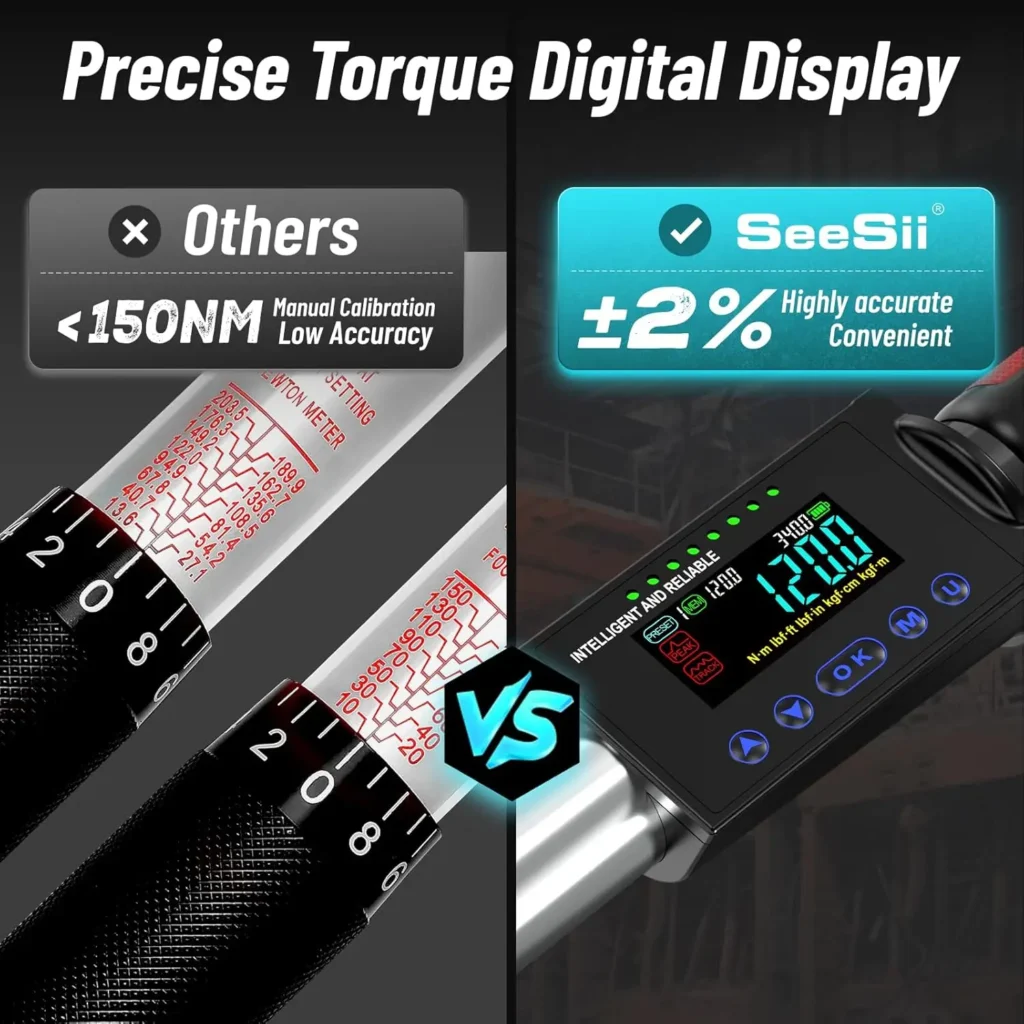
A digital model shows the reading on a screen instead of using a spring and a scale. Many people find that easier to read, especially in a dim garage, because the number is right there and does not depend on lining up a mark.
Choose the drive size that fits your sockets
Drive size is the square fitting that your socket clips onto. The common sizes are 1/4, 3/8 and 1/2 inch. A 1/2 inch drive is the usual choice for car wheel nuts and other larger fasteners, and it matches the heavy-duty sockets many home mechanics already own.
Check the sockets you have before you buy. If your set is mostly 3/8 inch, you will need an adapter or a different wrench. The listing for this tool states a 1/2 inch drive, so confirm your sockets match.
Check the torque range
Range matters as much as drive size. This wrench goes up to 340 Nm. That is a wide span, and it suits wheel nuts and many other car and home DIY jobs. But a wrench is not equally good across its whole range.
As a rule, work in the middle of the range rather than at the very bottom. If most of your jobs need a small, delicate value, a smaller wrench is a better fit. If you tighten wheel nuts, a high upper limit gives you comfortable headroom. Look up the value for your own vehicle in its manual and make sure it sits well inside the range of any tool you consider.
Understand the accuracy figure
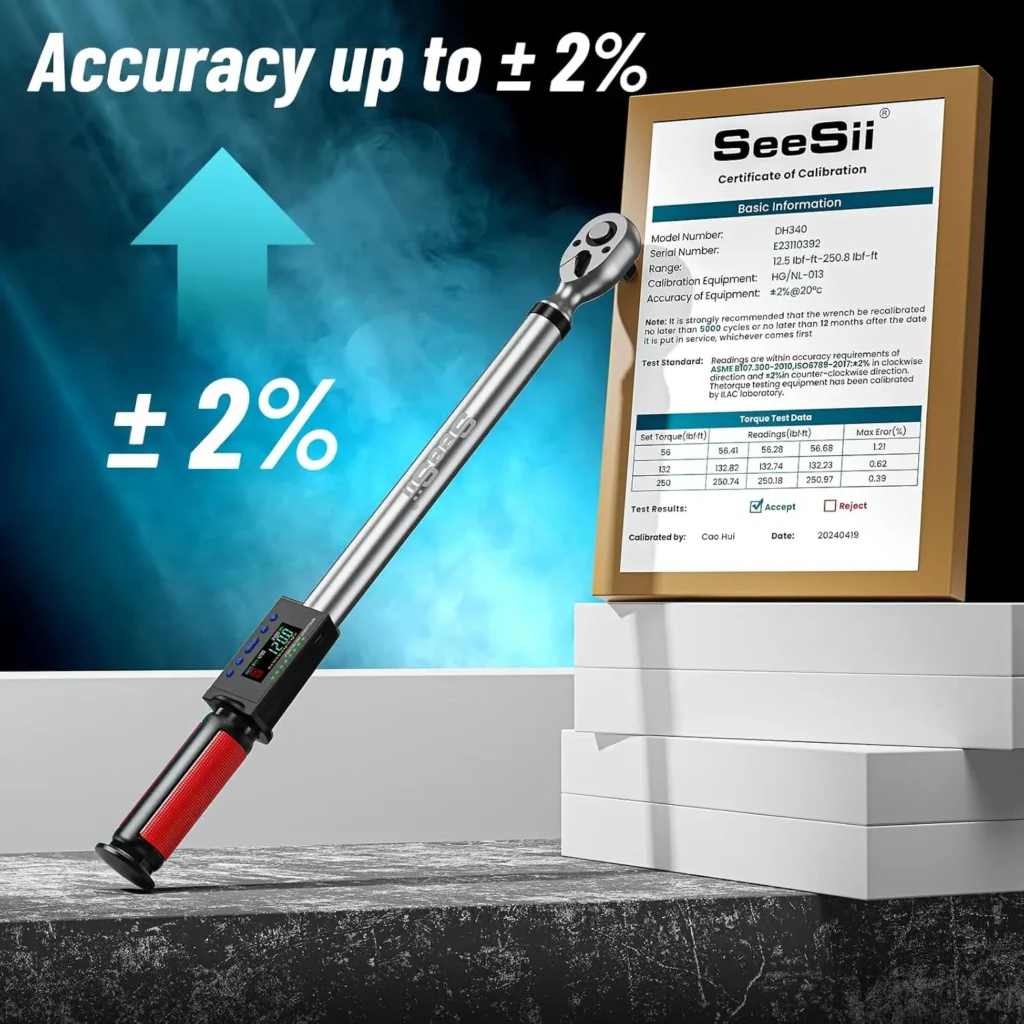
The listing quotes an accuracy of 2%. Treat that as the maker’s stated figure rather than something you have measured yourself. In plain terms, it means the reading should be close to the real torque, within a small margin.
Accuracy figures usually describe the middle of the working range under normal conditions. Dropping the tool, using it as a breaker bar or storing it carelessly can all move it out of tune. If you need certified accuracy for professional work, check whether calibration is available. For occasional home use, careful handling goes a long way.
Why modes are useful
This wrench has three adjustable modes. Modes usually let you pick the unit shown on the screen or change how the tool warns you when you reach the target. Check the product page and manual for the exact choices before you rely on them.
What matters in practice is that you can set the target, understand the signal and avoid overshooting. Spend a few minutes learning how the modes work on a spare bolt rather than learning on a wheel nut in a rush.
Battery power and display
An electronic wrench needs a battery, and this one includes it. That is a small but real convenience, because you can use it straight away. Keep a spare in the toolbox anyway, since a flat battery in the middle of a job is a nuisance.
Take the battery out if you will not use the tool for months. A leaking cell can damage the electronics. Also look for a display that is clear and easy to read from the angle you will actually work at.
Size, weight and handling
This tool is about 6.7 in long and weighs around 930 g. That makes it compact and easy to store in a drawer or a car boot. A short handle means less leverage, though, so for very tight fasteners you must pull steadily and position your body well.
Weight matters too. A heavier tool feels solid but tires your arm if you work on several wheels. Think about how long you will hold it on a typical job.
How to use it properly
- Start with clean threads and the correct socket for the fastener.
- Snug the fastener by hand first so the wrench only does the final tightening.
- Set the target value from your vehicle or product manual.
- Pull in one smooth motion and stop when you reach the target.
- Never use the wrench to loosen stuck bolts. Use a breaker bar for that.
For wheels, tighten the nuts in a star or criss-cross pattern so the wheel seats evenly, and go around once more at the final value.
Common mistakes to avoid
- Choosing a range that does not suit your most common jobs.
- Using the wrench as a breaker bar.
- Forgetting to check the battery before a job.
- Dropping the tool and trusting the reading afterwards.
- Ignoring the value printed in the vehicle manual.
Store the wrench in a dry place, away from heavy tools that could knock it. Wipe it with a clean dry cloth after use, and keep oil and grit off the display and the drive.
Who this tool suits
A digital torque wrench suits home mechanics who change wheels, work on brakes or do general car care and want a repeatable result. It also helps with bicycles, furniture and other DIY where a fastener has a specified value. If you only do the occasional job, a simpler tool may be enough, but wheel nuts are one task where measuring pays off.
You can browse more in our Automotive category. This wrench is available from our US store and ships to US addresses only.
The bottom line on torque wrench
Match the drive size to your sockets, make sure the range covers your jobs with room to spare, and treat the tool carefully so the accuracy holds. If those boxes tick, the digital torque wrench with a 1/2 inch drive and 340 Nm range is worth a look, with a 2% quoted accuracy, three modes and a battery included.
For independent guidance on vehicle safety, see the NHTSA vehicle safety information.
Digital Torque Wrench 1/2 in Drive, 340 Nm, 3 Modes
A digital torque wrench with a 1/2 inch drive and a range up to 340 Nm, with 3 adjustable modes for wheels, engine work and general car care.
$99.99
View productSubmit Your Story
What is the one job where you wish you had used a torque wrench sooner? Share it through our contact page and we may feature it in a future article.
How This Article Was Created
This article was written from the product details on our listing and widely known buying considerations for this type of product. It contains no unsourced statistics and only mentions features shown on the product page. Please check the page for current options and prices. This item ships from a US warehouse to US addresses only.